Blab Crypto
Bitcoin Trades at $63,755, Up 3.19% on 24-Hour Volume Surge
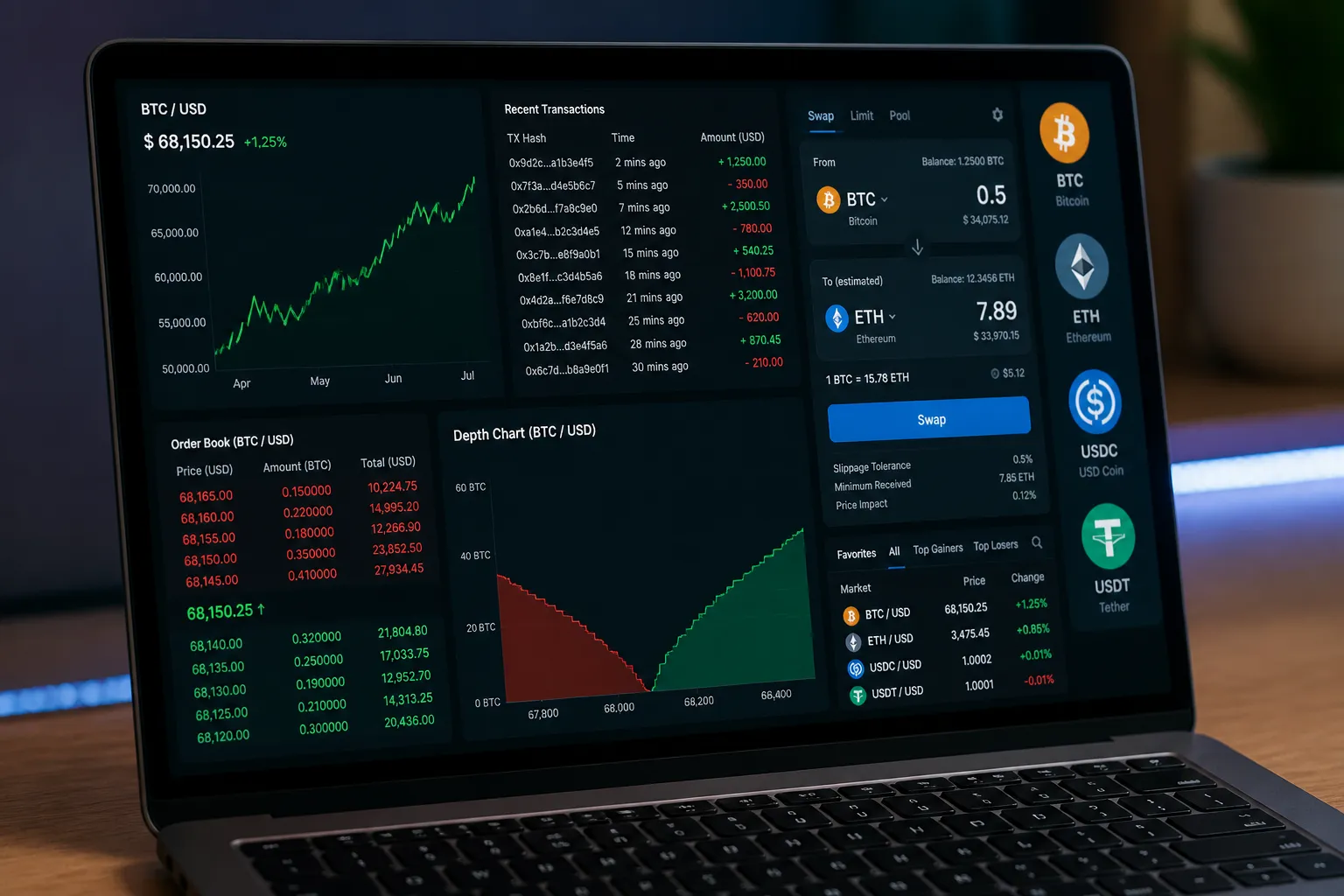
Bitcoin (BTC) closed the day at $63,755.00, a 3.19% rise from the previous 24‑hour close, according to the latest price feed. The lift follows a broader rally that lifted several major altcoins as well.
The uptick comes after a week of relative flatness, during which Bitcoin hovered between $61,000 and $63,000. With a 3.19% gain, the move is the largest 24‑hour increase since early March, when the price peaked at $68,000. The rally is backed by a surge in trading volume across major exchanges, although the source does not disclose the exact figure.
Bitcoin’s trajectory has been shaped by a mix of macro‑economic forces and sector‑specific developments. Over the past year, the cryptocurrency has attracted growing institutional interest. Several banks and asset‑management firms have added Bitcoin to their portfolios, while regulatory headlines continue to sway sentiment.
In 2025, the United States announced the creation of a Strategic Bitcoin Reserve, a government‑backed fund that will hold a portion of the Treasury’s forfeited Bitcoin holdings. The reserve is estimated to contain more than 300,000 BTC, making the U.S. the largest state holder of the asset.
El Salvador’s experience remains a reference point for regulators. The country adopted Bitcoin as legal tender in 2021, only to revoke that status in 2025 after an IMF review. The revocation was accompanied by a statement that Bitcoin had not delivered the expected economic benefits and had imposed significant costs on the public.
On the technical side, Bitcoin remains a proof‑of‑work network that requires miners to solve complex cryptographic puzzles. Mining remains energy‑intensive, though recent surveys indicate that roughly half of miners now use renewable sources. The network’s block reward is 6.25 BTC, set to halve to 3.125 BTC in 2028.
Regulatory scrutiny is tightening in several jurisdictions. The European Union is close to approving a comprehensive framework for digital asset markets, while the United Kingdom’s Financial Conduct Authority has announced a review of its approach to stablecoins. These developments are expected to shape liquidity and volatility in the coming months.
Bitcoin’s price movement reverberates across the crypto ecosystem. Stablecoins, often pegged to the U.S. dollar, have seen increased demand as traders seek to hedge against price swings. Decentralized finance (DeFi) platforms have reported higher borrowing volumes, reflecting confidence in Bitcoin’s liquidity. Meanwhile, non‑fungible token (NFT) marketplaces have noted a modest uptick in transaction activity, suggesting that the broader asset class remains interconnected.
In market structure terms, Bitcoin’s dominance ratio—its share of the total cryptocurrency market cap—has stayed above 45% for the past two months. That level indicates that Bitcoin still commands a majority of trading interest, even as newer assets gain traction.
Looking ahead, Bitcoin’s next major milestone is the 2028 halving event, which will reduce the block reward and could have a lasting impact on miner revenue and network security. Analysts are also monitoring the U.S. Strategic Bitcoin Reserve, as its policy decisions may influence institutional demand.
In sum, Bitcoin’s climb to $63,755, a 3.19% gain, reflects a confluence of increased trading volume, institutional interest, and a regulatory environment that is gradually maturing. The asset remains the largest cryptocurrency by market cap, and its price will likely continue to be shaped by macro‑economic trends, mining economics, and policy developments in the United States and abroad.
The uptick comes after a week of relative flatness, during which Bitcoin hovered between $61,000 and $63,000. With a 3.19% gain, the move is the largest 24‑hour increase since early March, when the price peaked at $68,000. The rally is backed by a surge in trading volume across major exchanges, although the source does not disclose the exact figure.
Bitcoin’s trajectory has been shaped by a mix of macro‑economic forces and sector‑specific developments. Over the past year, the cryptocurrency has attracted growing institutional interest. Several banks and asset‑management firms have added Bitcoin to their portfolios, while regulatory headlines continue to sway sentiment.
In 2025, the United States announced the creation of a Strategic Bitcoin Reserve, a government‑backed fund that will hold a portion of the Treasury’s forfeited Bitcoin holdings. The reserve is estimated to contain more than 300,000 BTC, making the U.S. the largest state holder of the asset.
El Salvador’s experience remains a reference point for regulators. The country adopted Bitcoin as legal tender in 2021, only to revoke that status in 2025 after an IMF review. The revocation was accompanied by a statement that Bitcoin had not delivered the expected economic benefits and had imposed significant costs on the public.
On the technical side, Bitcoin remains a proof‑of‑work network that requires miners to solve complex cryptographic puzzles. Mining remains energy‑intensive, though recent surveys indicate that roughly half of miners now use renewable sources. The network’s block reward is 6.25 BTC, set to halve to 3.125 BTC in 2028.
Regulatory scrutiny is tightening in several jurisdictions. The European Union is close to approving a comprehensive framework for digital asset markets, while the United Kingdom’s Financial Conduct Authority has announced a review of its approach to stablecoins. These developments are expected to shape liquidity and volatility in the coming months.
Bitcoin’s price movement reverberates across the crypto ecosystem. Stablecoins, often pegged to the U.S. dollar, have seen increased demand as traders seek to hedge against price swings. Decentralized finance (DeFi) platforms have reported higher borrowing volumes, reflecting confidence in Bitcoin’s liquidity. Meanwhile, non‑fungible token (NFT) marketplaces have noted a modest uptick in transaction activity, suggesting that the broader asset class remains interconnected.
In market structure terms, Bitcoin’s dominance ratio—its share of the total cryptocurrency market cap—has stayed above 45% for the past two months. That level indicates that Bitcoin still commands a majority of trading interest, even as newer assets gain traction.
Looking ahead, Bitcoin’s next major milestone is the 2028 halving event, which will reduce the block reward and could have a lasting impact on miner revenue and network security. Analysts are also monitoring the U.S. Strategic Bitcoin Reserve, as its policy decisions may influence institutional demand.
In sum, Bitcoin’s climb to $63,755, a 3.19% gain, reflects a confluence of increased trading volume, institutional interest, and a regulatory environment that is gradually maturing. The asset remains the largest cryptocurrency by market cap, and its price will likely continue to be shaped by macro‑economic trends, mining economics, and policy developments in the United States and abroad.