Blab Crypto
Bitcoin Price Fluctuations in 2026: From $81,286 in May to $69,256 in Early June
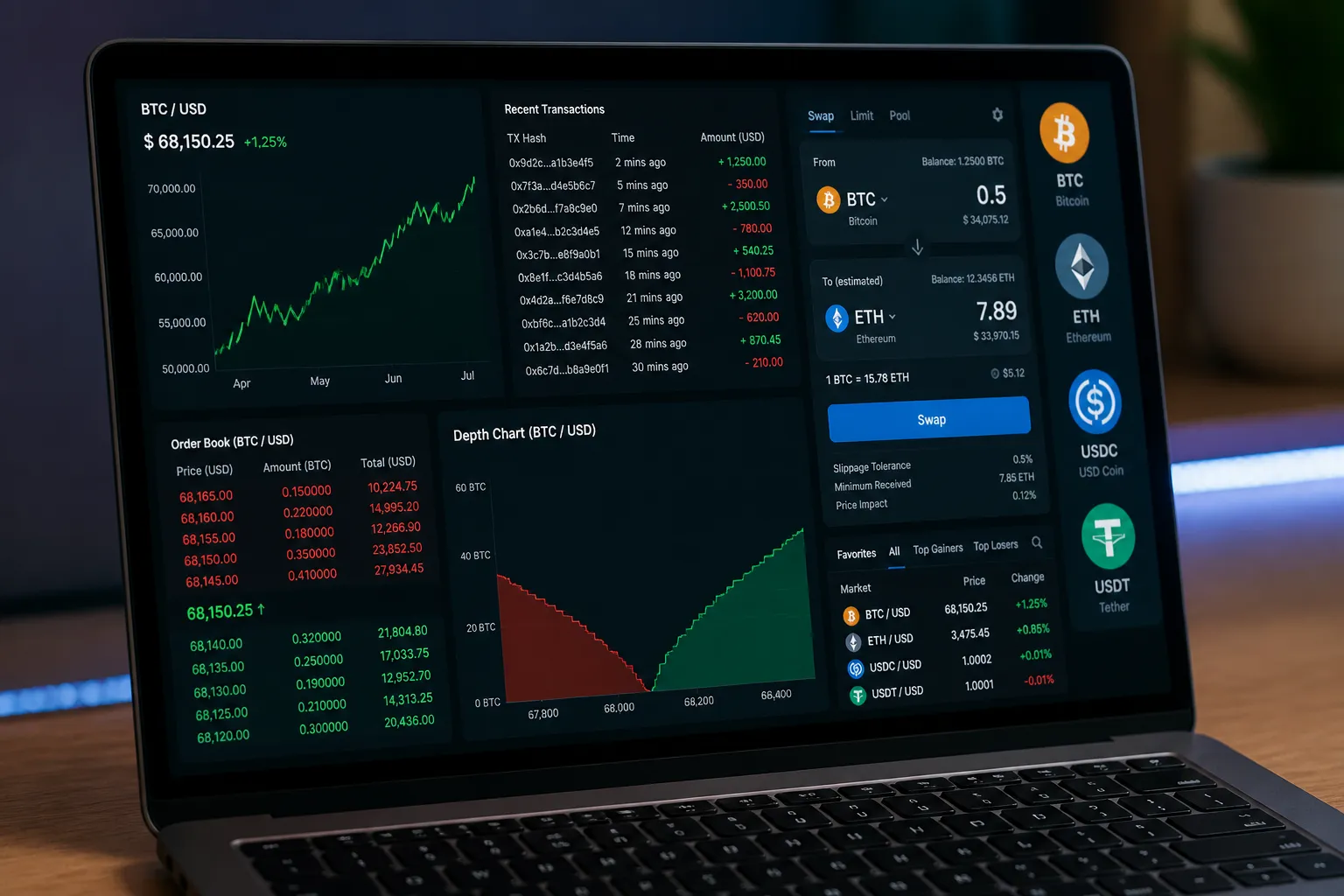
Bitcoin (BTC) has continued to exhibit significant price volatility throughout 2026. According to Fortune’s market data, the cryptocurrency reached a high of $81,286.38 on May 5, 2026, before falling to $69,256.14 on June 2, 2026, and rebounding slightly to $70,256.14 on June 3, 2026. Earlier in the year, Bitcoin traded at $71,043.14 on March 24, 2026, and $72,204.20 on April 10, 2026. These figures illustrate a swing of roughly $12,000 over a three‑month period.
The price movements are consistent with Bitcoin’s historical pattern of rapid price changes. Bitcoin’s market capitalization remains the largest among all cryptocurrencies, and its price is influenced by a range of factors, including institutional adoption, macro‑economic trends, and regulatory developments. The cryptocurrency’s status as a decentralized digital asset means that its price is determined by supply and demand dynamics on global exchanges.
During the period covered, Bitcoin’s price rose from the $71,000 level in late March to a peak above $81,000 in early May. This rise was followed by a decline that brought the price below $70,000 by early June. The data from Fortune’s daily price listings confirm that the price dipped to $69,256.14 on June 2, 2026, before recovering to $70,256.14 on June 3, 2026. The daily price changes reflect the underlying trading volume and market sentiment that fluctuate throughout the week.
Bitcoin’s price volatility is partly a function of its limited supply of 21 million coins and the fact that new coins are created only through mining, a proof‑of‑work process that consumes significant energy. The mining process also influences the number of new coins introduced into circulation each day, which can affect price. In addition, Bitcoin’s price is sensitive to macro‑economic indicators such as inflation rates, interest rates, and global financial market movements.
The cryptocurrency’s role as a store of value has been reinforced by continued institutional interest. Large corporations and financial institutions have added Bitcoin to their balance sheets, and some have begun offering cryptocurrency services to clients. These developments contribute to the demand side of the market and can support price levels.
Regulatory scrutiny remains a factor that can impact Bitcoin’s price. While the United States and other jurisdictions have not classified Bitcoin as a currency, it is treated as a commodity under U.S. law, which subjects it to oversight by the Commodity Futures Trading Commission and the Securities and Exchange Commission. Regulatory announcements or changes in policy can trigger rapid price movements.
In summary, Bitcoin’s price in 2026 has shown a clear pattern of volatility, with a peak of $81,286.38 in early May, a trough of $69,256.14 in early June, and a rebound to $70,256.14 by June 3. The cryptocurrency continues to be the largest digital asset by market capitalization, and its price is influenced by a combination of supply constraints, mining activity, institutional adoption, macro‑economic conditions, and regulatory developments.
The next few weeks will likely see further price adjustments as market participants respond to new data on inflation, interest rates, and any forthcoming regulatory announcements. Investors and analysts will continue to monitor Bitcoin’s price movements closely, as they provide insight into the broader health of the cryptocurrency market.
The price movements are consistent with Bitcoin’s historical pattern of rapid price changes. Bitcoin’s market capitalization remains the largest among all cryptocurrencies, and its price is influenced by a range of factors, including institutional adoption, macro‑economic trends, and regulatory developments. The cryptocurrency’s status as a decentralized digital asset means that its price is determined by supply and demand dynamics on global exchanges.
During the period covered, Bitcoin’s price rose from the $71,000 level in late March to a peak above $81,000 in early May. This rise was followed by a decline that brought the price below $70,000 by early June. The data from Fortune’s daily price listings confirm that the price dipped to $69,256.14 on June 2, 2026, before recovering to $70,256.14 on June 3, 2026. The daily price changes reflect the underlying trading volume and market sentiment that fluctuate throughout the week.
Bitcoin’s price volatility is partly a function of its limited supply of 21 million coins and the fact that new coins are created only through mining, a proof‑of‑work process that consumes significant energy. The mining process also influences the number of new coins introduced into circulation each day, which can affect price. In addition, Bitcoin’s price is sensitive to macro‑economic indicators such as inflation rates, interest rates, and global financial market movements.
The cryptocurrency’s role as a store of value has been reinforced by continued institutional interest. Large corporations and financial institutions have added Bitcoin to their balance sheets, and some have begun offering cryptocurrency services to clients. These developments contribute to the demand side of the market and can support price levels.
Regulatory scrutiny remains a factor that can impact Bitcoin’s price. While the United States and other jurisdictions have not classified Bitcoin as a currency, it is treated as a commodity under U.S. law, which subjects it to oversight by the Commodity Futures Trading Commission and the Securities and Exchange Commission. Regulatory announcements or changes in policy can trigger rapid price movements.
In summary, Bitcoin’s price in 2026 has shown a clear pattern of volatility, with a peak of $81,286.38 in early May, a trough of $69,256.14 in early June, and a rebound to $70,256.14 by June 3. The cryptocurrency continues to be the largest digital asset by market capitalization, and its price is influenced by a combination of supply constraints, mining activity, institutional adoption, macro‑economic conditions, and regulatory developments.
The next few weeks will likely see further price adjustments as market participants respond to new data on inflation, interest rates, and any forthcoming regulatory announcements. Investors and analysts will continue to monitor Bitcoin’s price movements closely, as they provide insight into the broader health of the cryptocurrency market.