Blab Crypto
SEC Proposes Rescinding Trade-Through Rule to Ease Tokenized Stock Trading
On June 11, 2026, the U.S. Securities and Exchange Commission filed a proposal that could finally lift a long‑standing wall for tokenized equities. The agency is looking to repeal Rule 611 of Regulation National Market System (Reg NMS) and Rule 610(e), both of which were adopted in 2005 to curb trade‑throughs and lock‑and‑cross quotes.
Rule 611 forces every order to be executed at the best available price across all protected venues, while Rule 610(e) bans locked and crossed quotations. Together they have shaped how brokers route orders and how traditional exchanges display quotes for decades. For the burgeoning world of blockchain‑based shares, however, the rules represent a structural bottleneck.
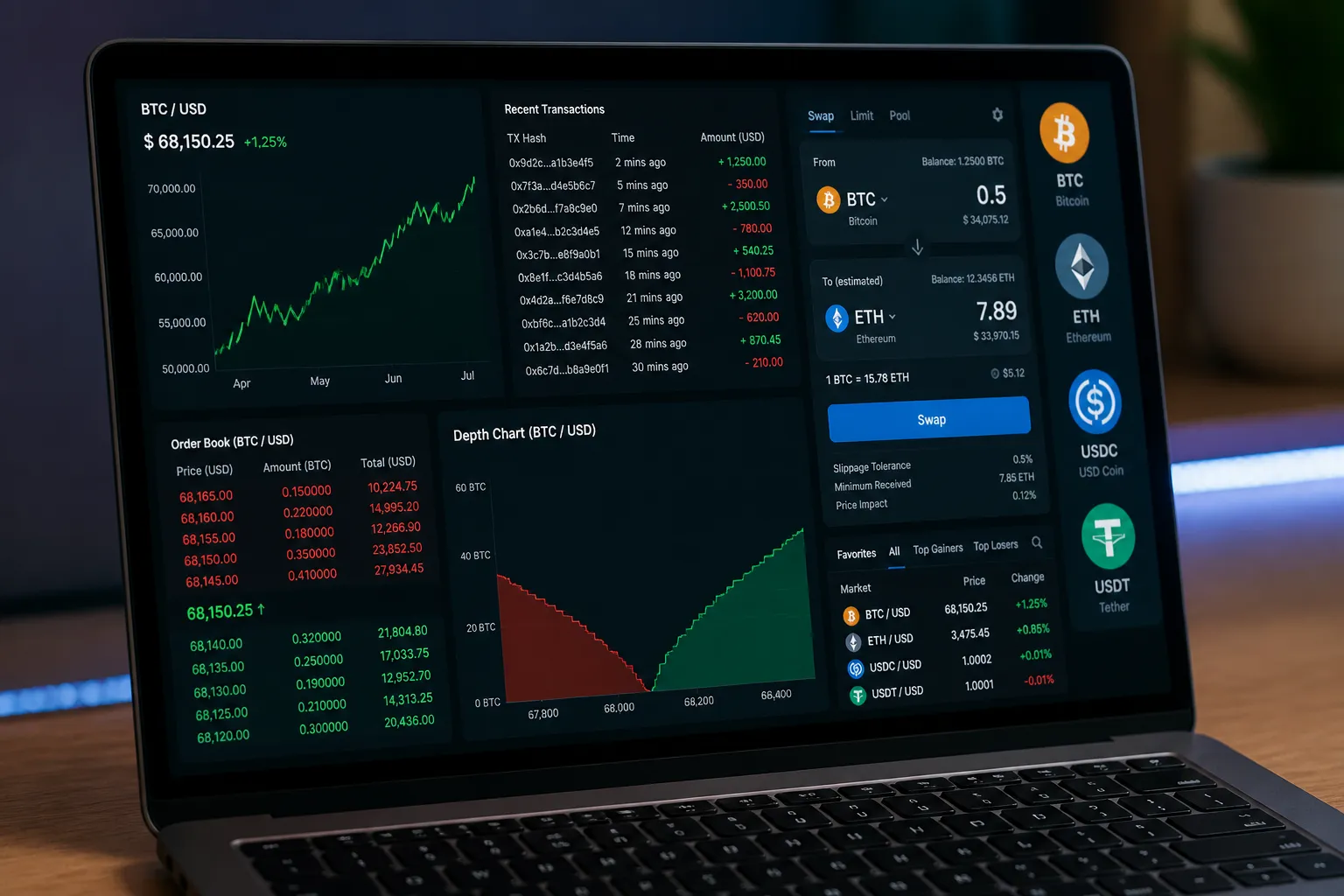
Automated market makers (AMMs) that supply liquidity through bonding curves and slippage cannot satisfy a per‑trade National Best Bid and Offer (NBBO) requirement. An AMM operates against a pool price that can drift, making it difficult to match the best off‑chain quote or to halt a swap when a better price appears on a conventional exchange. In other words, the rules make it nearly impossible for AMMs to comply with the best‑price execution mandate.
Alex Thorn, head of research at Galaxy Digital, called the rule “one of the largest structural barriers to DeFi‑based trading of tokenized equities.” He added that a broker routing to an on‑chain pool could use best‑execution duties to evaluate venues over time—a framework that “can accommodate an AMM.”
Tokenized stocks are blockchain‑based representations of company shares. Advocates argue they could deliver 24/7 trading, fractional ownership, faster settlement, and broader international access. Christopher Perkins, chief executive of 250 Digital Asset Management, said that rescinding Rule 611 would be “a whole new ballgame” for DeFi and that incumbents would be “not happy.”
The proposal is part of a wider review of Reg NMS. Chairman Paul Atkins has described the change as an overdue simplification that could cut costs and spur competition. Commissioner Hester Peirce has previously floated an innovation exemption that would allow limited experimentation with tokenized securities through AMMs, potentially with volume limits and whitelisting.
SIFMA, the trade group representing broker‑dealers and investment banks, welcomed the review but cautioned that the market structure is “made up of many interconnected pieces.” The group urged the SEC to study how any changes would affect investors, execution quality, transparency, and the development of overnight trading and tokenized securities.
Even if Rule 611 and Rule 610(e) are rescinded, tokenized stocks would still face other regulatory hurdles. Firms would need to address registration, settlement, corporate actions, shareholder rights, and the nature of the token—whether it is a direct share, custodial claim, depositary receipt, derivative, or synthetic instrument. The proposal does not legalize tokenized equities; it merely removes one market‑structure obstacle.
The public comment period for the proposal runs until September 12, 2026. During that time, market participants, regulators, and the public can submit views on the potential impact of removing the trade‑through and locked‑quote rules.
In short, the SEC’s proposal to rescind Rule 611 and Rule 610(e) could remove a key barrier for tokenized equity trading on blockchain networks. It would shift the focus from per‑trade price protection to broker best‑execution duties. Yet tokenized stocks would still need to resolve registration, settlement, and investor‑rights questions before they can be traded in the U.S. market.
Rule 611 forces every order to be executed at the best available price across all protected venues, while Rule 610(e) bans locked and crossed quotations. Together they have shaped how brokers route orders and how traditional exchanges display quotes for decades. For the burgeoning world of blockchain‑based shares, however, the rules represent a structural bottleneck.
Automated market makers (AMMs) that supply liquidity through bonding curves and slippage cannot satisfy a per‑trade National Best Bid and Offer (NBBO) requirement. An AMM operates against a pool price that can drift, making it difficult to match the best off‑chain quote or to halt a swap when a better price appears on a conventional exchange. In other words, the rules make it nearly impossible for AMMs to comply with the best‑price execution mandate.
Alex Thorn, head of research at Galaxy Digital, called the rule “one of the largest structural barriers to DeFi‑based trading of tokenized equities.” He added that a broker routing to an on‑chain pool could use best‑execution duties to evaluate venues over time—a framework that “can accommodate an AMM.”
Tokenized stocks are blockchain‑based representations of company shares. Advocates argue they could deliver 24/7 trading, fractional ownership, faster settlement, and broader international access. Christopher Perkins, chief executive of 250 Digital Asset Management, said that rescinding Rule 611 would be “a whole new ballgame” for DeFi and that incumbents would be “not happy.”
The proposal is part of a wider review of Reg NMS. Chairman Paul Atkins has described the change as an overdue simplification that could cut costs and spur competition. Commissioner Hester Peirce has previously floated an innovation exemption that would allow limited experimentation with tokenized securities through AMMs, potentially with volume limits and whitelisting.
SIFMA, the trade group representing broker‑dealers and investment banks, welcomed the review but cautioned that the market structure is “made up of many interconnected pieces.” The group urged the SEC to study how any changes would affect investors, execution quality, transparency, and the development of overnight trading and tokenized securities.
Even if Rule 611 and Rule 610(e) are rescinded, tokenized stocks would still face other regulatory hurdles. Firms would need to address registration, settlement, corporate actions, shareholder rights, and the nature of the token—whether it is a direct share, custodial claim, depositary receipt, derivative, or synthetic instrument. The proposal does not legalize tokenized equities; it merely removes one market‑structure obstacle.
The public comment period for the proposal runs until September 12, 2026. During that time, market participants, regulators, and the public can submit views on the potential impact of removing the trade‑through and locked‑quote rules.
In short, the SEC’s proposal to rescind Rule 611 and Rule 610(e) could remove a key barrier for tokenized equity trading on blockchain networks. It would shift the focus from per‑trade price protection to broker best‑execution duties. Yet tokenized stocks would still need to resolve registration, settlement, and investor‑rights questions before they can be traded in the U.S. market.