Blab Crypto
Embedded Swap APIs Drive Growth for Crypto Wallets and Platforms in 2026
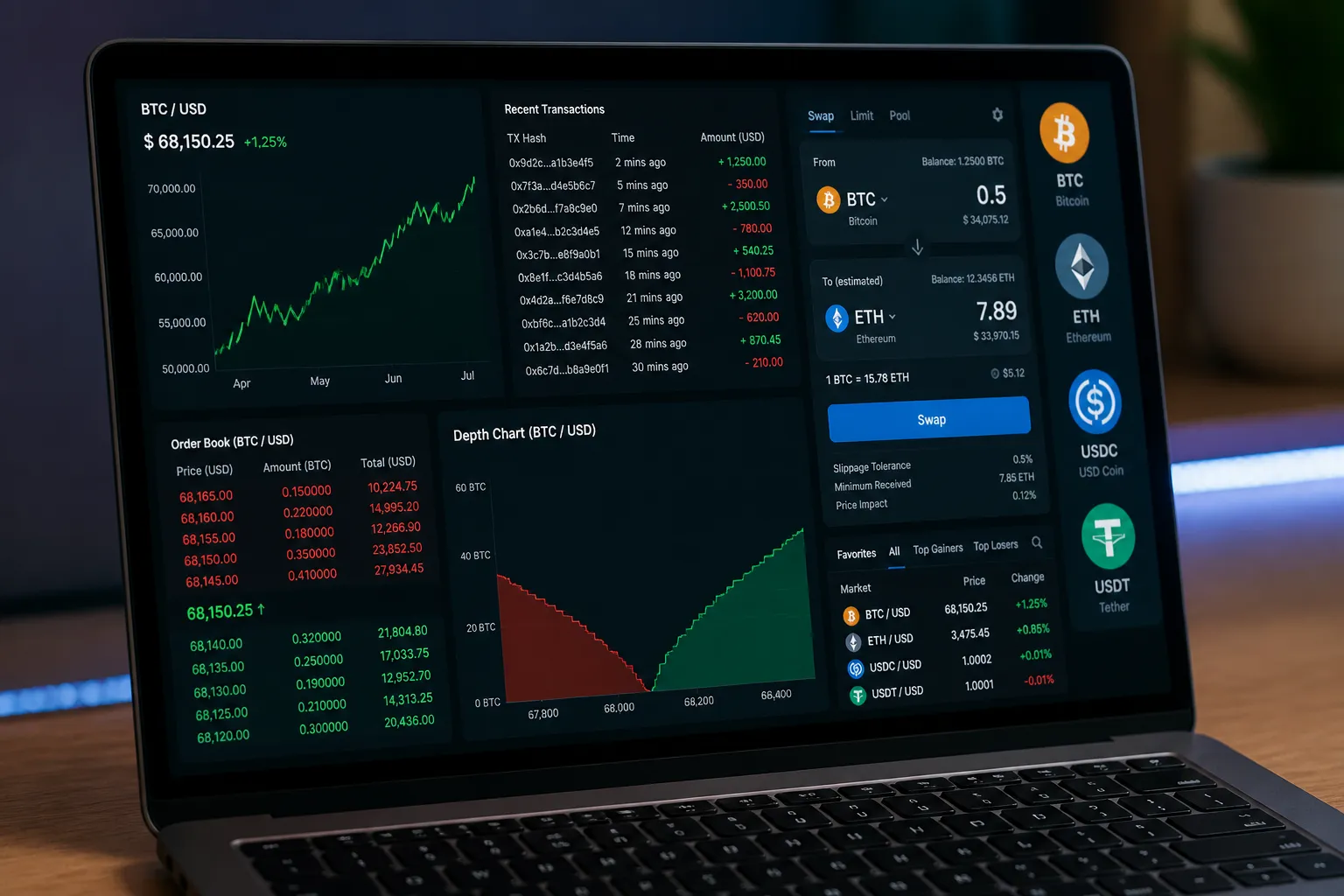
In 2026, an expanding cohort of wallets, fintech apps, and cross‑chain platforms are embracing embedded swap infrastructure to widen asset coverage, accelerate execution, and unlock new revenue streams—without the burden of running an exchange.
Embedded swap APIs let a product tap into multiple liquidity sources while preserving a seamless user experience. The outcome is a smoother transition from wallet to trade, higher success rates, and a built‑in monetization channel. A handful of high‑profile integrations underscore the trend.
Cross‑chain aggregators lead the charge. Rubic, which routes trades across more than 340 DEXs and bridges on 70+ networks, incorporated the ChangeNOW Crypto Exchange API to support non‑EVM assets such as Bitcoin, Monero, and Cardano. The addition delivered instant swaps on those chains, boosted success rates on cross‑chain routes, and lifted volume on high‑demand pairs.
Warden, an AI‑driven trading interface that had relied solely on Solana liquidity, added the Uniswap Trading API. Within three weeks, the platform executed over 650,000 swaps across 14 chains and served more than 500,000 users.
Exchange aggregators are also turning to swap APIs to cut friction. An anonymous aggregator that routed orders across hundreds of venues discovered that users abandoned the platform at the wallet‑connection step. By replacing that step with a deposit‑and‑receive flow powered by the ChangeNOW API, the aggregator lowered abandonment and opened the service to users who prefer to keep custody of their assets.
Protocols and payment services are using embedded swaps to simplify onboarding. Tonbankcard, a TON‑based protocol that structures accounts as NFTs, integrated the ChangeNOW Widget to allow users to fund accounts with assets from other chains. The change cut the steps required to fund an account by 50% and enabled fiat and crypto on‑ramps. The same integration also created a revenue share of 0.4% of transaction volume, giving the protocol a predictable income stream.
Monetizing swap flows is a recurring theme. Interface, a social network and block explorer for Ethereum, adopted the 0x Protocol’s Swap API. Within 70 days the platform reached $3.5 million in social trading volume, with daily volume hitting $500,000. The revenue came directly from swap fees built into the 0x integration.
Super apps and institutional wallets are following suit. xPortal, an all‑in‑one crypto super app, integrated ChangeNOW into its routing engine. During a zero‑deposit‑fee promotion, ChangeNOW’s routes won frequently, improving pricing and conversion. Anchorage Digital’s institutional self‑custody wallet, Porto, added the Uniswap Trading API to give clients on‑chain liquidity across more than 14 blockchains.
Wallets that need to scale are also turning to swap APIs. Bitcoin.com Wallet, which had been limited by a single swap provider, added ChangeNOW as a complementary partner. The move improved service stability by 10%, processing speeds by up to 18%, and reduced the time to add new assets by 40%. The changes drove a 20–25% increase in user activity.
Self‑custody wallets that want to keep private‑key control are adopting swap APIs as well. Zelcore, a multi‑chain wallet that expanded to over 70 blockchains, integrated the ChangeNOW API in 2021. The integration brought swaps inside the wallet without requiring a custodial layer or KYC. Five years later, ChangeNOW remains the most‑used route in Zelcore’s aggregated backend. Ledger, a hardware wallet brand, added the Uniswap Trading API to its software, giving users permissionless on‑chain swaps while preserving Ledger’s hardware‑backed security.
ChangeNOW also offers a Fast‑Track Program that provides early‑stage wallets with free integration support, revenue attribution, and marketing exposure. The program aims to help new products launch with swap functionality from day one.
Embedded swap APIs are proving to be a flexible solution that can be tailored to a product’s specific needs—whether that is expanding coverage, improving execution, simplifying onboarding, or generating revenue. The pattern is clear: start from the end goal, choose the API that matches that goal, and integrate.
Embedded swap APIs let a product tap into multiple liquidity sources while preserving a seamless user experience. The outcome is a smoother transition from wallet to trade, higher success rates, and a built‑in monetization channel. A handful of high‑profile integrations underscore the trend.
Cross‑chain aggregators lead the charge. Rubic, which routes trades across more than 340 DEXs and bridges on 70+ networks, incorporated the ChangeNOW Crypto Exchange API to support non‑EVM assets such as Bitcoin, Monero, and Cardano. The addition delivered instant swaps on those chains, boosted success rates on cross‑chain routes, and lifted volume on high‑demand pairs.
Warden, an AI‑driven trading interface that had relied solely on Solana liquidity, added the Uniswap Trading API. Within three weeks, the platform executed over 650,000 swaps across 14 chains and served more than 500,000 users.
Exchange aggregators are also turning to swap APIs to cut friction. An anonymous aggregator that routed orders across hundreds of venues discovered that users abandoned the platform at the wallet‑connection step. By replacing that step with a deposit‑and‑receive flow powered by the ChangeNOW API, the aggregator lowered abandonment and opened the service to users who prefer to keep custody of their assets.
Protocols and payment services are using embedded swaps to simplify onboarding. Tonbankcard, a TON‑based protocol that structures accounts as NFTs, integrated the ChangeNOW Widget to allow users to fund accounts with assets from other chains. The change cut the steps required to fund an account by 50% and enabled fiat and crypto on‑ramps. The same integration also created a revenue share of 0.4% of transaction volume, giving the protocol a predictable income stream.
Monetizing swap flows is a recurring theme. Interface, a social network and block explorer for Ethereum, adopted the 0x Protocol’s Swap API. Within 70 days the platform reached $3.5 million in social trading volume, with daily volume hitting $500,000. The revenue came directly from swap fees built into the 0x integration.
Super apps and institutional wallets are following suit. xPortal, an all‑in‑one crypto super app, integrated ChangeNOW into its routing engine. During a zero‑deposit‑fee promotion, ChangeNOW’s routes won frequently, improving pricing and conversion. Anchorage Digital’s institutional self‑custody wallet, Porto, added the Uniswap Trading API to give clients on‑chain liquidity across more than 14 blockchains.
Wallets that need to scale are also turning to swap APIs. Bitcoin.com Wallet, which had been limited by a single swap provider, added ChangeNOW as a complementary partner. The move improved service stability by 10%, processing speeds by up to 18%, and reduced the time to add new assets by 40%. The changes drove a 20–25% increase in user activity.
Self‑custody wallets that want to keep private‑key control are adopting swap APIs as well. Zelcore, a multi‑chain wallet that expanded to over 70 blockchains, integrated the ChangeNOW API in 2021. The integration brought swaps inside the wallet without requiring a custodial layer or KYC. Five years later, ChangeNOW remains the most‑used route in Zelcore’s aggregated backend. Ledger, a hardware wallet brand, added the Uniswap Trading API to its software, giving users permissionless on‑chain swaps while preserving Ledger’s hardware‑backed security.
ChangeNOW also offers a Fast‑Track Program that provides early‑stage wallets with free integration support, revenue attribution, and marketing exposure. The program aims to help new products launch with swap functionality from day one.
Embedded swap APIs are proving to be a flexible solution that can be tailored to a product’s specific needs—whether that is expanding coverage, improving execution, simplifying onboarding, or generating revenue. The pattern is clear: start from the end goal, choose the API that matches that goal, and integrate.