Blab Crypto
Anchorage Digital Adds Custody for Tokenized Mexican CETES on Stellar
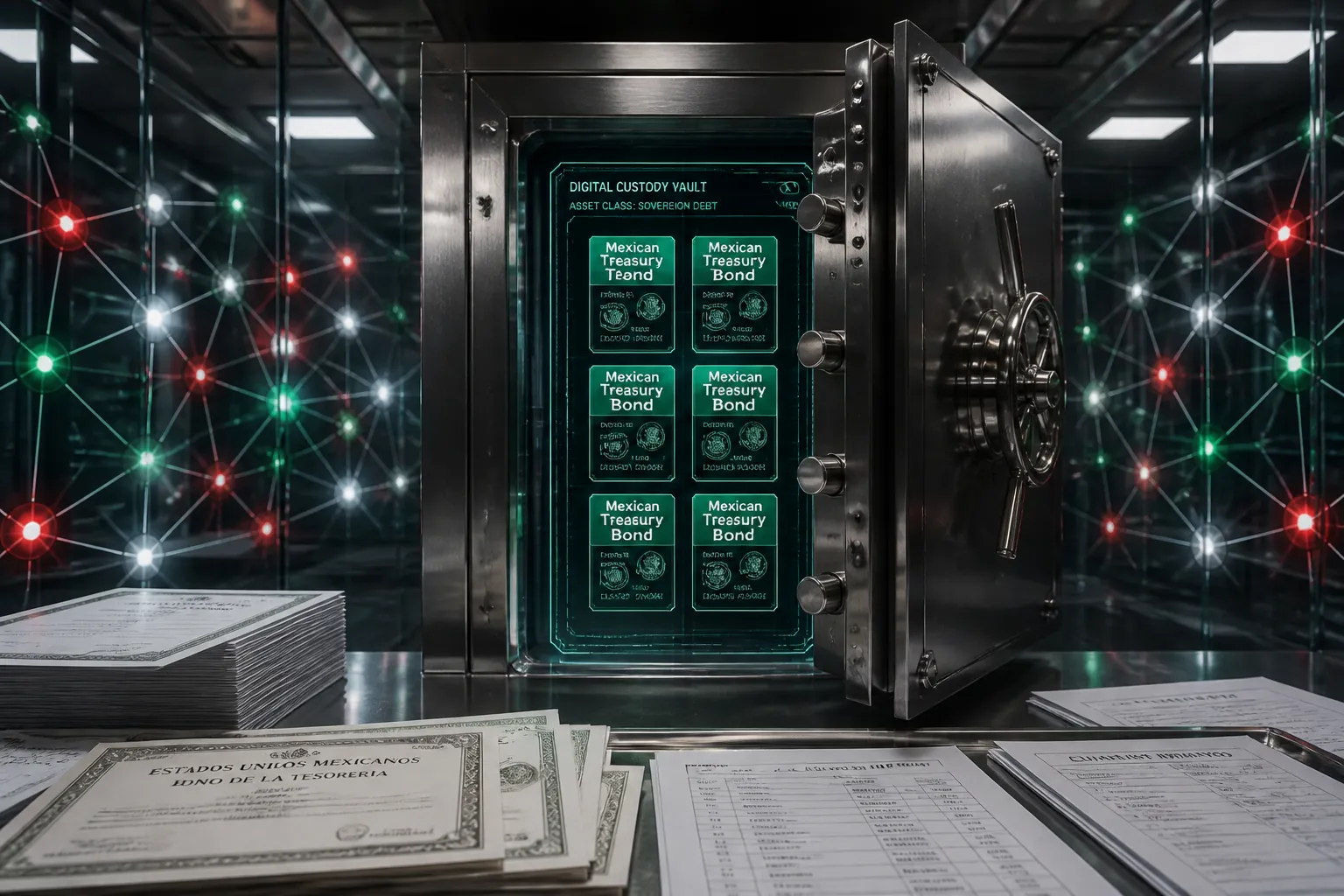
Anchorage Digital, the U.S. crypto‑bank that earned a federal charter from the Office of the Comptroller of the Currency, has announced that it will now offer regulated custody for CETES—tokenized Mexican federal treasury certificates—on the Stellar network.
CETES are short‑term debt instruments issued by the Mexican government and rank among the country’s most actively traded securities. Etherfuse, a Mexico‑based tokenisation platform, wraps each certificate on Stellar, turning the underlying bond into a digital token that mirrors the real‑world asset. Stellar handles settlement and transfer, while Anchorage provides the custody layer that institutional investors need to hold the token in a compliant environment.
The new partnership follows the standard three‑party architecture that underpins most tokenised real‑world asset projects: an issuer tokenises the financial instrument, a public or permissioned blockchain delivers the settlement rail, and a regulated custodian holds the token on behalf of end investors. Custody is often the bottleneck, because it requires the deepest regulatory footing.
Anchorage’s custody service is backed by its OCC charter, a Monetary Authority of Singapore licence, and a New York BitLicense—credentials that allow the bank to serve investment advisers and fund managers in multiple jurisdictions. This is crucial for CETES, which may be purchased by investors in the U.S., Europe, or Asia.
The announcement follows Anchorage’s recent partnership with Grupo Salinas for cross‑border settlement, a move the company frames as part of a sustained focus on Mexico and Latin America.
“Adding CETES broadens the range of global assets institutions can hold on a single regulated platform,” said Nathan McCauley, co‑founder and chief executive of Anchorage Digital. “Tokenised real‑world assets are becoming a core component of institutional digital finance, and we are reinforcing our commitment to Mexico and the broader Latin American market.”
David Taylor, co‑founder and chief executive of Etherfuse, highlighted the access argument: tokenisation can widen the pool of participants in established government debt markets by lowering the operational friction of cross‑border holding.
Tokenised sovereign debt has attracted growing institutional interest worldwide. Franklin Templeton and BlackRock have launched tokenised fund products in the U.S., and several European asset managers have explored on‑chain versions of sovereign debt. The Mexican CETES market is a natural candidate for tokenisation given the instrument’s liquidity and name recognition, but the cross‑border custody and settlement infrastructure for emerging‑market sovereign debt remains thin compared to U.S. Treasuries or EU government bonds.
From a regulatory perspective, the product sits at the intersection of several frameworks. In the U.S., the OCC’s stance on crypto‑bank activities will shape how Anchorage can market custody services to registered investment advisers and fund managers. In the EU, MiCA does not directly govern tokenised securities, which remain under MiFID II and the EU DLT Pilot Regime. Institutions considering CETES exposure will also need to weigh the Mexican peso currency risk embedded in the underlying instrument, a risk that tokenisation does not eliminate.
Raja Chakravorti, chief business officer of the Stellar Development Foundation, described the arrangement as an example of blockchain improving access to global markets. The commercial test will be whether institutional demand for tokenised Mexican sovereign debt is sufficient to justify the compliance and operational overhead of onboarding a new asset class.
Anchorage’s move adds a new asset class to the suite of tokenised real‑world assets it holds on behalf of institutional clients. It also signals a broader trend of crypto‑banks extending custody services to emerging‑market sovereign debt, potentially increasing liquidity and participation in those markets.
The partnership remains in its early stages; market uptake, regulatory clarifications, and the performance of the underlying CETES instruments will determine the long‑term viability of this tokenised offering.
CETES are short‑term debt instruments issued by the Mexican government and rank among the country’s most actively traded securities. Etherfuse, a Mexico‑based tokenisation platform, wraps each certificate on Stellar, turning the underlying bond into a digital token that mirrors the real‑world asset. Stellar handles settlement and transfer, while Anchorage provides the custody layer that institutional investors need to hold the token in a compliant environment.
The new partnership follows the standard three‑party architecture that underpins most tokenised real‑world asset projects: an issuer tokenises the financial instrument, a public or permissioned blockchain delivers the settlement rail, and a regulated custodian holds the token on behalf of end investors. Custody is often the bottleneck, because it requires the deepest regulatory footing.
Anchorage’s custody service is backed by its OCC charter, a Monetary Authority of Singapore licence, and a New York BitLicense—credentials that allow the bank to serve investment advisers and fund managers in multiple jurisdictions. This is crucial for CETES, which may be purchased by investors in the U.S., Europe, or Asia.
The announcement follows Anchorage’s recent partnership with Grupo Salinas for cross‑border settlement, a move the company frames as part of a sustained focus on Mexico and Latin America.
“Adding CETES broadens the range of global assets institutions can hold on a single regulated platform,” said Nathan McCauley, co‑founder and chief executive of Anchorage Digital. “Tokenised real‑world assets are becoming a core component of institutional digital finance, and we are reinforcing our commitment to Mexico and the broader Latin American market.”
David Taylor, co‑founder and chief executive of Etherfuse, highlighted the access argument: tokenisation can widen the pool of participants in established government debt markets by lowering the operational friction of cross‑border holding.
Tokenised sovereign debt has attracted growing institutional interest worldwide. Franklin Templeton and BlackRock have launched tokenised fund products in the U.S., and several European asset managers have explored on‑chain versions of sovereign debt. The Mexican CETES market is a natural candidate for tokenisation given the instrument’s liquidity and name recognition, but the cross‑border custody and settlement infrastructure for emerging‑market sovereign debt remains thin compared to U.S. Treasuries or EU government bonds.
From a regulatory perspective, the product sits at the intersection of several frameworks. In the U.S., the OCC’s stance on crypto‑bank activities will shape how Anchorage can market custody services to registered investment advisers and fund managers. In the EU, MiCA does not directly govern tokenised securities, which remain under MiFID II and the EU DLT Pilot Regime. Institutions considering CETES exposure will also need to weigh the Mexican peso currency risk embedded in the underlying instrument, a risk that tokenisation does not eliminate.
Raja Chakravorti, chief business officer of the Stellar Development Foundation, described the arrangement as an example of blockchain improving access to global markets. The commercial test will be whether institutional demand for tokenised Mexican sovereign debt is sufficient to justify the compliance and operational overhead of onboarding a new asset class.
Anchorage’s move adds a new asset class to the suite of tokenised real‑world assets it holds on behalf of institutional clients. It also signals a broader trend of crypto‑banks extending custody services to emerging‑market sovereign debt, potentially increasing liquidity and participation in those markets.
The partnership remains in its early stages; market uptake, regulatory clarifications, and the performance of the underlying CETES instruments will determine the long‑term viability of this tokenised offering.