Blab Crypto
Bitcoin Climbs to Two-Week High as U.S.-Iran Strait of Hormuz Deal Boosts Market Confidence
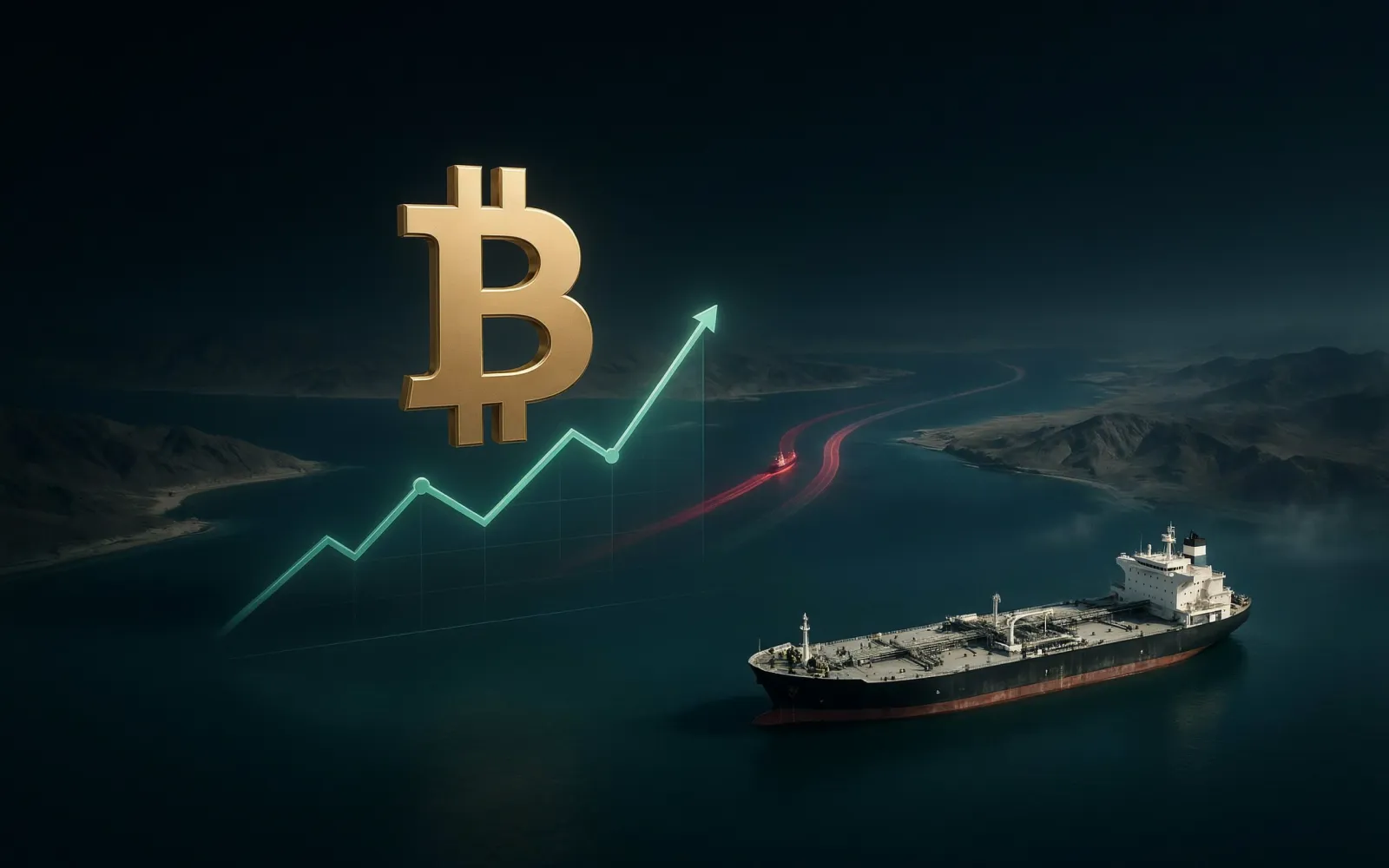
Bitcoin closed the day near a two‑week high, trading at roughly $65,844, a 2.1 % rise from the previous 24‑hour period. The price later dipped to $65,548.73, but the overall trend remained upward. The surge followed a U.S.–Iran agreement to reopen the Strait of Hormuz, a critical maritime passage for global oil and natural‑gas shipments.
The Strait of Hormuz is the sole sea route from the Persian Gulf to the open ocean. In 2025, about 20 million barrels of crude oil and 25 % of seaborne oil trade passed through the strait annually, underscoring its strategic importance for Europe and Asia. During the 2026 Iran war, the waterway was largely closed, prompting fears of supply disruptions. The June 14, 2026 memorandum of understanding, mediated by Pakistan and Qatar, lifted the U.S. naval blockade and cleared the strait of mines, allowing commercial vessels to resume transit.
Bitcoin’s price movement is often sensitive to geopolitical events that affect global economic sentiment. The reopening of the strait is seen as a sign of reduced regional tension, which can lift risk‑averse sentiment and encourage investment in alternative assets such as cryptocurrencies.
Bitcoin’s market capitalization was reported at approximately $3,365.89 million on June 15, 2026. The cryptocurrency remains the dominant asset in the digital‑asset market, accounting for a majority of the total market cap, which reached $2.65 trillion in May 2026.
The price rally also lifted the broader crypto‑stock sector. Shares of MicroStrategy (MSTR), a company that holds a large Bitcoin position, led gains among peers. Since 2020, MicroStrategy’s holdings have made its stock a proxy for Bitcoin exposure, and its performance often mirrors the cryptocurrency’s price trend.
Valuation metrics for Bitcoin differ from traditional equities. According to the source data, Bitcoin’s GF Score™ is 0/100, indicating that the data required for a comprehensive evaluation is unavailable. No P/E ratio or other conventional valuation figures are published for the asset. The lack of insider buying or selling activity in the last 12 months suggests that corporate insiders are not actively trading the token.
The Bitcoin protocol operates on a decentralized network of nodes that maintain a public ledger of transactions. Consensus is achieved through proof‑of‑work mining, which consumes significant electricity. Recent studies indicate that about 52 % of miners use sustainable energy sources, though the environmental impact remains a point of debate.
The June 15 price level is consistent with Bitcoin’s historical volatility. For context, the cryptocurrency has experienced rapid price swings since its launch in 2009, and its market cap has grown from negligible levels to billions of dollars. The current price reflects both the asset’s intrinsic value as a digital store of value and the broader macro‑economic environment.
In summary, Bitcoin’s climb to a two‑week high on June 15, 2026, is linked to the geopolitical resolution that reopened the Strait of Hormuz. The development has eased market concerns about regional instability, supporting a rally in Bitcoin and related stocks such as MicroStrategy. Bitcoin’s market cap remains over $3.3 billion, and its price continues to be influenced by global economic and political events.
The cryptocurrency market will likely monitor the durability of the U.S.–Iran agreement and any further geopolitical developments that could affect oil supply chains. Investors and analysts will also watch for updates on Bitcoin’s network activity, regulatory announcements, and institutional adoption trends that may shape future price movements.
The Strait of Hormuz is the sole sea route from the Persian Gulf to the open ocean. In 2025, about 20 million barrels of crude oil and 25 % of seaborne oil trade passed through the strait annually, underscoring its strategic importance for Europe and Asia. During the 2026 Iran war, the waterway was largely closed, prompting fears of supply disruptions. The June 14, 2026 memorandum of understanding, mediated by Pakistan and Qatar, lifted the U.S. naval blockade and cleared the strait of mines, allowing commercial vessels to resume transit.
Bitcoin’s price movement is often sensitive to geopolitical events that affect global economic sentiment. The reopening of the strait is seen as a sign of reduced regional tension, which can lift risk‑averse sentiment and encourage investment in alternative assets such as cryptocurrencies.
Bitcoin’s market capitalization was reported at approximately $3,365.89 million on June 15, 2026. The cryptocurrency remains the dominant asset in the digital‑asset market, accounting for a majority of the total market cap, which reached $2.65 trillion in May 2026.
The price rally also lifted the broader crypto‑stock sector. Shares of MicroStrategy (MSTR), a company that holds a large Bitcoin position, led gains among peers. Since 2020, MicroStrategy’s holdings have made its stock a proxy for Bitcoin exposure, and its performance often mirrors the cryptocurrency’s price trend.
Valuation metrics for Bitcoin differ from traditional equities. According to the source data, Bitcoin’s GF Score™ is 0/100, indicating that the data required for a comprehensive evaluation is unavailable. No P/E ratio or other conventional valuation figures are published for the asset. The lack of insider buying or selling activity in the last 12 months suggests that corporate insiders are not actively trading the token.
The Bitcoin protocol operates on a decentralized network of nodes that maintain a public ledger of transactions. Consensus is achieved through proof‑of‑work mining, which consumes significant electricity. Recent studies indicate that about 52 % of miners use sustainable energy sources, though the environmental impact remains a point of debate.
The June 15 price level is consistent with Bitcoin’s historical volatility. For context, the cryptocurrency has experienced rapid price swings since its launch in 2009, and its market cap has grown from negligible levels to billions of dollars. The current price reflects both the asset’s intrinsic value as a digital store of value and the broader macro‑economic environment.
In summary, Bitcoin’s climb to a two‑week high on June 15, 2026, is linked to the geopolitical resolution that reopened the Strait of Hormuz. The development has eased market concerns about regional instability, supporting a rally in Bitcoin and related stocks such as MicroStrategy. Bitcoin’s market cap remains over $3.3 billion, and its price continues to be influenced by global economic and political events.
The cryptocurrency market will likely monitor the durability of the U.S.–Iran agreement and any further geopolitical developments that could affect oil supply chains. Investors and analysts will also watch for updates on Bitcoin’s network activity, regulatory announcements, and institutional adoption trends that may shape future price movements.