Blab Crypto
Pennsylvania Introduces Bill to Regulate Crypto ATMs and Protect Vulnerable Users
The Pennsylvania House has introduced House Bill 2643, a regulatory framework aimed at curbing fraud at cryptocurrency automated teller machines (ATMs). The bill, sponsored by Representatives Joe Ciresi and Liz Hanbidge, would require operators of virtual‑currency kiosks to obtain a license from the Department of Banking and Securities and to meet a set of consumer‑protection standards.
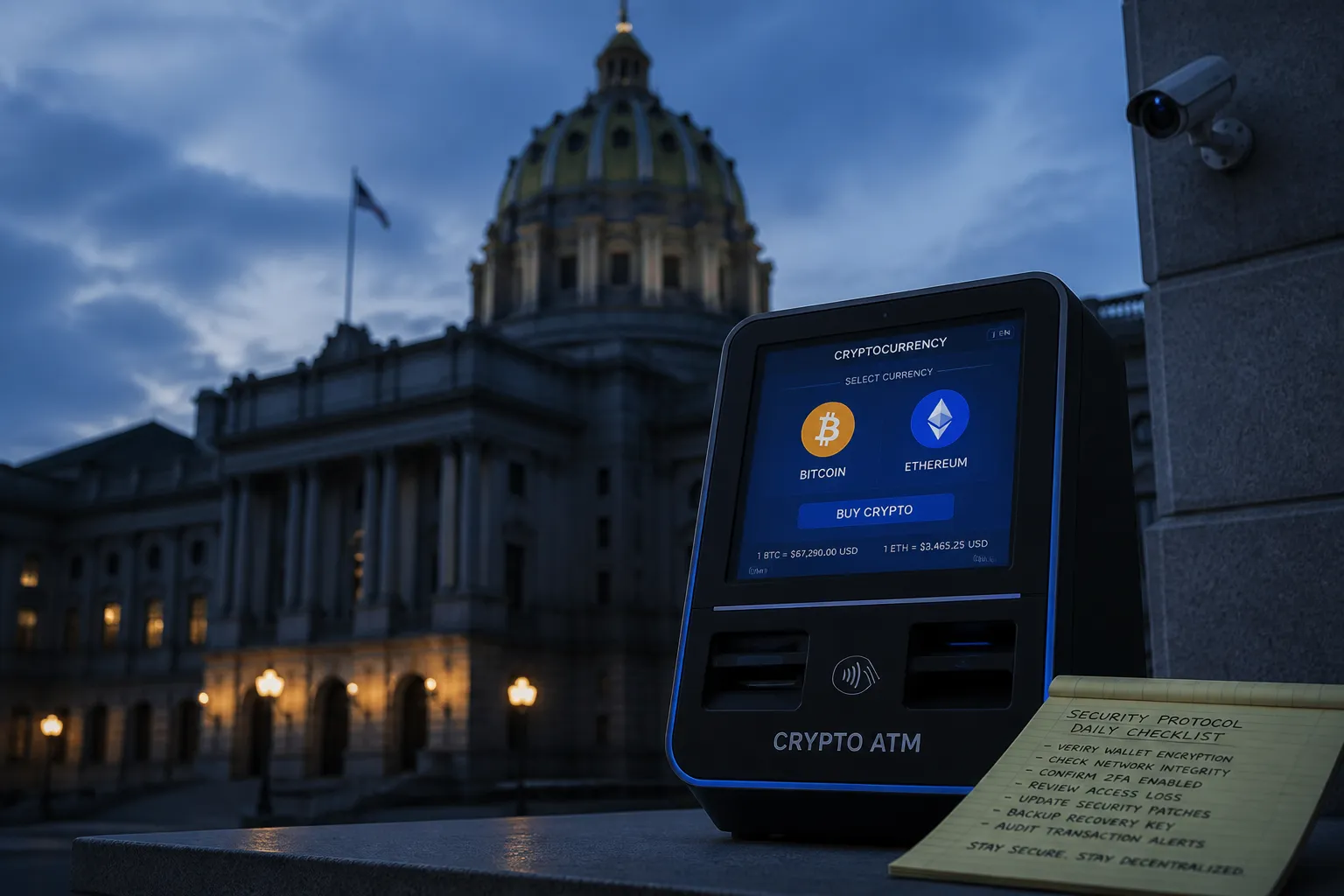
Crypto ATMs have become common in retail locations such as gas stations, convenience stores and grocery outlets, allowing customers to exchange cash for Bitcoin, Ethereum and other tokens. While the convenience of converting physical money into digital assets is appealing, the lack of oversight has made these kiosks a target for scammers. According to reports, seniors and other vulnerable individuals are often directed to deposit cash without fully understanding the transaction, and many users face high fees and limited recourse.
House Bill 2643 would establish daily transaction limits, cap the fees that operators can charge, and mandate identity verification for each customer. Operators would also be required to display scam warnings, provide live customer support, and issue detailed receipts for every transaction. The legislation would make refunds mandatory for victims who report incidents to law enforcement within 60 days, and would give new users a 72‑hour window to cancel a transaction.
The bill follows FBI data that cites more than $333 million in reported crypto‑ATM losses for 2025, with seniors accounting for 85 % of those losses. The data underscores the urgency of regulatory measures. The proposed framework does not seek to ban crypto ATMs; instead, it aims to impose safeguards that would make the technology safer for consumers.
The Department of Banking and Securities would be responsible for issuing licenses and monitoring compliance. Operators would need to maintain records of kiosk locations and transaction activity, enabling authorities to trace suspicious behavior. The bill also calls for periodic audits of operators to ensure adherence to the new rules.
The legislation is currently in the 2025‑2026 regular session of the Pennsylvania House. While the bill has not yet passed, it has attracted bipartisan support from lawmakers concerned about consumer protection. The initiative follows similar efforts in other states; for example, Delaware advanced a bill to ban crypto ATMs entirely.
If enacted, H.B. 2643 would be the first state‑wide regulatory scheme for virtual‑currency kiosks in the United States. The framework could serve as a model for other jurisdictions seeking to balance the benefits of crypto ATMs with the need to protect consumers from fraud.
The bill’s sponsors emphasize that the regulations are designed to preserve the availability of crypto ATMs while adding transparency and accountability. By requiring licensing, transaction limits, fee caps, identity checks, and refund provisions, the legislation aims to reduce the risk of scams and provide a clear path for victims to recover lost funds.
The current status of the bill remains pending. Lawmakers will need to navigate the legislative calendar, and the Department of Banking and Securities will prepare the licensing infrastructure. The outcome of H.B. 2643 will determine whether Pennsylvania becomes the first state to impose comprehensive oversight on crypto ATMs.
Crypto ATMs have become common in retail locations such as gas stations, convenience stores and grocery outlets, allowing customers to exchange cash for Bitcoin, Ethereum and other tokens. While the convenience of converting physical money into digital assets is appealing, the lack of oversight has made these kiosks a target for scammers. According to reports, seniors and other vulnerable individuals are often directed to deposit cash without fully understanding the transaction, and many users face high fees and limited recourse.
House Bill 2643 would establish daily transaction limits, cap the fees that operators can charge, and mandate identity verification for each customer. Operators would also be required to display scam warnings, provide live customer support, and issue detailed receipts for every transaction. The legislation would make refunds mandatory for victims who report incidents to law enforcement within 60 days, and would give new users a 72‑hour window to cancel a transaction.
The bill follows FBI data that cites more than $333 million in reported crypto‑ATM losses for 2025, with seniors accounting for 85 % of those losses. The data underscores the urgency of regulatory measures. The proposed framework does not seek to ban crypto ATMs; instead, it aims to impose safeguards that would make the technology safer for consumers.
The Department of Banking and Securities would be responsible for issuing licenses and monitoring compliance. Operators would need to maintain records of kiosk locations and transaction activity, enabling authorities to trace suspicious behavior. The bill also calls for periodic audits of operators to ensure adherence to the new rules.
The legislation is currently in the 2025‑2026 regular session of the Pennsylvania House. While the bill has not yet passed, it has attracted bipartisan support from lawmakers concerned about consumer protection. The initiative follows similar efforts in other states; for example, Delaware advanced a bill to ban crypto ATMs entirely.
If enacted, H.B. 2643 would be the first state‑wide regulatory scheme for virtual‑currency kiosks in the United States. The framework could serve as a model for other jurisdictions seeking to balance the benefits of crypto ATMs with the need to protect consumers from fraud.
The bill’s sponsors emphasize that the regulations are designed to preserve the availability of crypto ATMs while adding transparency and accountability. By requiring licensing, transaction limits, fee caps, identity checks, and refund provisions, the legislation aims to reduce the risk of scams and provide a clear path for victims to recover lost funds.
The current status of the bill remains pending. Lawmakers will need to navigate the legislative calendar, and the Department of Banking and Securities will prepare the licensing infrastructure. The outcome of H.B. 2643 will determine whether Pennsylvania becomes the first state to impose comprehensive oversight on crypto ATMs.







