Blab Crypto
Thailand Moves Toward Baht-Backed Stablecoin Amid Regional Digital-Currency Push
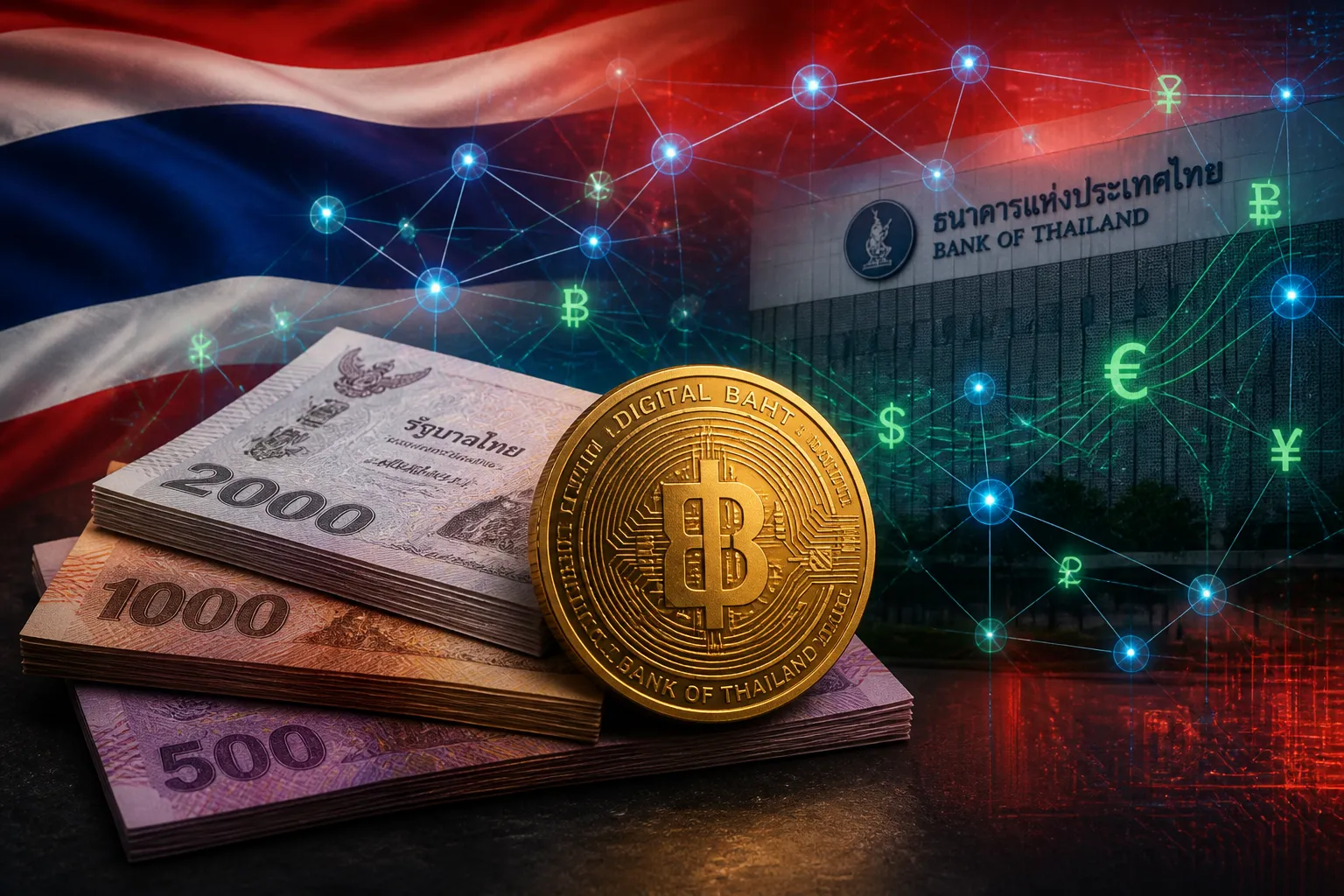
In a move that signals Thailand’s ambition to join the global wave of digital‑currency innovation, the Bank of Thailand (BoT) has announced plans to hold a public hearing on a proposed baht‑backed stablecoin before the end of 2026. Governor Vitai Ratanakorn framed the initiative as part of a broader push to modernise the country’s payment infrastructure and trim transaction costs for businesses and consumers alike.
The stablecoin would be issued on a strict 1:1 basis, meaning each token would be backed by an equivalent amount of Thai baht kept in reserve. Issuers would need a licence from the BoT and would operate under the central bank’s regulatory oversight. The reserves would be locked, preventing their reuse and ensuring the stablecoin does not inflate the money supply or create additional monetary pressure.
BoT’s roadmap starts with a sandbox phase that limits the stablecoin’s use to inter‑bank settlement. In a subsequent phase, the regulator will explore wider applications such as merchant payments and asset tokenisation. Working closely with the Securities and Exchange Commission, the BoT is crafting the operational framework and has already gathered substantial public feedback since the proposal’s unveiling. The consultation period is expected to run for roughly three months.
Alongside the stablecoin effort, the BoT has launched a Programmable Payment Project to test new payment technologies. Eight business operators were selected to pilot payment settlement and related financial innovations within the regulatory sandbox. As of April 2026, three participants—TrueMoney, Bitkub Blockchain Technology, and Om Platform—have advanced to the second phase of testing. These pilots employ programmable electronic tokens built on distributed ledger technology and smart contracts, enabling transactions to execute automatically once predefined conditions are met.
The asset‑tokenisation pilots use baht‑programmable payment as the settlement medium for transactions involving tokenised digital assets, including digital tickets, non‑fungible tokens, investment tokens, and utility tokens. The projects aim to improve settlement efficiency through atomic settlement, which completes payments and asset transfers simultaneously. A pilot for Purpose‑Bound Money (PBM) is being conducted on a limited basis for foreign tourists, allowing them to exchange digital assets for baht‑programmable payment and use the funds to pay for goods and services via QR codes at participating merchants.
Regional peers are also advancing stablecoin frameworks. In April 2026, the Hong Kong Monetary Authority granted licences to HSBC and Standard Chartered Bank to issue Hong Kong dollar‑referenced stablecoins under the Stablecoin Ordinance. Singapore’s Monetary Authority introduced a regulatory framework in August 2023 that requires stablecoin issuers to maintain value stability, capital and liquidity, redemption at par within five business days, and transparent reserve management.
The Bank of Korea is studying won‑backed stablecoins while lawmakers debate legislation. Some proposals would allow non‑bank issuers to enter the market, but regulators favour a conservative approach that requires majority ownership by banks.
At present, the BoT has not finalized the rules for the baht‑backed stablecoin. The central bank expects to release formal regulations between late 2026 and early 2027, and commercial banks may be able to issue the token once the framework is in place.
The stablecoin proposal and programmable payment pilots reflect Thailand’s strategy to build a utility‑driven digital‑asset system that aligns with global financial trends while maintaining strong regulatory oversight.
The stablecoin would be issued on a strict 1:1 basis, meaning each token would be backed by an equivalent amount of Thai baht kept in reserve. Issuers would need a licence from the BoT and would operate under the central bank’s regulatory oversight. The reserves would be locked, preventing their reuse and ensuring the stablecoin does not inflate the money supply or create additional monetary pressure.
BoT’s roadmap starts with a sandbox phase that limits the stablecoin’s use to inter‑bank settlement. In a subsequent phase, the regulator will explore wider applications such as merchant payments and asset tokenisation. Working closely with the Securities and Exchange Commission, the BoT is crafting the operational framework and has already gathered substantial public feedback since the proposal’s unveiling. The consultation period is expected to run for roughly three months.
Alongside the stablecoin effort, the BoT has launched a Programmable Payment Project to test new payment technologies. Eight business operators were selected to pilot payment settlement and related financial innovations within the regulatory sandbox. As of April 2026, three participants—TrueMoney, Bitkub Blockchain Technology, and Om Platform—have advanced to the second phase of testing. These pilots employ programmable electronic tokens built on distributed ledger technology and smart contracts, enabling transactions to execute automatically once predefined conditions are met.
The asset‑tokenisation pilots use baht‑programmable payment as the settlement medium for transactions involving tokenised digital assets, including digital tickets, non‑fungible tokens, investment tokens, and utility tokens. The projects aim to improve settlement efficiency through atomic settlement, which completes payments and asset transfers simultaneously. A pilot for Purpose‑Bound Money (PBM) is being conducted on a limited basis for foreign tourists, allowing them to exchange digital assets for baht‑programmable payment and use the funds to pay for goods and services via QR codes at participating merchants.
Regional peers are also advancing stablecoin frameworks. In April 2026, the Hong Kong Monetary Authority granted licences to HSBC and Standard Chartered Bank to issue Hong Kong dollar‑referenced stablecoins under the Stablecoin Ordinance. Singapore’s Monetary Authority introduced a regulatory framework in August 2023 that requires stablecoin issuers to maintain value stability, capital and liquidity, redemption at par within five business days, and transparent reserve management.
The Bank of Korea is studying won‑backed stablecoins while lawmakers debate legislation. Some proposals would allow non‑bank issuers to enter the market, but regulators favour a conservative approach that requires majority ownership by banks.
At present, the BoT has not finalized the rules for the baht‑backed stablecoin. The central bank expects to release formal regulations between late 2026 and early 2027, and commercial banks may be able to issue the token once the framework is in place.
The stablecoin proposal and programmable payment pilots reflect Thailand’s strategy to build a utility‑driven digital‑asset system that aligns with global financial trends while maintaining strong regulatory oversight.