Blab Crypto
Bitcoin Rises 1.6% to $63,700 After Jim Cramer Signals Quantum-Computing-Driven Sell-Off
Bitcoin finished August 4, 2026 at roughly $63,700, a 1.6 % lift from yesterday’s close. The rally followed CNBC host Jim Cramer’s public decision to liquidate his Bitcoin holdings amid concerns over quantum‑computing threats.
Cramer’s announcement came after a brief interview with IBM Chairman and CEO Arvind Krishna, who warned investors to become “paranoid” about crypto security within the next three to four years. Cramer did not disclose how much he owns or whether the sale has already been executed.
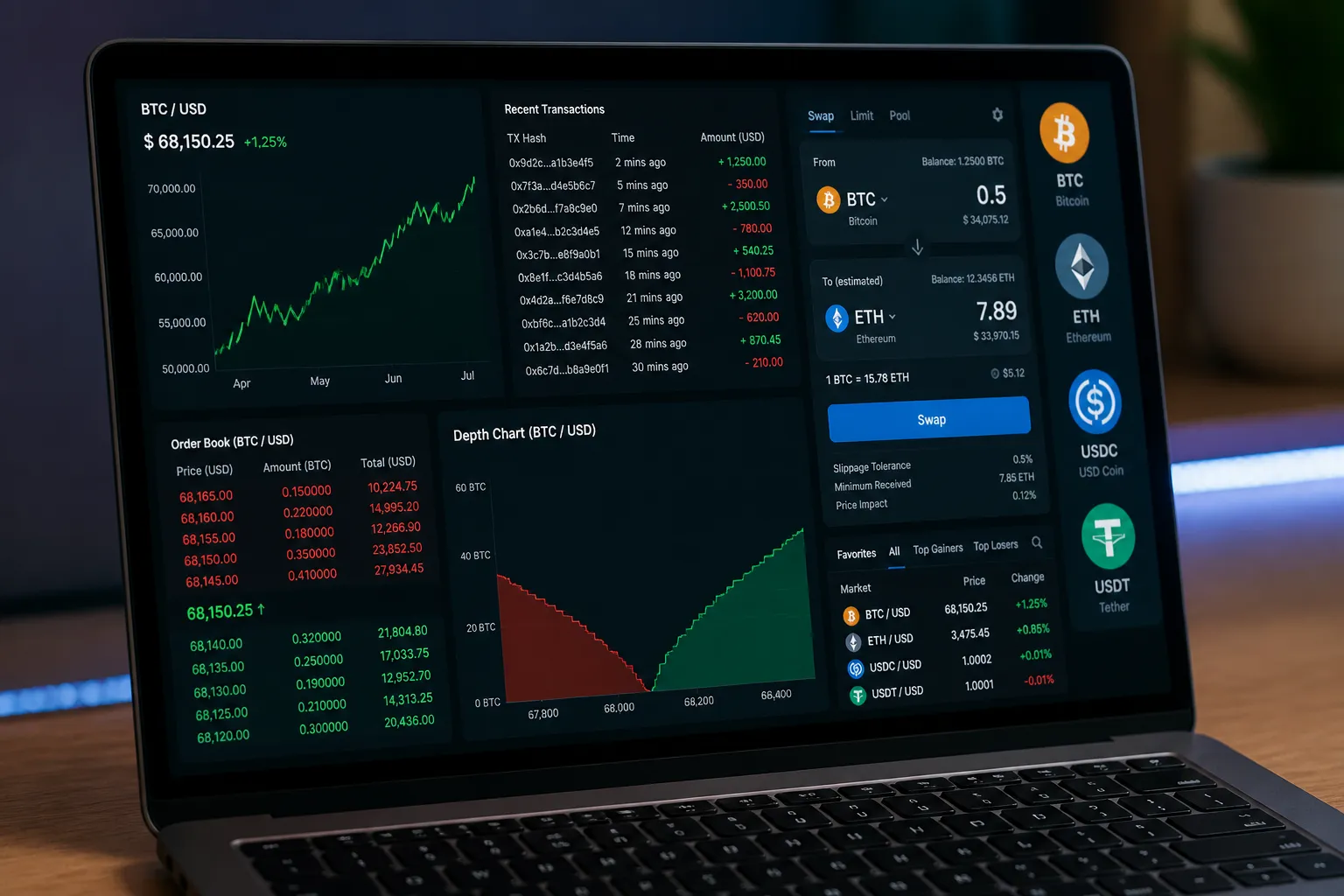
During the session, Bitcoin dipped to an intraday low near $62,387 before rebounding to a high of $64,117. The price later eased, leaving the asset about 1.6 % higher over the 24‑hour period. The move unfolded while spot‑market liquidity stayed weak, with daily volume around 5,950 BTC—modest compared with the June sell‑off.
The market reaction does not prove that traders ignored Cramer’s warning. Bitcoin also faced other headwinds, including a recent sale by crypto‑asset firm Strategy, miner distribution estimates, and a Coldcard security incident. Buyers, however, continued to hold the $60,000 support level that has guided trading since the June decline.
Technical indicators show Bitcoin consolidating after its sharp June drop. Support sits near $60,000, while resistance lies between $65,000 and $67,000. A sustained move above $67,000 would bolster the recovery narrative. Until then, the price remains range‑bound rather than in a confirmed uptrend.
The quantum‑computing threat that prompted Cramer’s comment is theoretical. IBM’s roadmap targets a fault‑tolerant system called Starling, slated for 2029. The company says Starling will use 200 logical qubits and perform 100 million quantum operations, but it has not claimed the machine could recover Bitcoin private keys.
Google Quantum AI tightened the risk estimate in March. Researchers said a future quantum computer could solve the elliptic‑curve problem used by many digital assets with fewer than 500,000 physical qubits under certain hardware assumptions. The estimate was about 20 times lower than earlier calculations. Google urged blockchains to adopt post‑quantum cryptography before such machines become available.
Glassnode’s May analysis classified 1.92 million BTC—about 9.6 % of the issued supply—as structurally exposed because the associated public keys are already visible. Another 4.12 million BTC fell into an operationally exposed category linked largely to address reuse and custody practices. Glassnode clarified that its study did not predict whether or when a practical quantum attack would become possible.
Separately, Lookonchain reported that a wallet holding 16,400 BTC (roughly $1.04 billion) transferred its full balance to a new address after seven months of inactivity. The wallet‑to‑wallet movement did not involve an exchange, so it does not confirm a sale.
Market depth remains a separate concern. The Kobeissi Letter, citing Kaiko data, said daily spot activity across 44 exchanges fell to about $15 billion, roughly 70 % below its January peak. The Kaiko dataset was not publicly available for review, so the figure should be treated as an estimate.
Social media users revived the “inverse Cramer” meme, treating his bearish calls as contrarian buy signals. While the meme has appeared in discussions, it is not a tested indicator and does not explain Bitcoin’s price movement on its own.
Bitcoin’s immediate test remains the $65,000 to $67,000 resistance band. A sustained close above that area, backed by stronger volume, would improve the short‑term structure. Failure to maintain the current recovery could bring attention back to $62,000 and then the key $60,000 support.
The longer‑term question is whether developers, exchanges, and custodians accelerate preparations before quantum computers become cryptographically relevant. Bitcoin companies have begun funding post‑quantum research, and BitGo recently introduced four wallet controls designed to measure and reduce public‑key exposure.
Cramer’s statement does not change Bitcoin’s current security, and no practical quantum computer has broken its cryptography. The next verifiable developments would include evidence that Cramer completed a sale, movement of the 16,400 BTC toward an exchange, stronger spot volume, or measurable progress on Bitcoin’s post‑quantum migration plans.
Cramer’s announcement came after a brief interview with IBM Chairman and CEO Arvind Krishna, who warned investors to become “paranoid” about crypto security within the next three to four years. Cramer did not disclose how much he owns or whether the sale has already been executed.
During the session, Bitcoin dipped to an intraday low near $62,387 before rebounding to a high of $64,117. The price later eased, leaving the asset about 1.6 % higher over the 24‑hour period. The move unfolded while spot‑market liquidity stayed weak, with daily volume around 5,950 BTC—modest compared with the June sell‑off.
The market reaction does not prove that traders ignored Cramer’s warning. Bitcoin also faced other headwinds, including a recent sale by crypto‑asset firm Strategy, miner distribution estimates, and a Coldcard security incident. Buyers, however, continued to hold the $60,000 support level that has guided trading since the June decline.
Technical indicators show Bitcoin consolidating after its sharp June drop. Support sits near $60,000, while resistance lies between $65,000 and $67,000. A sustained move above $67,000 would bolster the recovery narrative. Until then, the price remains range‑bound rather than in a confirmed uptrend.
The quantum‑computing threat that prompted Cramer’s comment is theoretical. IBM’s roadmap targets a fault‑tolerant system called Starling, slated for 2029. The company says Starling will use 200 logical qubits and perform 100 million quantum operations, but it has not claimed the machine could recover Bitcoin private keys.
Google Quantum AI tightened the risk estimate in March. Researchers said a future quantum computer could solve the elliptic‑curve problem used by many digital assets with fewer than 500,000 physical qubits under certain hardware assumptions. The estimate was about 20 times lower than earlier calculations. Google urged blockchains to adopt post‑quantum cryptography before such machines become available.
Glassnode’s May analysis classified 1.92 million BTC—about 9.6 % of the issued supply—as structurally exposed because the associated public keys are already visible. Another 4.12 million BTC fell into an operationally exposed category linked largely to address reuse and custody practices. Glassnode clarified that its study did not predict whether or when a practical quantum attack would become possible.
Separately, Lookonchain reported that a wallet holding 16,400 BTC (roughly $1.04 billion) transferred its full balance to a new address after seven months of inactivity. The wallet‑to‑wallet movement did not involve an exchange, so it does not confirm a sale.
Market depth remains a separate concern. The Kobeissi Letter, citing Kaiko data, said daily spot activity across 44 exchanges fell to about $15 billion, roughly 70 % below its January peak. The Kaiko dataset was not publicly available for review, so the figure should be treated as an estimate.
Social media users revived the “inverse Cramer” meme, treating his bearish calls as contrarian buy signals. While the meme has appeared in discussions, it is not a tested indicator and does not explain Bitcoin’s price movement on its own.
Bitcoin’s immediate test remains the $65,000 to $67,000 resistance band. A sustained close above that area, backed by stronger volume, would improve the short‑term structure. Failure to maintain the current recovery could bring attention back to $62,000 and then the key $60,000 support.
The longer‑term question is whether developers, exchanges, and custodians accelerate preparations before quantum computers become cryptographically relevant. Bitcoin companies have begun funding post‑quantum research, and BitGo recently introduced four wallet controls designed to measure and reduce public‑key exposure.
Cramer’s statement does not change Bitcoin’s current security, and no practical quantum computer has broken its cryptography. The next verifiable developments would include evidence that Cramer completed a sale, movement of the 16,400 BTC toward an exchange, stronger spot volume, or measurable progress on Bitcoin’s post‑quantum migration plans.