Blab Crypto
Coldcard Wallet Breach and Quantum Computing Threats Shake Bitcoin Community
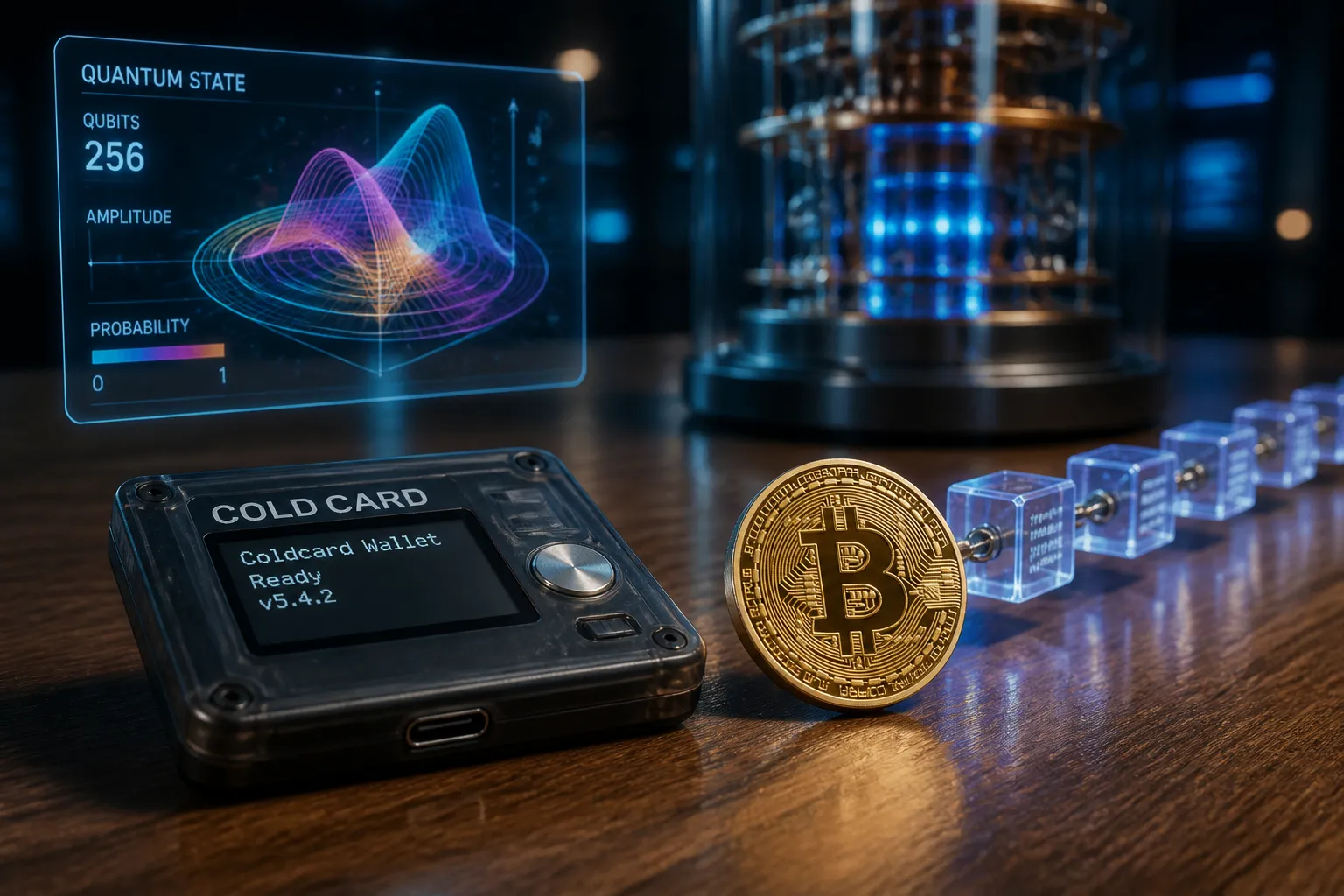
Bitcoin holders were rattled this week by a large‑scale theft that targeted the Coldcard hardware wallet, a device long regarded as one of the safest ways to store the cryptocurrency. According to reports from Fortune and Bloomberg, the attack drained more than $100 million from over 5,200 Coldcard addresses that were managed through the Canada‑based Coinkite platform. The breach was carried out by exploiting a software flaw that allowed attackers to generate candidate seed phrases on their own hardware, derive the corresponding Bitcoin addresses, and then scan the public blockchain for any addresses that held funds. Once a match was found, the attacker moved the coins to a single address in a matter of minutes.
The incident has had an immediate impact on market sentiment. Bitcoin’s price fell sharply after the news broke, and traders have expressed concern that the attack could erode confidence in hardware wallets. The Coldcard team has confirmed that the vulnerability was in the firmware that manages seed generation and that it does not affect the physical security of the device itself.
The theft is part of a broader pattern of attacks on cold storage solutions. Earlier this month, a series of four waves of thefts were reported, each targeting different Coldcard users. The cumulative loss from these incidents has been estimated at roughly $116 million, according to a Fortune article that cited data from the blockchain and from Coinkite’s own security team.
While the Coldcard breach is a stark reminder of the importance of secure key management, a separate, longer‑term threat is emerging from the field of quantum computing. On March 31 2026, Google researchers published a white paper that argued future quantum computers could break the elliptic‑curve cryptography that underpins Bitcoin, Ethereum, and many other cryptocurrencies with fewer qubits and gates than previously believed. The paper urged the community to begin migrating to post‑quantum cryptographic schemes.
IBM’s chief executive, Arvind Krishna, discussed the potential impact of quantum computers on the CNBC program Mad Money. “I think you should give yourself three of four years, and at that point, I would get rather paranoid about it,” Krishna said. Jim Cramer replied, “That’s not that long… people should listen to that.” Krishna added that IBM expects quantum computing to have a measurable effect on its revenue by 2028‑29 and could represent a trillion‑dollar opportunity by the end of the decade.
The quantum threat is still theoretical in practice. Current quantum machines lack the scale and stability required to break Bitcoin’s cryptographic primitives. However, the Google paper’s findings suggest that the timeline for a practical attack could be shorter than earlier estimates. The research also highlighted that the resources needed to attack Bitcoin’s elliptic‑curve digital signatures are roughly an order of magnitude smaller than previously thought.
In the meantime, Bitcoin’s price volatility has been exacerbated by other high‑profile comments. Elon Musk recently made a prediction that could “change everything,” though he did not elaborate on the specifics. Meanwhile, Jim Cramer’s decision to exit Bitcoin has sparked a reaction among traders who view his moves as a signal to buy. Pseudonymous investor “Bitcoin & Barbells” on X noted that the inverse Cramer index has remained undefeated.
The combination of a hardware wallet breach and the looming quantum threat has prompted several stakeholders to reassess risk. Coldcard’s developers have announced a firmware update that addresses the identified flaw, and Coinkite has urged users to upgrade immediately. At the same time, the Bitcoin community is beginning to discuss a potential transition to post‑quantum signatures, a process that would require a coordinated effort across wallets, exchanges, and mining pools.
As of now, the Bitcoin network remains secure against quantum attacks, and no evidence suggests that the current Coldcard firmware flaw can be exploited to compromise the device’s physical security. However, the incidents underscore the need for continuous vigilance and the importance of staying ahead of emerging threats in the rapidly evolving cryptocurrency landscape.
The incident has had an immediate impact on market sentiment. Bitcoin’s price fell sharply after the news broke, and traders have expressed concern that the attack could erode confidence in hardware wallets. The Coldcard team has confirmed that the vulnerability was in the firmware that manages seed generation and that it does not affect the physical security of the device itself.
The theft is part of a broader pattern of attacks on cold storage solutions. Earlier this month, a series of four waves of thefts were reported, each targeting different Coldcard users. The cumulative loss from these incidents has been estimated at roughly $116 million, according to a Fortune article that cited data from the blockchain and from Coinkite’s own security team.
While the Coldcard breach is a stark reminder of the importance of secure key management, a separate, longer‑term threat is emerging from the field of quantum computing. On March 31 2026, Google researchers published a white paper that argued future quantum computers could break the elliptic‑curve cryptography that underpins Bitcoin, Ethereum, and many other cryptocurrencies with fewer qubits and gates than previously believed. The paper urged the community to begin migrating to post‑quantum cryptographic schemes.
IBM’s chief executive, Arvind Krishna, discussed the potential impact of quantum computers on the CNBC program Mad Money. “I think you should give yourself three of four years, and at that point, I would get rather paranoid about it,” Krishna said. Jim Cramer replied, “That’s not that long… people should listen to that.” Krishna added that IBM expects quantum computing to have a measurable effect on its revenue by 2028‑29 and could represent a trillion‑dollar opportunity by the end of the decade.
The quantum threat is still theoretical in practice. Current quantum machines lack the scale and stability required to break Bitcoin’s cryptographic primitives. However, the Google paper’s findings suggest that the timeline for a practical attack could be shorter than earlier estimates. The research also highlighted that the resources needed to attack Bitcoin’s elliptic‑curve digital signatures are roughly an order of magnitude smaller than previously thought.
In the meantime, Bitcoin’s price volatility has been exacerbated by other high‑profile comments. Elon Musk recently made a prediction that could “change everything,” though he did not elaborate on the specifics. Meanwhile, Jim Cramer’s decision to exit Bitcoin has sparked a reaction among traders who view his moves as a signal to buy. Pseudonymous investor “Bitcoin & Barbells” on X noted that the inverse Cramer index has remained undefeated.
The combination of a hardware wallet breach and the looming quantum threat has prompted several stakeholders to reassess risk. Coldcard’s developers have announced a firmware update that addresses the identified flaw, and Coinkite has urged users to upgrade immediately. At the same time, the Bitcoin community is beginning to discuss a potential transition to post‑quantum signatures, a process that would require a coordinated effort across wallets, exchanges, and mining pools.
As of now, the Bitcoin network remains secure against quantum attacks, and no evidence suggests that the current Coldcard firmware flaw can be exploited to compromise the device’s physical security. However, the incidents underscore the need for continuous vigilance and the importance of staying ahead of emerging threats in the rapidly evolving cryptocurrency landscape.







