Blab Crypto
Russian Hardware Wallet Sales Surge Ahead of New Crypto Regulation
When the Russian market opened its first quarter of 2026, hardware wallets were already on the back burner for many investors. By the end of the second quarter, the country’s biggest electronics chain reported a 107‑percent jump in unit sales, while revenue from those devices leapt 92 percent. The numbers hint at a sudden, nationwide shift toward self‑custody just as a sweeping new crypto law prepares to take effect on September 1.
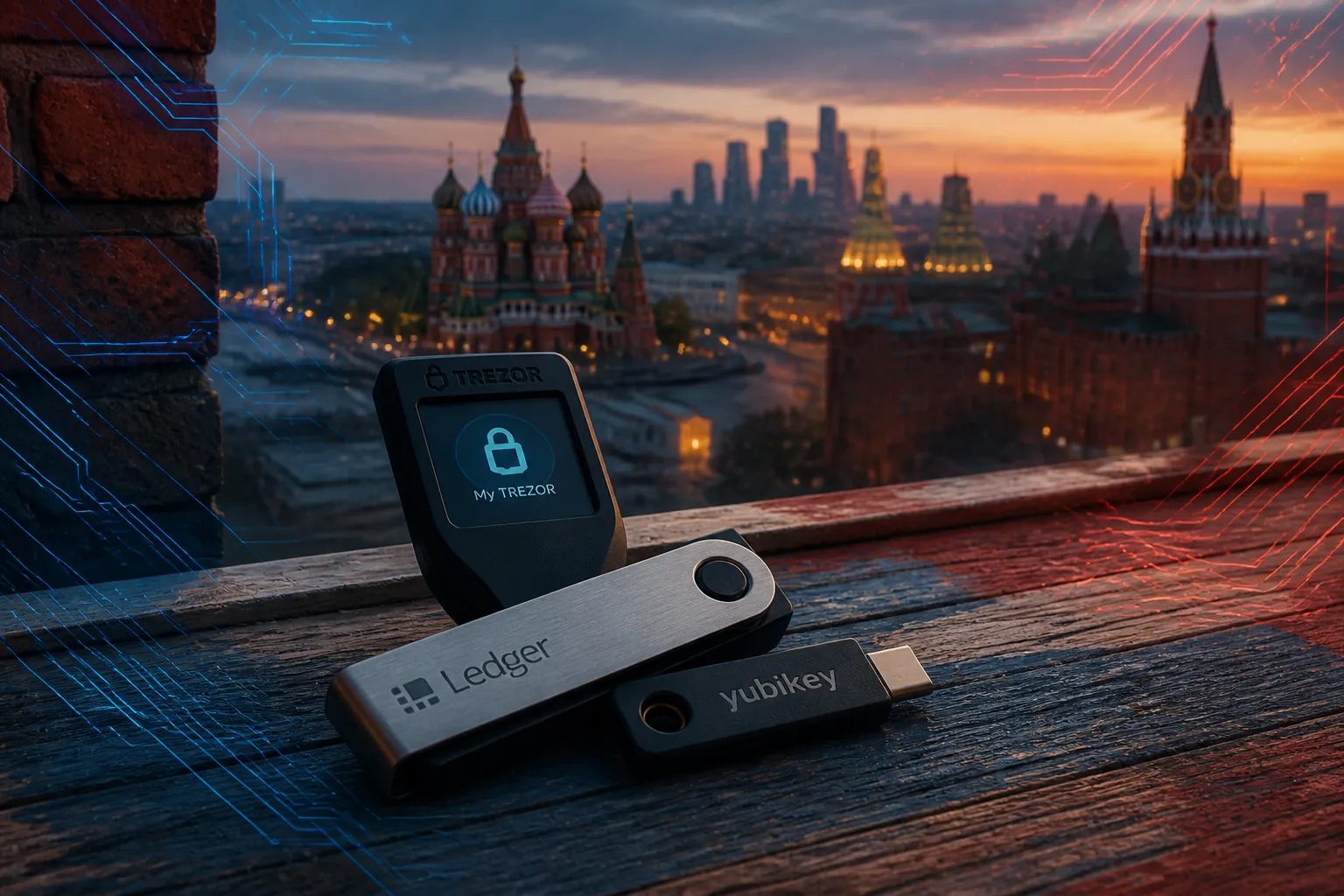
M.Video, the nation’s flagship electronics retailer, disclosed the steep rise without revealing exact volumes. Still, the growth figures suggest that more than twice as many Russians were buying hardware wallets in Q2 as they had in Q1. Ledger units made up roughly 30 percent of the inventory sold, yet they accounted for about 40 percent of the sales value. Trezor devices held about 20 percent of both units and revenue, with the remaining shares split among OneKey, Ellipal, SafePal, and Jade.
Across the country’s largest online marketplace, Wildberries, the picture was equally dramatic. The platform logged an 84 percent increase in wallet units sold during the first half of 2026 compared with the same period in 2025, and sales by value grew 60 percent. The average price per device hovered around 7,900 rubles, a 13 percent dip from the previous year.
The timing of these sales spikes dovetails with President Vladimir Putin’s signing of a comprehensive cryptocurrency law on 6 August 2026. The new framework will create a regulated ecosystem of licensed exchanges, brokers, and digital depositories, allowing both qualified and non‑qualified investors to trade cryptocurrencies through authorized intermediaries. Retailers who do not meet the qualifications must pass a knowledge test and are capped at 300,000 rubles per year per intermediary, whereas qualified investors face no such limit.
Personal wallets remain legal. Investors can continue to hold digital assets in addresses they control, but moving those assets between regulated infrastructure and self‑custody is constrained. Funds in a Russian digital depository cannot be withdrawn to a private wallet, and any cross‑border transfer must route through permitted intermediaries or eligible foreign institutions. The transition to the new system must be completed by 1 July 2027; beyond that date, Russian banks will be obliged to refuse payments involving crypto businesses that operate outside the authorized framework.
Hardware wallets keep private keys offline, reducing counterparty risk but shifting responsibility to the user. Recent vulnerabilities underscore that risk. On 30 July 2026, Coldcard manufacturer Coinkite disclosed a firmware flaw that weakened the randomness used to generate seed phrases. Investigators traced about 1,816 BTC—roughly $116 million—to more than 5,200 addresses linked to several theft waves. Coinkite issued patched firmware, but seeds generated with the vulnerable version cannot be repaired; affected users must create new seeds with the corrected firmware and transfer their holdings to new addresses.
The surge in hardware wallet ownership runs counter to the direction of Russia’s regulatory agenda, which favors centralized exchanges, brokers, and depositories. Yet the two models can coexist because ownership and market access are separate. Investors can keep control of private keys while still using licensed intermediaries to convert rubles into crypto or to move assets back into the banking system. This dual approach may appeal to long‑term holders who value self‑custody, while frequent traders and those needing fiat conversions can rely on regulated custodians.
Russia experienced a similar hardware‑wallet boom in 2022, driven by sanctions, currency restrictions, and distrust of centralized exchanges. The 2026 surge differs only in that self‑custody is expanding alongside a formal domestic trading framework. The coming months will test whether personal ownership can remain practical as regulated intermediaries tighten the links between cryptocurrency and Russia’s financial system.
Key questions remain unanswered. It is unclear how quickly retail investors will adapt to the new purchase limits and knowledge tests, how effectively banks will enforce the 2027 deadline, and whether the hardware‑wallet market will continue to grow once the regulatory framework is fully operational. Industry observers will be watching the rollout of the new law and the performance of regulated intermediaries closely in the months ahead.
M.Video, the nation’s flagship electronics retailer, disclosed the steep rise without revealing exact volumes. Still, the growth figures suggest that more than twice as many Russians were buying hardware wallets in Q2 as they had in Q1. Ledger units made up roughly 30 percent of the inventory sold, yet they accounted for about 40 percent of the sales value. Trezor devices held about 20 percent of both units and revenue, with the remaining shares split among OneKey, Ellipal, SafePal, and Jade.
Across the country’s largest online marketplace, Wildberries, the picture was equally dramatic. The platform logged an 84 percent increase in wallet units sold during the first half of 2026 compared with the same period in 2025, and sales by value grew 60 percent. The average price per device hovered around 7,900 rubles, a 13 percent dip from the previous year.
The timing of these sales spikes dovetails with President Vladimir Putin’s signing of a comprehensive cryptocurrency law on 6 August 2026. The new framework will create a regulated ecosystem of licensed exchanges, brokers, and digital depositories, allowing both qualified and non‑qualified investors to trade cryptocurrencies through authorized intermediaries. Retailers who do not meet the qualifications must pass a knowledge test and are capped at 300,000 rubles per year per intermediary, whereas qualified investors face no such limit.
Personal wallets remain legal. Investors can continue to hold digital assets in addresses they control, but moving those assets between regulated infrastructure and self‑custody is constrained. Funds in a Russian digital depository cannot be withdrawn to a private wallet, and any cross‑border transfer must route through permitted intermediaries or eligible foreign institutions. The transition to the new system must be completed by 1 July 2027; beyond that date, Russian banks will be obliged to refuse payments involving crypto businesses that operate outside the authorized framework.
Hardware wallets keep private keys offline, reducing counterparty risk but shifting responsibility to the user. Recent vulnerabilities underscore that risk. On 30 July 2026, Coldcard manufacturer Coinkite disclosed a firmware flaw that weakened the randomness used to generate seed phrases. Investigators traced about 1,816 BTC—roughly $116 million—to more than 5,200 addresses linked to several theft waves. Coinkite issued patched firmware, but seeds generated with the vulnerable version cannot be repaired; affected users must create new seeds with the corrected firmware and transfer their holdings to new addresses.
The surge in hardware wallet ownership runs counter to the direction of Russia’s regulatory agenda, which favors centralized exchanges, brokers, and depositories. Yet the two models can coexist because ownership and market access are separate. Investors can keep control of private keys while still using licensed intermediaries to convert rubles into crypto or to move assets back into the banking system. This dual approach may appeal to long‑term holders who value self‑custody, while frequent traders and those needing fiat conversions can rely on regulated custodians.
Russia experienced a similar hardware‑wallet boom in 2022, driven by sanctions, currency restrictions, and distrust of centralized exchanges. The 2026 surge differs only in that self‑custody is expanding alongside a formal domestic trading framework. The coming months will test whether personal ownership can remain practical as regulated intermediaries tighten the links between cryptocurrency and Russia’s financial system.
Key questions remain unanswered. It is unclear how quickly retail investors will adapt to the new purchase limits and knowledge tests, how effectively banks will enforce the 2027 deadline, and whether the hardware‑wallet market will continue to grow once the regulatory framework is fully operational. Industry observers will be watching the rollout of the new law and the performance of regulated intermediaries closely in the months ahead.