Blab Crypto
Bitwise CIO Urges Major Blockchains to Adopt Hyperliquid-Style Buybacks, Solanas Governance Vote Falls Short
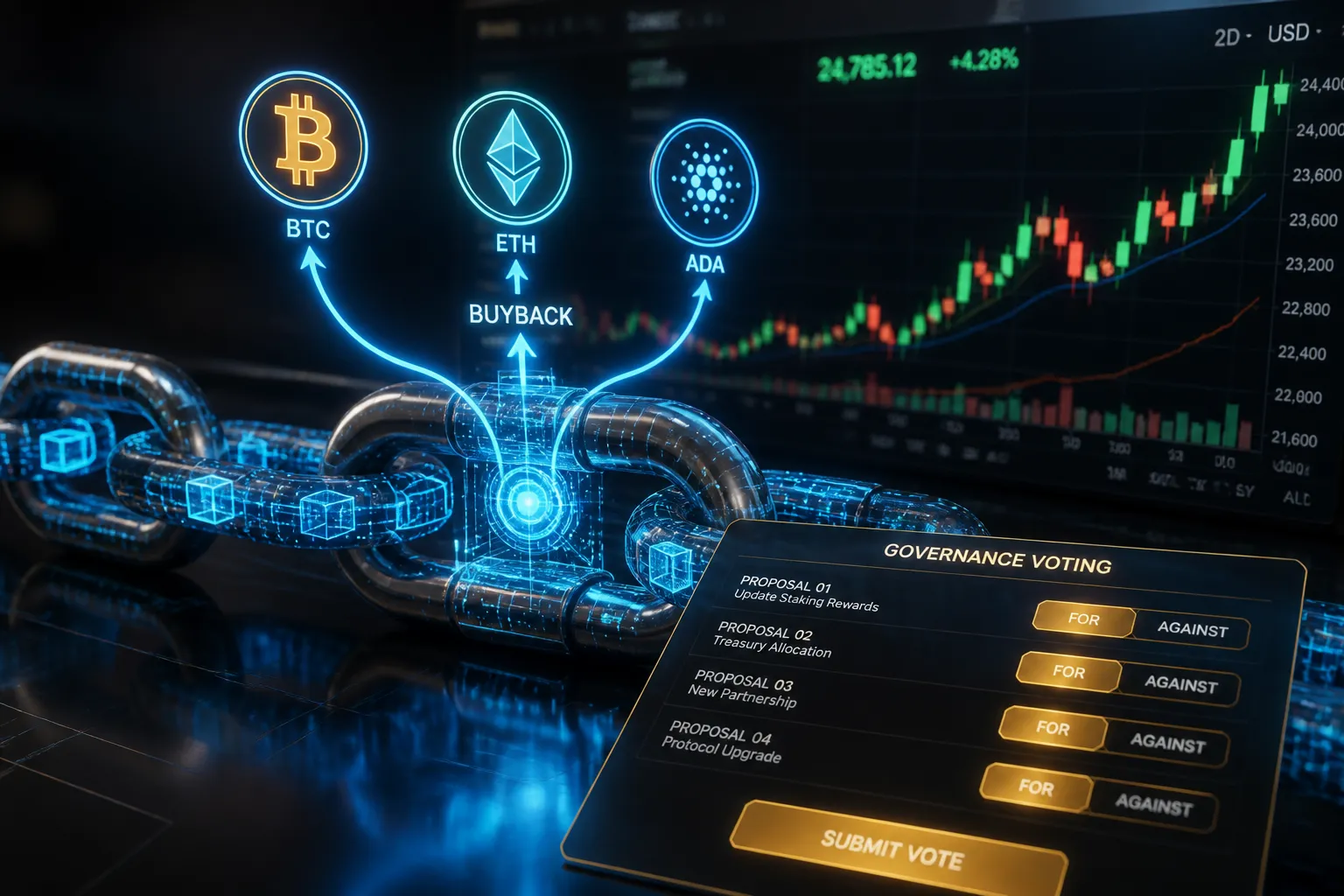
On August 12 2026, Matthew Hougan, chief investment officer at Bitwise Asset Management, issued a note that could reshape how investors view crypto valuations. Hougan argued that if blockchains were to channel a slice of their fee revenue into buying back and burning their native tokens, market prices could potentially double.
His case was built around Hyperliquid (HYPE), a decentralized exchange that has already proven the concept. The platform has destroyed more than $3.9 billion of its own token—removing 4.8 % of the 1 billion‑token cap—and HYPE’s price has surged 84 % over the past year.
Hyperliquid runs on its own high‑performance chain, HyperEVM, and focuses on perpetual futures contracts. In Q2 2026, the exchange generated $169 million in trading revenue. A dedicated fund captured $141 million of that income, purchasing HYPE on the open market and permanently burning it. Token‑burn analytics confirm that the cumulative burn has cut circulating supply by nearly five percent.
Ethereum and Solana employ different burn mechanisms. Ethereum burns a portion of every transaction fee, but most of the fee revenue is paid to validators as block rewards. Solana burns part of its transaction fees, yet the protocol introduces new tokens at roughly 3.6 % per year, which offsets the burn and ultimately dilutes holders.
Hougan’s note stresses that if major blockchains adopt a Hyperliquid‑style model within the next 12 to 24 months, investors would gain a clearer link between network activity and token supply reduction. This could simplify the assessment of a coin’s intrinsic value.
Solana’s first on‑chain governance vote, SGP‑0003, closed on August 28 2026. The proposal aimed to restructure the fee system to boost daily token burns, but it failed to reach the required threshold. The initiative is slated for future governance sessions.
At present, Hyperliquid’s burn program remains the only large‑scale, fee‑driven buy‑back and burn initiative in the market. Ethereum’s and Solana’s current mechanisms do not provide a mechanically linked supply reduction that scales with trading volume, leaving the question of whether other blockchains will follow suit open.
Industry observers are keeping a close eye on Solana’s governance process and any potential updates to Ethereum’s fee structure. If either network implements a similar buy‑back and burn model, it would lend credence to Hougan’s hypothesis that tokenomics can materially influence market valuations.
In the coming months, analysts will monitor whether Hyperliquid’s supply‑reduction trajectory continues, how its price reacts to further burns, and whether other networks announce comparable initiatives. The next major governance vote on Solana and any changes to Ethereum’s fee distribution will serve as key indicators of whether the crypto sector moves toward the model advocated by Bitwise’s chief investment officer.
His case was built around Hyperliquid (HYPE), a decentralized exchange that has already proven the concept. The platform has destroyed more than $3.9 billion of its own token—removing 4.8 % of the 1 billion‑token cap—and HYPE’s price has surged 84 % over the past year.
Hyperliquid runs on its own high‑performance chain, HyperEVM, and focuses on perpetual futures contracts. In Q2 2026, the exchange generated $169 million in trading revenue. A dedicated fund captured $141 million of that income, purchasing HYPE on the open market and permanently burning it. Token‑burn analytics confirm that the cumulative burn has cut circulating supply by nearly five percent.
Ethereum and Solana employ different burn mechanisms. Ethereum burns a portion of every transaction fee, but most of the fee revenue is paid to validators as block rewards. Solana burns part of its transaction fees, yet the protocol introduces new tokens at roughly 3.6 % per year, which offsets the burn and ultimately dilutes holders.
Hougan’s note stresses that if major blockchains adopt a Hyperliquid‑style model within the next 12 to 24 months, investors would gain a clearer link between network activity and token supply reduction. This could simplify the assessment of a coin’s intrinsic value.
Solana’s first on‑chain governance vote, SGP‑0003, closed on August 28 2026. The proposal aimed to restructure the fee system to boost daily token burns, but it failed to reach the required threshold. The initiative is slated for future governance sessions.
At present, Hyperliquid’s burn program remains the only large‑scale, fee‑driven buy‑back and burn initiative in the market. Ethereum’s and Solana’s current mechanisms do not provide a mechanically linked supply reduction that scales with trading volume, leaving the question of whether other blockchains will follow suit open.
Industry observers are keeping a close eye on Solana’s governance process and any potential updates to Ethereum’s fee structure. If either network implements a similar buy‑back and burn model, it would lend credence to Hougan’s hypothesis that tokenomics can materially influence market valuations.
In the coming months, analysts will monitor whether Hyperliquid’s supply‑reduction trajectory continues, how its price reacts to further burns, and whether other networks announce comparable initiatives. The next major governance vote on Solana and any changes to Ethereum’s fee distribution will serve as key indicators of whether the crypto sector moves toward the model advocated by Bitwise’s chief investment officer.