Blab Crypto
Albuquerque City Council Bans Crypto ATMs, Introduces Road Safety and Recycling Ordinances
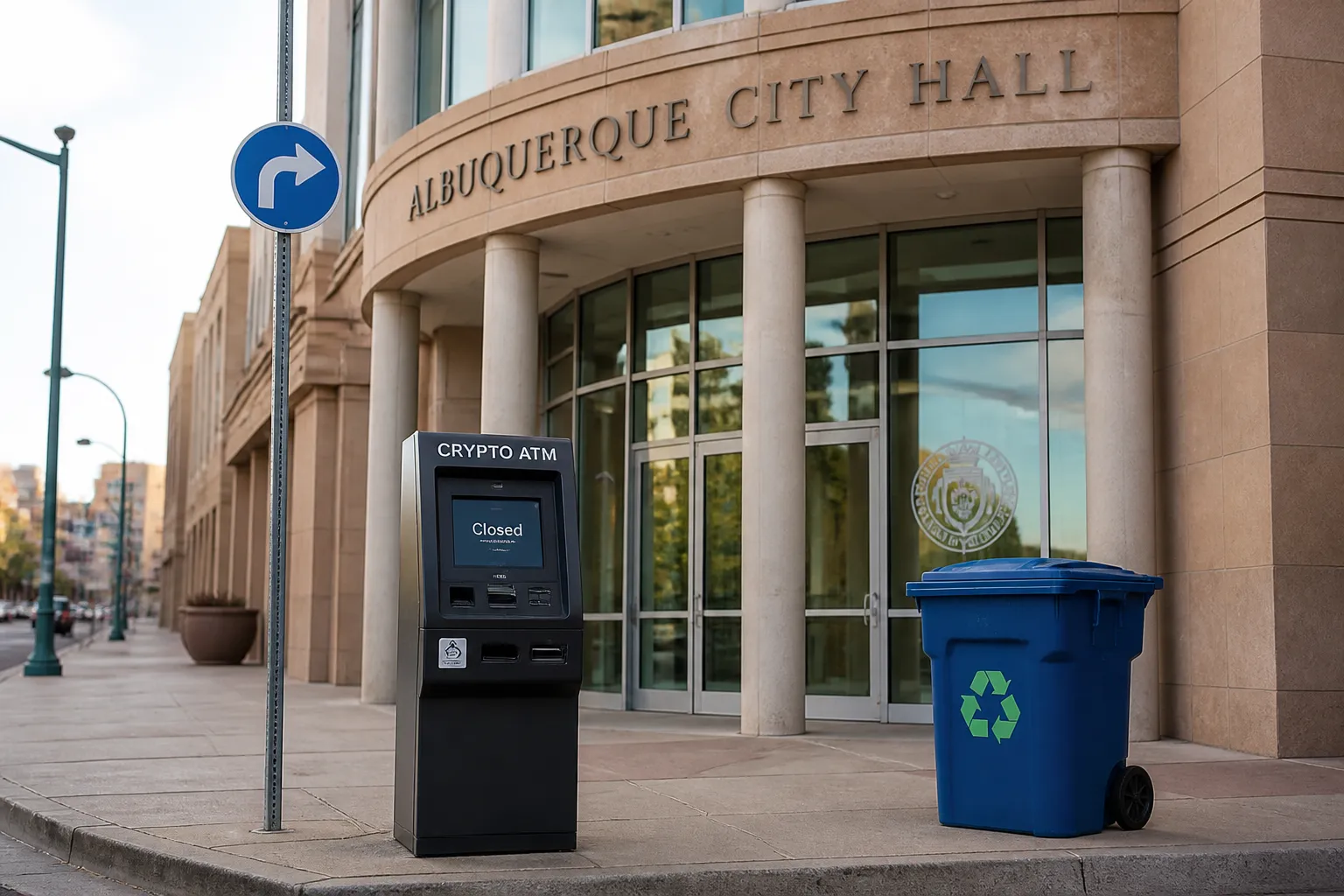
Albuquerque, N.M. – On Wednesday night, the city council approved a package of ordinances that will reshape the city’s approach to cryptocurrency, road safety, and waste management. The most visible change is a ban on virtual‑currency automatic teller machines (crypto ATMs) within city limits, coupled with a 45‑day removal deadline for existing units.
The council’s decision was driven by concerns that crypto ATMs carry high transaction fees and are frequently used by scammers. Local news reports note that the machines can charge more than 20 % of a user’s transaction amount in fees, and that they have become a target for fraud schemes that exploit elderly and vulnerable customers. The ordinance requires all crypto ATMs to be removed from Albuquerque properties by the end of the 45‑day period.
In addition to the crypto ban, the council passed the Quick Build ordinance, which applies to any street‑maintenance or restriping project. The new rule mandates that crews assess how to improve road safety during each intervention. Measures include adding traffic paint, updating pavement markings, installing flexible traffic posts, and placing concrete elements designed to reduce accidents. The ordinance reflects the city’s ongoing effort to lower traffic fatalities, a goal that has been a priority for Albuquerque officials in recent years.
The council also adopted a recycling ordinance that targets property managers. Residential complexes with fewer than 25 units must establish a recycling program, while larger complexes are required to provide recycling containers that are physically accessible to all residents. An exemption is available for properties where structural constraints make it impossible to install such containers. The measure is part of a broader municipal strategy to increase recycling rates and reduce landfill waste.
Albuquerque is the most populous city in New Mexico, with a 2020 census population of 564,559. The city’s jurisdiction covers a diverse landscape that includes the Sandia Mountains to the east and the West Mesa to the west, as well as the Rio Grande running through the center of the city. The municipal government has a history of implementing policies aimed at improving public safety, environmental stewardship, and consumer protection.
The crypto ATM ban aligns with a growing trend among U.S. municipalities to regulate or prohibit the use of cryptocurrency kiosks. Similar actions have been taken in other states, including New Hampshire and Tennessee, where local officials cited fraud and consumer protection concerns. The Albuquerque ordinance is the first in New Mexico to address the issue directly.
The Quick Build ordinance builds on existing traffic‑management initiatives. Albuquerque’s Department of Transportation has previously introduced projects to improve visibility and signage on city streets. The new rule expands the scope of safety considerations to all maintenance activities, ensuring that road‑surface improvements also incorporate accident‑reduction features.
The recycling ordinance follows the city’s long‑term waste‑management plan, which aims to increase recycling participation and reduce the amount of residential waste sent to landfills. By targeting property managers, the ordinance seeks to create a more consistent recycling infrastructure across the city’s residential sector.
City officials have not released a detailed implementation schedule for the new ordinances beyond the 45‑day removal deadline for crypto ATMs. The council’s statements, as reported by local news outlets, emphasize the need for compliance and the potential penalties for non‑compliance.
The ordinances reflect Albuquerque’s broader regulatory approach to emerging technologies and public‑interest issues. While the crypto ATM ban addresses consumer protection and fraud concerns, the road‑safety and recycling measures focus on infrastructure improvement and environmental sustainability. Together, the measures illustrate the city’s intent to balance technological innovation with public safety and environmental responsibility.
As of September 10, 2026, the ordinances are in effect. Property managers and crypto‑ATM operators will need to adjust their operations to comply with the new rules. The city’s enforcement mechanisms and timelines for the recycling and road‑safety ordinances remain to be fully detailed by municipal departments.
The measures are expected to influence local businesses, residents, and the broader cryptocurrency ecosystem in Albuquerque. The city’s actions may also serve as a reference point for other municipalities considering similar regulatory approaches.
The article is based on reports from KOB 4, MSN, and the City of Albuquerque’s official communications. No additional quotes or data were introduced beyond the publicly available information.
The council’s decision was driven by concerns that crypto ATMs carry high transaction fees and are frequently used by scammers. Local news reports note that the machines can charge more than 20 % of a user’s transaction amount in fees, and that they have become a target for fraud schemes that exploit elderly and vulnerable customers. The ordinance requires all crypto ATMs to be removed from Albuquerque properties by the end of the 45‑day period.
In addition to the crypto ban, the council passed the Quick Build ordinance, which applies to any street‑maintenance or restriping project. The new rule mandates that crews assess how to improve road safety during each intervention. Measures include adding traffic paint, updating pavement markings, installing flexible traffic posts, and placing concrete elements designed to reduce accidents. The ordinance reflects the city’s ongoing effort to lower traffic fatalities, a goal that has been a priority for Albuquerque officials in recent years.
The council also adopted a recycling ordinance that targets property managers. Residential complexes with fewer than 25 units must establish a recycling program, while larger complexes are required to provide recycling containers that are physically accessible to all residents. An exemption is available for properties where structural constraints make it impossible to install such containers. The measure is part of a broader municipal strategy to increase recycling rates and reduce landfill waste.
Albuquerque is the most populous city in New Mexico, with a 2020 census population of 564,559. The city’s jurisdiction covers a diverse landscape that includes the Sandia Mountains to the east and the West Mesa to the west, as well as the Rio Grande running through the center of the city. The municipal government has a history of implementing policies aimed at improving public safety, environmental stewardship, and consumer protection.
The crypto ATM ban aligns with a growing trend among U.S. municipalities to regulate or prohibit the use of cryptocurrency kiosks. Similar actions have been taken in other states, including New Hampshire and Tennessee, where local officials cited fraud and consumer protection concerns. The Albuquerque ordinance is the first in New Mexico to address the issue directly.
The Quick Build ordinance builds on existing traffic‑management initiatives. Albuquerque’s Department of Transportation has previously introduced projects to improve visibility and signage on city streets. The new rule expands the scope of safety considerations to all maintenance activities, ensuring that road‑surface improvements also incorporate accident‑reduction features.
The recycling ordinance follows the city’s long‑term waste‑management plan, which aims to increase recycling participation and reduce the amount of residential waste sent to landfills. By targeting property managers, the ordinance seeks to create a more consistent recycling infrastructure across the city’s residential sector.
City officials have not released a detailed implementation schedule for the new ordinances beyond the 45‑day removal deadline for crypto ATMs. The council’s statements, as reported by local news outlets, emphasize the need for compliance and the potential penalties for non‑compliance.
The ordinances reflect Albuquerque’s broader regulatory approach to emerging technologies and public‑interest issues. While the crypto ATM ban addresses consumer protection and fraud concerns, the road‑safety and recycling measures focus on infrastructure improvement and environmental sustainability. Together, the measures illustrate the city’s intent to balance technological innovation with public safety and environmental responsibility.
As of September 10, 2026, the ordinances are in effect. Property managers and crypto‑ATM operators will need to adjust their operations to comply with the new rules. The city’s enforcement mechanisms and timelines for the recycling and road‑safety ordinances remain to be fully detailed by municipal departments.
The measures are expected to influence local businesses, residents, and the broader cryptocurrency ecosystem in Albuquerque. The city’s actions may also serve as a reference point for other municipalities considering similar regulatory approaches.
The article is based on reports from KOB 4, MSN, and the City of Albuquerque’s official communications. No additional quotes or data were introduced beyond the publicly available information.







