Blab Crypto
US-Iran Provisional Peace Deal Sparks Oil Price Drop, Stock and Crypto Gains
When the world heard that the U.S. and Iran had tentatively agreed to end hostilities on June 14, 2026, oil markets breathed a sigh of relief and risk‑seeking investors seized the moment.
The provisional accord, brokered by Pakistan and Qatar, sets a 60‑day ceasefire, reopens the Strait of Hormuz, and lays out a framework for further talks on Iran’s nuclear program and sanctions relief. A formal signing is slated for June 19 in Switzerland.
The deal follows months of conflict that began on February 28, 2026, when U.S. and Israeli airstrikes on Iranian targets triggered retaliatory attacks and the closure of the Strait. The waterway, through which roughly 20 % of global oil trade passes, had been largely shut, sending crude prices higher.
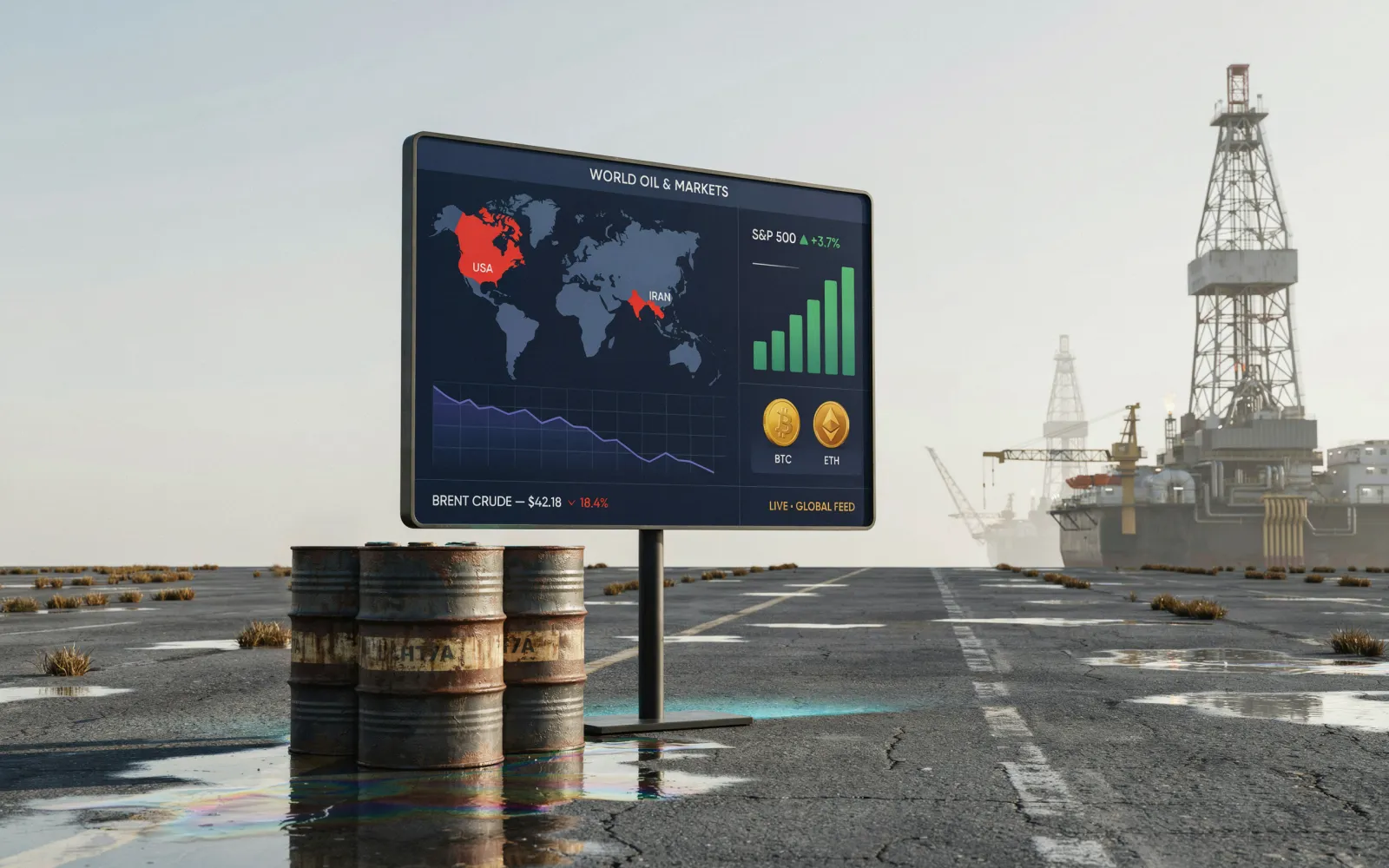
CoinDesk reports that the announcement has already moved markets. West Texas Intermediate (WTI) crude fell almost 5 %, slipping below $81 a barrel to its lowest level in about two months. The decline reflects eased concerns about supply disruptions once the Strait is cleared of mines and reopened to commercial shipping.
Risk‑seeking investors have also responded. Nasdaq 100 futures rose 1.5 %, while S&P 500 futures climbed 0.9 %. The gains signal a rebound in confidence as inflationary pressures and corporate cost worries appear to have eased in the wake of the geopolitical de‑escalation.
Cryptocurrency markets have mirrored the broader risk‑asset rally. Bitcoin climbed to approximately $65,700, up about 2 % over the preceding 24 hours. The rise coincides with the rebound in traditional markets, suggesting that easing tensions are restoring cross‑market sentiment.
The war’s impact on oil had been stark. During the height of hostilities, the Strait’s closure forced shipping reroutes and increased insurance premiums, pushing WTI prices above $90 a barrel. The provisional deal is expected to normalize shipping lanes, reduce logistical costs, and support a gradual return to pre‑war price levels.
While the agreement is a significant step toward de‑escalation, several issues remain unresolved. The 60‑day ceasefire is intended as a bridge to a comprehensive settlement that will address Iran’s nuclear enrichment limits, the disposal of highly enriched uranium, sanctions relief, and the release of frozen Iranian assets. Analysts note that the success of the deal will depend on the parties’ willingness to negotiate beyond the provisional framework.
For now, market participants are watching the signing ceremony in Geneva closely. The reopening of the Strait of Hormuz is expected to lift shipping volumes, and the subsequent normalization of oil flows should support a sustained decline in crude prices. Meanwhile, the positive momentum in equity futures and Bitcoin indicates that investors are pricing in a lower risk environment.
In summary, the U.S.‑Iran provisional peace agreement has already influenced global markets: oil prices have fallen to a two‑month low, stock futures have risen, and Bitcoin has rebounded. The forthcoming signing in Switzerland will determine whether the de‑escalation solidifies and whether the broader economic and geopolitical implications materialize.
The provisional accord, brokered by Pakistan and Qatar, sets a 60‑day ceasefire, reopens the Strait of Hormuz, and lays out a framework for further talks on Iran’s nuclear program and sanctions relief. A formal signing is slated for June 19 in Switzerland.
The deal follows months of conflict that began on February 28, 2026, when U.S. and Israeli airstrikes on Iranian targets triggered retaliatory attacks and the closure of the Strait. The waterway, through which roughly 20 % of global oil trade passes, had been largely shut, sending crude prices higher.
CoinDesk reports that the announcement has already moved markets. West Texas Intermediate (WTI) crude fell almost 5 %, slipping below $81 a barrel to its lowest level in about two months. The decline reflects eased concerns about supply disruptions once the Strait is cleared of mines and reopened to commercial shipping.
Risk‑seeking investors have also responded. Nasdaq 100 futures rose 1.5 %, while S&P 500 futures climbed 0.9 %. The gains signal a rebound in confidence as inflationary pressures and corporate cost worries appear to have eased in the wake of the geopolitical de‑escalation.
Cryptocurrency markets have mirrored the broader risk‑asset rally. Bitcoin climbed to approximately $65,700, up about 2 % over the preceding 24 hours. The rise coincides with the rebound in traditional markets, suggesting that easing tensions are restoring cross‑market sentiment.
The war’s impact on oil had been stark. During the height of hostilities, the Strait’s closure forced shipping reroutes and increased insurance premiums, pushing WTI prices above $90 a barrel. The provisional deal is expected to normalize shipping lanes, reduce logistical costs, and support a gradual return to pre‑war price levels.
While the agreement is a significant step toward de‑escalation, several issues remain unresolved. The 60‑day ceasefire is intended as a bridge to a comprehensive settlement that will address Iran’s nuclear enrichment limits, the disposal of highly enriched uranium, sanctions relief, and the release of frozen Iranian assets. Analysts note that the success of the deal will depend on the parties’ willingness to negotiate beyond the provisional framework.
For now, market participants are watching the signing ceremony in Geneva closely. The reopening of the Strait of Hormuz is expected to lift shipping volumes, and the subsequent normalization of oil flows should support a sustained decline in crude prices. Meanwhile, the positive momentum in equity futures and Bitcoin indicates that investors are pricing in a lower risk environment.
In summary, the U.S.‑Iran provisional peace agreement has already influenced global markets: oil prices have fallen to a two‑month low, stock futures have risen, and Bitcoin has rebounded. The forthcoming signing in Switzerland will determine whether the de‑escalation solidifies and whether the broader economic and geopolitical implications materialize.