Blab Crypto
Grayscales GBTC Fee Still Outpaces Low-Cost Bitcoin ETFs, Dragging Investor Returns
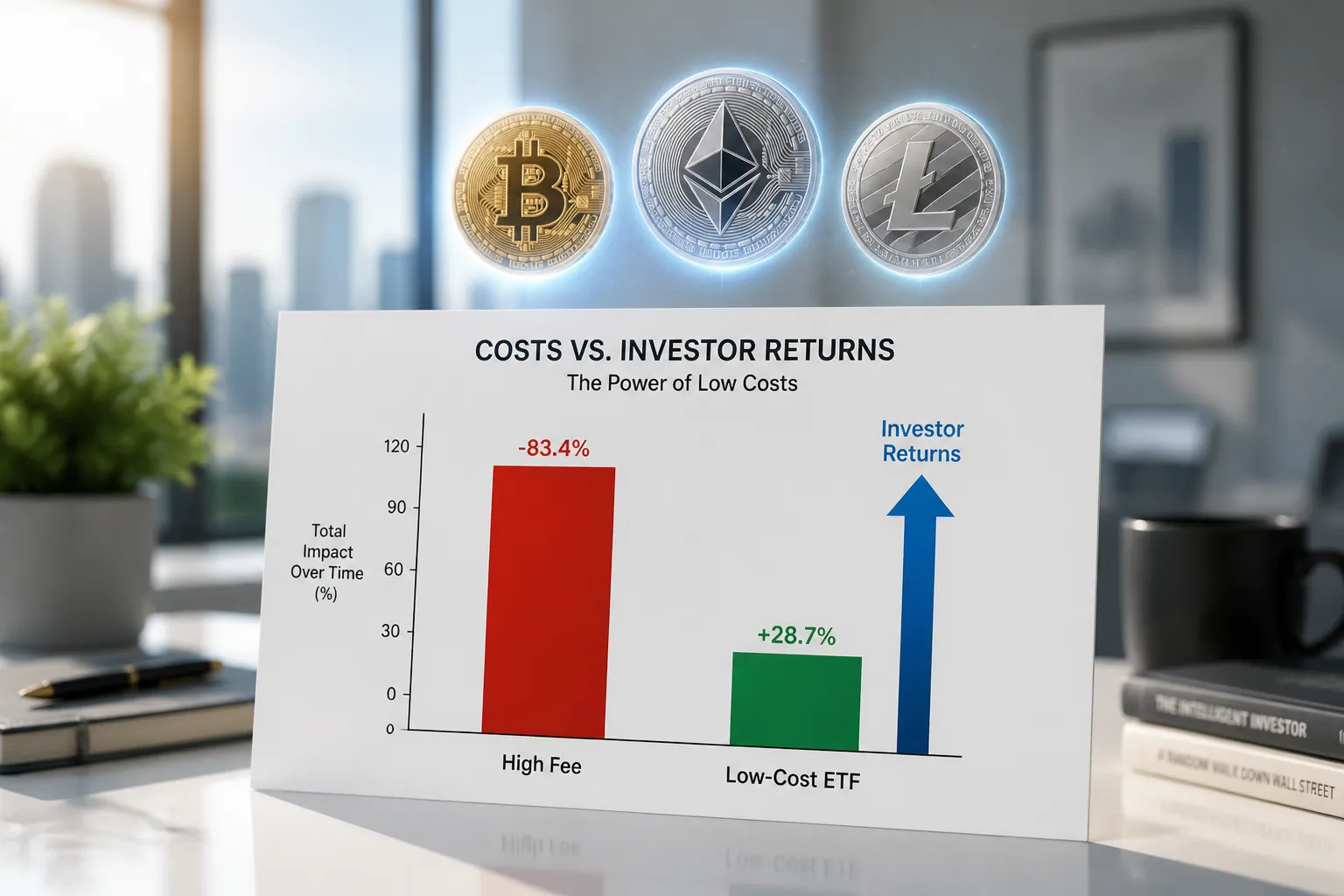
Grayscale Investments’ Bitcoin Trust (GBTC) continues to charge a 1.50 % annual fee, a rate that exceeds the expense ratios of the leading spot‑Bitcoin exchange‑traded funds (ETFs) by more than four times. The fee difference has translated into measurable drag on investor returns.
GBTC’s fee structure is unchanged since the trust’s conversion to an ETF in January 2024. The conversion eliminated the trust’s historic discount to net asset value, but the sponsor fee remained at 1.50 %. In contrast, BlackRock’s iShares Bitcoin Trust (IBIT) lists an expense ratio of 0.33 % as of March 14 2026, and Fidelity’s Fidelity Wise Origin Bitcoin Fund (FBTC) carries a similar low fee.
The cost impact is visible in year‑to‑date performance. Bitcoin has fallen 26.15 % in 2026. IBIT is down 26.77 %, FBTC 26.68 %, and GBTC 27.08 %. The additional 0.93 % that GBTC lags the spot price reflects the fee differential.
Grayscale’s assets under management (AUM) total more than $35 billion across its digital‑asset products. The fee is the primary source of revenue for the firm, and it is applied daily regardless of market conditions.
Investor outflows have intensified since the conversion. On January 22 2024, GBTC experienced outflows of $700 million to $785 million in a single day, according to reports. The outflows slowed in the following weeks, but the total net outflow since launch was $4.4 billion. Analysts note that legacy holders selling shares to avoid the fee can trigger capital‑gain distributions, creating additional tax drag for remaining investors.
The fee comparison is not merely theoretical. Over the past year, IBIT returned –38.89 %, FBTC –38.86 %, and GBTC –39.58 %. Bitcoin itself fell –38.41 %. The performance gap between GBTC and the lower‑fee wrappers aligns with the fee differential.
Grayscale’s decision to convert GBTC to an ETF did not address the fee structure. The firm has confirmed that the sponsor fee remains unchanged. The conversion was intended to unlock value by eliminating the trust’s discount to net asset value, but the fee continues to erode investor exposure.
The market has responded to the fee disparity. IBIT is described as poised to overtake GBTC in AUM, and its lower expense ratio has attracted investors who previously held GBTC. Fidelity’s FBTC, which also holds spot Bitcoin in cold storage, offers a comparable exposure at a lower cost.
For investors who purchased GBTC before the January 2024 conversion, the trust’s fee has become a persistent cost that reduces the effective Bitcoin exposure. The fee gap translates into a tangible loss of value over time, especially in a bear market where fees do not pause.
In summary, Grayscale’s GBTC still carries a 1.50 % annual fee, while the leading spot‑Bitcoin ETFs charge around 0.33 % to 0.25 %. The fee difference has produced measurable drag on returns, driven outflows, and prompted investors to shift to lower‑cost alternatives. The fee structure remains unchanged, and the firm’s AUM continues to be impacted by the cost differential.
GBTC’s fee structure is unchanged since the trust’s conversion to an ETF in January 2024. The conversion eliminated the trust’s historic discount to net asset value, but the sponsor fee remained at 1.50 %. In contrast, BlackRock’s iShares Bitcoin Trust (IBIT) lists an expense ratio of 0.33 % as of March 14 2026, and Fidelity’s Fidelity Wise Origin Bitcoin Fund (FBTC) carries a similar low fee.
The cost impact is visible in year‑to‑date performance. Bitcoin has fallen 26.15 % in 2026. IBIT is down 26.77 %, FBTC 26.68 %, and GBTC 27.08 %. The additional 0.93 % that GBTC lags the spot price reflects the fee differential.
Grayscale’s assets under management (AUM) total more than $35 billion across its digital‑asset products. The fee is the primary source of revenue for the firm, and it is applied daily regardless of market conditions.
Investor outflows have intensified since the conversion. On January 22 2024, GBTC experienced outflows of $700 million to $785 million in a single day, according to reports. The outflows slowed in the following weeks, but the total net outflow since launch was $4.4 billion. Analysts note that legacy holders selling shares to avoid the fee can trigger capital‑gain distributions, creating additional tax drag for remaining investors.
The fee comparison is not merely theoretical. Over the past year, IBIT returned –38.89 %, FBTC –38.86 %, and GBTC –39.58 %. Bitcoin itself fell –38.41 %. The performance gap between GBTC and the lower‑fee wrappers aligns with the fee differential.
Grayscale’s decision to convert GBTC to an ETF did not address the fee structure. The firm has confirmed that the sponsor fee remains unchanged. The conversion was intended to unlock value by eliminating the trust’s discount to net asset value, but the fee continues to erode investor exposure.
The market has responded to the fee disparity. IBIT is described as poised to overtake GBTC in AUM, and its lower expense ratio has attracted investors who previously held GBTC. Fidelity’s FBTC, which also holds spot Bitcoin in cold storage, offers a comparable exposure at a lower cost.
For investors who purchased GBTC before the January 2024 conversion, the trust’s fee has become a persistent cost that reduces the effective Bitcoin exposure. The fee gap translates into a tangible loss of value over time, especially in a bear market where fees do not pause.
In summary, Grayscale’s GBTC still carries a 1.50 % annual fee, while the leading spot‑Bitcoin ETFs charge around 0.33 % to 0.25 %. The fee difference has produced measurable drag on returns, driven outflows, and prompted investors to shift to lower‑cost alternatives. The fee structure remains unchanged, and the firm’s AUM continues to be impacted by the cost differential.