Blab Crypto
OSL Group Secures Australian Financial Services Licence, Expanding Regulated Stablecoin Infrastructure
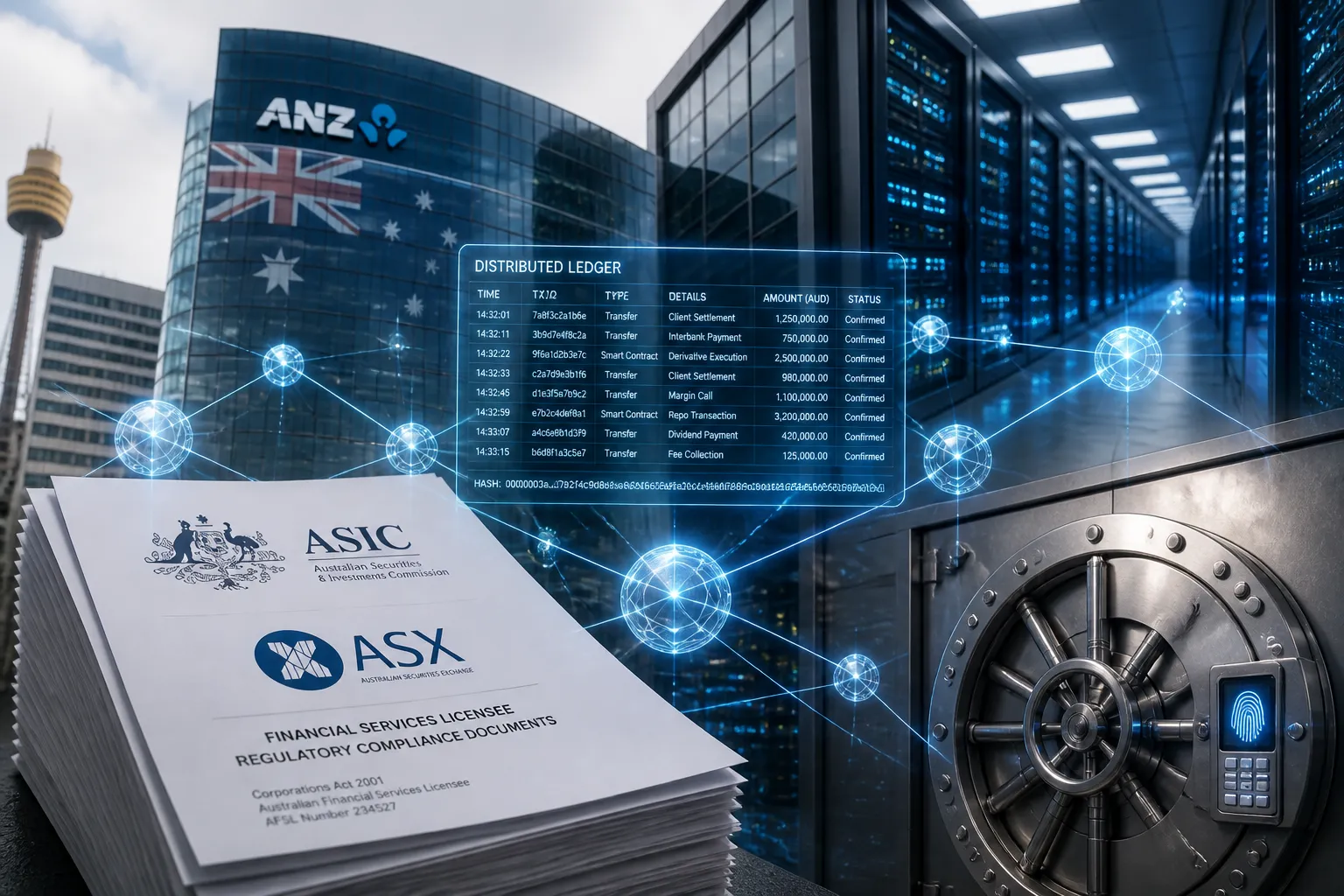
On 19 June 2026, OSL Group Ltd. (HKEX: 863) announced that its Australian subsidiary had earned an Australian Financial Services Licence (AFSL) from the Australian Securities and Investments Commission (ASIC). The licence authorises OSL to provide payment, custody and over‑the‑counter (OTC) services to wholesale clients across Australia, giving the company a fully regulated foothold for institutional digital‑asset operations.
The AFSL is a pivotal move in OSL’s worldwide strategy to construct a stable‑coin‑driven payments stack. Earlier this year, the firm completed the acquisition of Melbourne‑based Banxa Holdings, launched OSL BizPay—a B2B cross‑border payment platform—and rolled out USDGO, a U.S. dollar‑backed stablecoin regulated in the United States. These initiatives shift OSL from a simple trading venue to an end‑to‑end settlement infrastructure provider.
Under the licence, OSL’s Australian entity can deliver custody, settlement and stable‑coin infrastructure to banks, fintechs, payment service providers, OTC desks and corporate treasury teams. The regulated framework is designed to simplify the onboarding of institutional clients who must comply with Australian financial‑services law and who may be hesitant to engage with offshore or lightly supervised crypto firms.
"At OSL, we’re building the regulated rails to unlock a unified, borderless financial flow," said Kevin Cui, executive director and chief executive officer of OSL Group. "Demand for more efficient and reliable international payments is accelerating, and stable‑coin infrastructure is becoming central to connecting businesses across key corridors between Australia, Asia and global markets. Securing our AFSL demonstrates our commitment to Australia and to the many enterprise partners who rely on us to move value safely across borders."
The licence also strengthens OSL’s standing in talks with Australian banks and institutional clients. The company currently holds or is applying for more than 50 licences and registrations in over ten regions worldwide—a footprint that is increasingly vital as stable‑coin providers compete on regulatory access, banking relationships and settlement capacity.
The announcement arrived during the Digital Economy Council of Australia conference in Sydney. Banxa’s chief operating officer, Sean Moynihan, joined an executive roundtable on agentic commerce and the role of stable‑coins in future payments. Attendees included representatives from Visa, Coinbase, EY and other industry players, underscoring the growing interest in programmable, cross‑border settlement systems.
For wholesale clients, the AFSL’s primary advantage is counterparty quality. Payment service providers, merchants, financial institutions and treasury teams can work with a regulated entity rather than an offshore counterpart, easing compliance friction. The licence also opens doors to stronger banking relationships and fiat‑payment access in Australia—essential for moving between local currency systems and digital‑asset rails.
Australia’s digital‑asset regulatory framework remains in flux, and stable‑coin rules are still being refined by regulators worldwide. While the AFSL does not eliminate all uncertainties, it provides OSL with a clearer operating base as the broader policy environment evolves.
In short, OSL Group’s acquisition of an AFSL marks a significant milestone in its effort to deliver regulated stable‑coin infrastructure for institutional clients. The licence supports the company’s broader strategy of integrating payment, custody, OTC execution and stable‑coin issuance under a unified, compliant framework. As stable‑coins continue to move into settlement and treasury use cases, firms that combine licences, custody, OTC execution, fiat access and enterprise payment tools are likely to be better positioned to serve institutions.
The AFSL is a pivotal move in OSL’s worldwide strategy to construct a stable‑coin‑driven payments stack. Earlier this year, the firm completed the acquisition of Melbourne‑based Banxa Holdings, launched OSL BizPay—a B2B cross‑border payment platform—and rolled out USDGO, a U.S. dollar‑backed stablecoin regulated in the United States. These initiatives shift OSL from a simple trading venue to an end‑to‑end settlement infrastructure provider.
Under the licence, OSL’s Australian entity can deliver custody, settlement and stable‑coin infrastructure to banks, fintechs, payment service providers, OTC desks and corporate treasury teams. The regulated framework is designed to simplify the onboarding of institutional clients who must comply with Australian financial‑services law and who may be hesitant to engage with offshore or lightly supervised crypto firms.
"At OSL, we’re building the regulated rails to unlock a unified, borderless financial flow," said Kevin Cui, executive director and chief executive officer of OSL Group. "Demand for more efficient and reliable international payments is accelerating, and stable‑coin infrastructure is becoming central to connecting businesses across key corridors between Australia, Asia and global markets. Securing our AFSL demonstrates our commitment to Australia and to the many enterprise partners who rely on us to move value safely across borders."
The licence also strengthens OSL’s standing in talks with Australian banks and institutional clients. The company currently holds or is applying for more than 50 licences and registrations in over ten regions worldwide—a footprint that is increasingly vital as stable‑coin providers compete on regulatory access, banking relationships and settlement capacity.
The announcement arrived during the Digital Economy Council of Australia conference in Sydney. Banxa’s chief operating officer, Sean Moynihan, joined an executive roundtable on agentic commerce and the role of stable‑coins in future payments. Attendees included representatives from Visa, Coinbase, EY and other industry players, underscoring the growing interest in programmable, cross‑border settlement systems.
For wholesale clients, the AFSL’s primary advantage is counterparty quality. Payment service providers, merchants, financial institutions and treasury teams can work with a regulated entity rather than an offshore counterpart, easing compliance friction. The licence also opens doors to stronger banking relationships and fiat‑payment access in Australia—essential for moving between local currency systems and digital‑asset rails.
Australia’s digital‑asset regulatory framework remains in flux, and stable‑coin rules are still being refined by regulators worldwide. While the AFSL does not eliminate all uncertainties, it provides OSL with a clearer operating base as the broader policy environment evolves.
In short, OSL Group’s acquisition of an AFSL marks a significant milestone in its effort to deliver regulated stable‑coin infrastructure for institutional clients. The licence supports the company’s broader strategy of integrating payment, custody, OTC execution and stable‑coin issuance under a unified, compliant framework. As stable‑coins continue to move into settlement and treasury use cases, firms that combine licences, custody, OTC execution, fiat access and enterprise payment tools are likely to be better positioned to serve institutions.







