Blab Crypto
Texas Brothers Plead Guilty in $8 Million Crypto Kidnapping of Minnesota Family
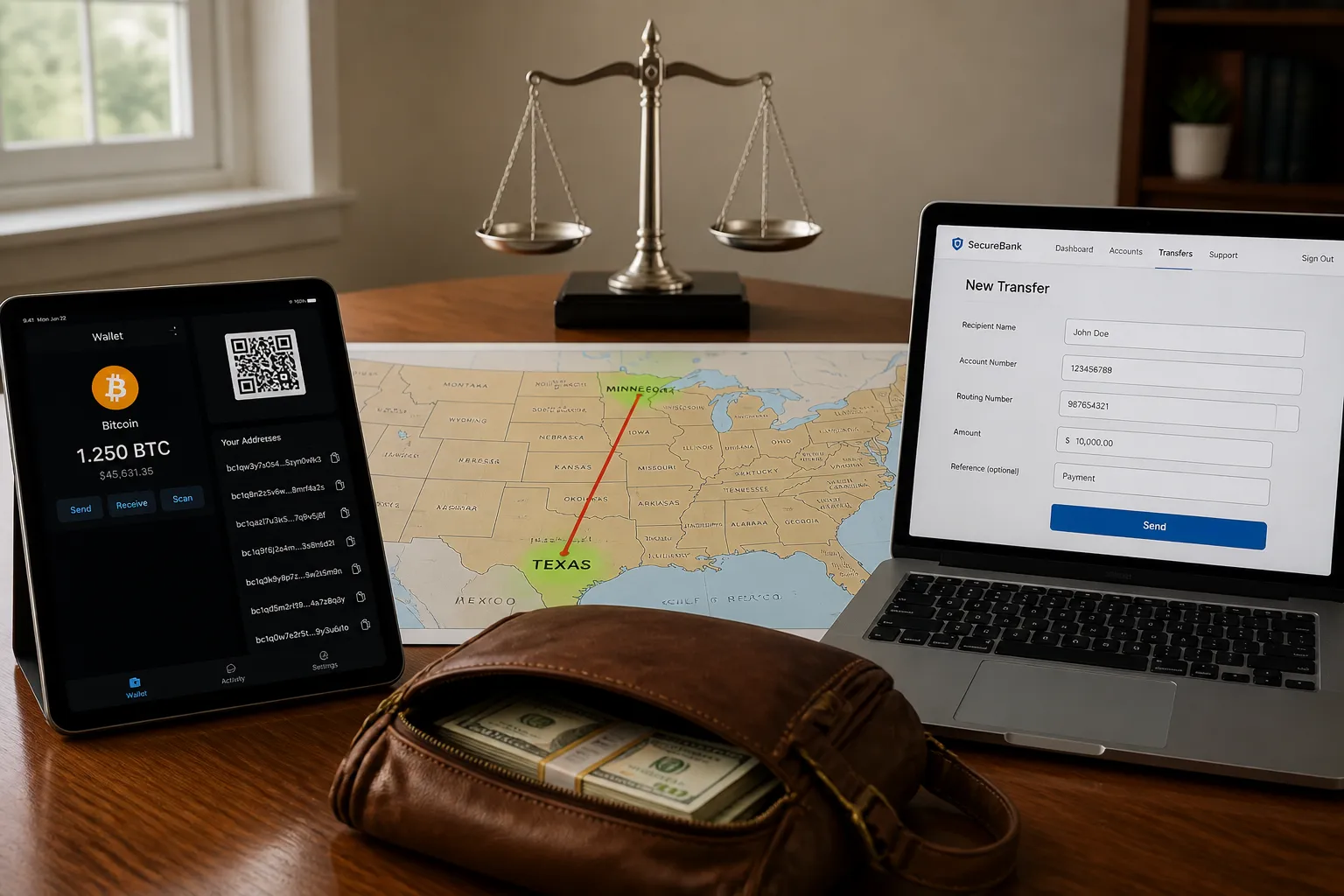
Two Texas brothers have pleaded guilty to federal robbery charges after prosecutors said they kidnapped a Minnesota family and forced the transfer of more than $8 million in cryptocurrency. The defendants, Raymond Christian Garcia, 23, and Isiah Angelo Garcia, 24, entered pleas on Thursday in a federal court in Minnesota. The case stems from an incident that occurred on September 19, 2025, when the brothers traveled from Waller, Texas, to Grant, Minnesota, and held a family at gunpoint for nine hours. The victims were forced to transfer more than $8 million in digital assets from online accounts and hardware wallets. The plea brings the brothers face‑to‑face with a charge of interference with commerce by robbery, a federal offense that carries a maximum sentence of 20 years in prison.
According to the U.S. Attorney’s Office for the District of Minnesota, the brothers used an AR‑15‑style rifle and a shotgun during the kidnapping. The victim’s wife and son were held inside the family home for roughly nine hours, while the victim was taken to a cabin three hours away. The son managed to place an emergency call, which prompted Washington County sheriff’s deputies to arrive on the scene. Deputies recovered the rifle and shotgun and collected other evidence, including surveillance footage that prosecutors say links the brothers to the crime. In their plea agreements, the defendants admitted that firearms were used to threaten the victims and agreed to pay more than $8 million in restitution. Sentencing dates have not yet been announced.
The case is part of a broader trend of physical attacks targeting cryptocurrency holders. Security firm CertiK reported in February that crypto‑related kidnappings and assaults increased by 75 % in 2025 compared with the previous year. The company estimated that losses tied to such attacks reached $101 million during the first four months of 2026 alone. The incident involving the Garcias is the most expensive kidnapping case reported in the United States to date. The federal prosecutors emphasized that the defendants’ actions were a deliberate attempt to interfere with interstate commerce by robbing the victim of digital assets.
Other high‑profile cases have highlighted the growing threat. Earlier this month, Saif Faiq pleaded guilty to a federal conspiracy charge in Connecticut after prosecutors accused him and his brother of planning to abduct the parents of a crypto millionaire linked to a theft of roughly 4,100 Bitcoin. In France, the wife of Sandbox co‑founder Sebastien Borget survived an attempted kidnapping at the couple’s home in Villenoy in May. Local authorities said suspects posing as delivery workers entered the property and tried to force her into a vehicle before neighbors intervened. French authorities have introduced new prevention measures in response to the rise in crypto‑linked kidnappings. Jean‑Didier Berger, France’s Minister Delegate to the Interior, said a prevention platform launched by the government had already attracted thousands of sign‑ups. Officials counted 41 cryptocurrency‑linked kidnapping cases across the country during the first four months of 2026, an average of one every 2.5 days.
The Garcias’ guilty pleas demonstrate that federal prosecutors are willing to pursue criminal charges against individuals who use violence to obtain cryptocurrency. The charge of interference with commerce by robbery is a federal offense under the Hobbs Act, which targets robbery or extortion that affects interstate or foreign commerce. The maximum penalty of 20 years reflects the seriousness of the offense and the impact on the victim’s digital assets. The defendants’ agreement to pay restitution is intended to compensate the victim for the loss of more than $8 million in cryptocurrency, although the recovery of the assets themselves remains uncertain.
The case also underscores the challenges law enforcement faces in tracking and prosecuting crypto‑kidnappings. Digital assets can be transferred across borders quickly and anonymously, making it difficult to trace the flow of stolen funds. In this case, prosecutors relied on physical evidence, surveillance footage, and the emergency call to build a case. The federal court’s acceptance of the guilty pleas indicates that the evidence was sufficient to establish the defendants’ intent and actions.
The Garcias’ sentencing will likely occur later this year, but no dates have been set. The outcome of the case may influence how future crypto‑kidnapping incidents are prosecuted and how victims are protected. The federal government’s focus on these crimes signals a broader effort to deter violent attacks on cryptocurrency holders and to reinforce the rule of law in the digital asset space.
According to the U.S. Attorney’s Office for the District of Minnesota, the brothers used an AR‑15‑style rifle and a shotgun during the kidnapping. The victim’s wife and son were held inside the family home for roughly nine hours, while the victim was taken to a cabin three hours away. The son managed to place an emergency call, which prompted Washington County sheriff’s deputies to arrive on the scene. Deputies recovered the rifle and shotgun and collected other evidence, including surveillance footage that prosecutors say links the brothers to the crime. In their plea agreements, the defendants admitted that firearms were used to threaten the victims and agreed to pay more than $8 million in restitution. Sentencing dates have not yet been announced.
The case is part of a broader trend of physical attacks targeting cryptocurrency holders. Security firm CertiK reported in February that crypto‑related kidnappings and assaults increased by 75 % in 2025 compared with the previous year. The company estimated that losses tied to such attacks reached $101 million during the first four months of 2026 alone. The incident involving the Garcias is the most expensive kidnapping case reported in the United States to date. The federal prosecutors emphasized that the defendants’ actions were a deliberate attempt to interfere with interstate commerce by robbing the victim of digital assets.
Other high‑profile cases have highlighted the growing threat. Earlier this month, Saif Faiq pleaded guilty to a federal conspiracy charge in Connecticut after prosecutors accused him and his brother of planning to abduct the parents of a crypto millionaire linked to a theft of roughly 4,100 Bitcoin. In France, the wife of Sandbox co‑founder Sebastien Borget survived an attempted kidnapping at the couple’s home in Villenoy in May. Local authorities said suspects posing as delivery workers entered the property and tried to force her into a vehicle before neighbors intervened. French authorities have introduced new prevention measures in response to the rise in crypto‑linked kidnappings. Jean‑Didier Berger, France’s Minister Delegate to the Interior, said a prevention platform launched by the government had already attracted thousands of sign‑ups. Officials counted 41 cryptocurrency‑linked kidnapping cases across the country during the first four months of 2026, an average of one every 2.5 days.
The Garcias’ guilty pleas demonstrate that federal prosecutors are willing to pursue criminal charges against individuals who use violence to obtain cryptocurrency. The charge of interference with commerce by robbery is a federal offense under the Hobbs Act, which targets robbery or extortion that affects interstate or foreign commerce. The maximum penalty of 20 years reflects the seriousness of the offense and the impact on the victim’s digital assets. The defendants’ agreement to pay restitution is intended to compensate the victim for the loss of more than $8 million in cryptocurrency, although the recovery of the assets themselves remains uncertain.
The case also underscores the challenges law enforcement faces in tracking and prosecuting crypto‑kidnappings. Digital assets can be transferred across borders quickly and anonymously, making it difficult to trace the flow of stolen funds. In this case, prosecutors relied on physical evidence, surveillance footage, and the emergency call to build a case. The federal court’s acceptance of the guilty pleas indicates that the evidence was sufficient to establish the defendants’ intent and actions.
The Garcias’ sentencing will likely occur later this year, but no dates have been set. The outcome of the case may influence how future crypto‑kidnapping incidents are prosecuted and how victims are protected. The federal government’s focus on these crimes signals a broader effort to deter violent attacks on cryptocurrency holders and to reinforce the rule of law in the digital asset space.







