Blab Crypto
COINHUB Launches First Western Japan Crypto ATM at Osaka's Tennoji MIO
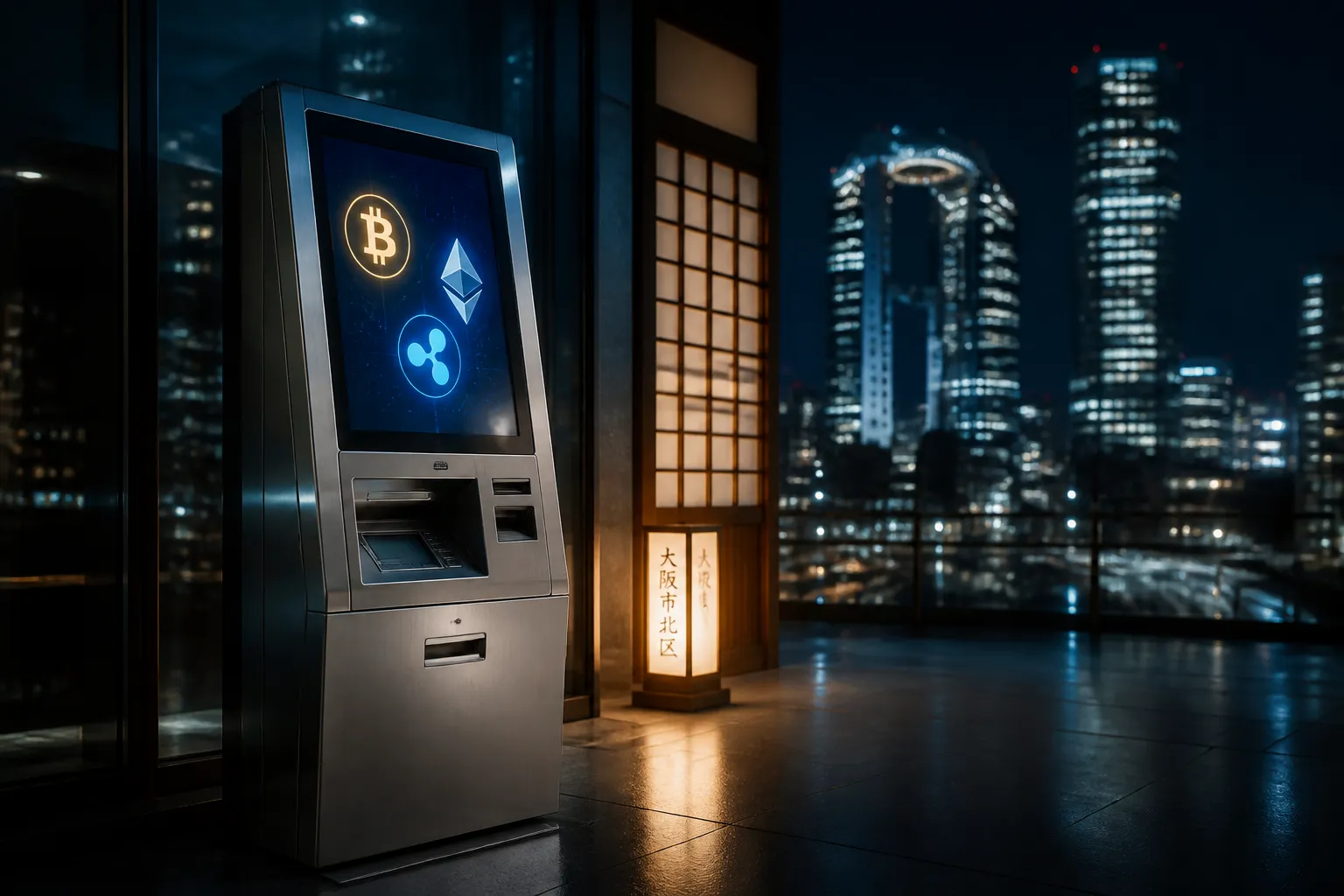
On June 18, 2026, COINHUB Co., Ltd. installed a bidirectional cryptocurrency ATM at Tennoji MIO, a commercial complex above JR Tennoji Station in Osaka. The machine marks the company’s first presence in western Japan and expands its FSA‑regulated network to a new region.
The new kiosk is part of a broader rollout that began in 2025 when COINHUB launched Japan’s first network of FSA‑approved crypto ATMs. That initial deployment placed 25 machines in six major cities, including Tokyo, Yokohama and Nagoya. The firm now targets 3,000 ATMs nationwide—a 120‑fold increase from the original 25. For context, the United States hosts roughly 30,000 crypto ATMs, meaning COINHUB’s plan would supply about one‑tenth of the U.S. network within a single country.
Unlike most crypto ATMs worldwide, which only allow purchases, the Tennoji MIO machine can both buy Bitcoin with cash and sell Bitcoin for yen. This bidirectional capability aligns with COINHUB’s strategy of integrating cryptocurrency transactions into everyday cash‑heavy environments. Japan remains one of the most cash‑centric developed economies, and ATMs that bridge physical yen and digital assets occupy a niche that mobile exchanges cannot fill.
Operating under the Financial Services Agency (FSA) regulatory framework is a key differentiator for COINHUB. The FSA is Japan’s integrated financial regulator, overseeing banking, securities and insurance sectors. COINHUB’s machines comply with the FSA’s know‑your‑customer (KYC) and anti‑money‑laundering (AML) requirements, a standard that has kept most international crypto‑ATM operators out of the Japanese market. The company’s affiliation with the One World Holdings network and its regulatory approval from the FSA signal that it meets Japan’s stringent compliance obligations.
Japan’s regulatory history provides context for COINHUB’s cautious approach. The country first recognized Bitcoin as legal property in 2017 and introduced formal regulations for digital asset exchanges after the 2014 Mt. Gox hack, which exposed vulnerabilities in the industry. The Mt. Gox incident prompted Japan to establish the first formal regulatory framework for cryptocurrency exchanges and virtual currencies.
Despite the regulatory green light, several risks remain. Fees on crypto ATMs can be high; some operators charge spreads exceeding 10 % on transactions. COINHUB has not disclosed the fee structure for the Tennoji MIO machine. Execution risk also exists, as scaling from 25 to 3,000 machines requires securing retail partnerships, managing compliance across prefectures and maintaining hardware at scale. These operational challenges are significant even with regulatory approval.
In summary, COINHUB’s installation at Tennoji MIO represents a milestone in Japan’s crypto infrastructure, extending the company’s FSA‑regulated network into western Japan and offering bidirectional cash‑to‑crypto and crypto‑to‑cash transactions. The move underscores the growing role of physical ATMs in a cash‑heavy economy and highlights the importance of regulatory compliance in expanding crypto services. While the company’s ambitious 3,000‑ATM target remains to be realized, the Tennoji MIO kiosk signals a clear intent to embed cryptocurrency transactions into everyday retail environments.
The new kiosk is part of a broader rollout that began in 2025 when COINHUB launched Japan’s first network of FSA‑approved crypto ATMs. That initial deployment placed 25 machines in six major cities, including Tokyo, Yokohama and Nagoya. The firm now targets 3,000 ATMs nationwide—a 120‑fold increase from the original 25. For context, the United States hosts roughly 30,000 crypto ATMs, meaning COINHUB’s plan would supply about one‑tenth of the U.S. network within a single country.
Unlike most crypto ATMs worldwide, which only allow purchases, the Tennoji MIO machine can both buy Bitcoin with cash and sell Bitcoin for yen. This bidirectional capability aligns with COINHUB’s strategy of integrating cryptocurrency transactions into everyday cash‑heavy environments. Japan remains one of the most cash‑centric developed economies, and ATMs that bridge physical yen and digital assets occupy a niche that mobile exchanges cannot fill.
Operating under the Financial Services Agency (FSA) regulatory framework is a key differentiator for COINHUB. The FSA is Japan’s integrated financial regulator, overseeing banking, securities and insurance sectors. COINHUB’s machines comply with the FSA’s know‑your‑customer (KYC) and anti‑money‑laundering (AML) requirements, a standard that has kept most international crypto‑ATM operators out of the Japanese market. The company’s affiliation with the One World Holdings network and its regulatory approval from the FSA signal that it meets Japan’s stringent compliance obligations.
Japan’s regulatory history provides context for COINHUB’s cautious approach. The country first recognized Bitcoin as legal property in 2017 and introduced formal regulations for digital asset exchanges after the 2014 Mt. Gox hack, which exposed vulnerabilities in the industry. The Mt. Gox incident prompted Japan to establish the first formal regulatory framework for cryptocurrency exchanges and virtual currencies.
Despite the regulatory green light, several risks remain. Fees on crypto ATMs can be high; some operators charge spreads exceeding 10 % on transactions. COINHUB has not disclosed the fee structure for the Tennoji MIO machine. Execution risk also exists, as scaling from 25 to 3,000 machines requires securing retail partnerships, managing compliance across prefectures and maintaining hardware at scale. These operational challenges are significant even with regulatory approval.
In summary, COINHUB’s installation at Tennoji MIO represents a milestone in Japan’s crypto infrastructure, extending the company’s FSA‑regulated network into western Japan and offering bidirectional cash‑to‑crypto and crypto‑to‑cash transactions. The move underscores the growing role of physical ATMs in a cash‑heavy economy and highlights the importance of regulatory compliance in expanding crypto services. While the company’s ambitious 3,000‑ATM target remains to be realized, the Tennoji MIO kiosk signals a clear intent to embed cryptocurrency transactions into everyday retail environments.







