Blab Crypto
Morgan Stanley Low-Fee Ethereum and Solana ETF Proposals Set New Benchmark
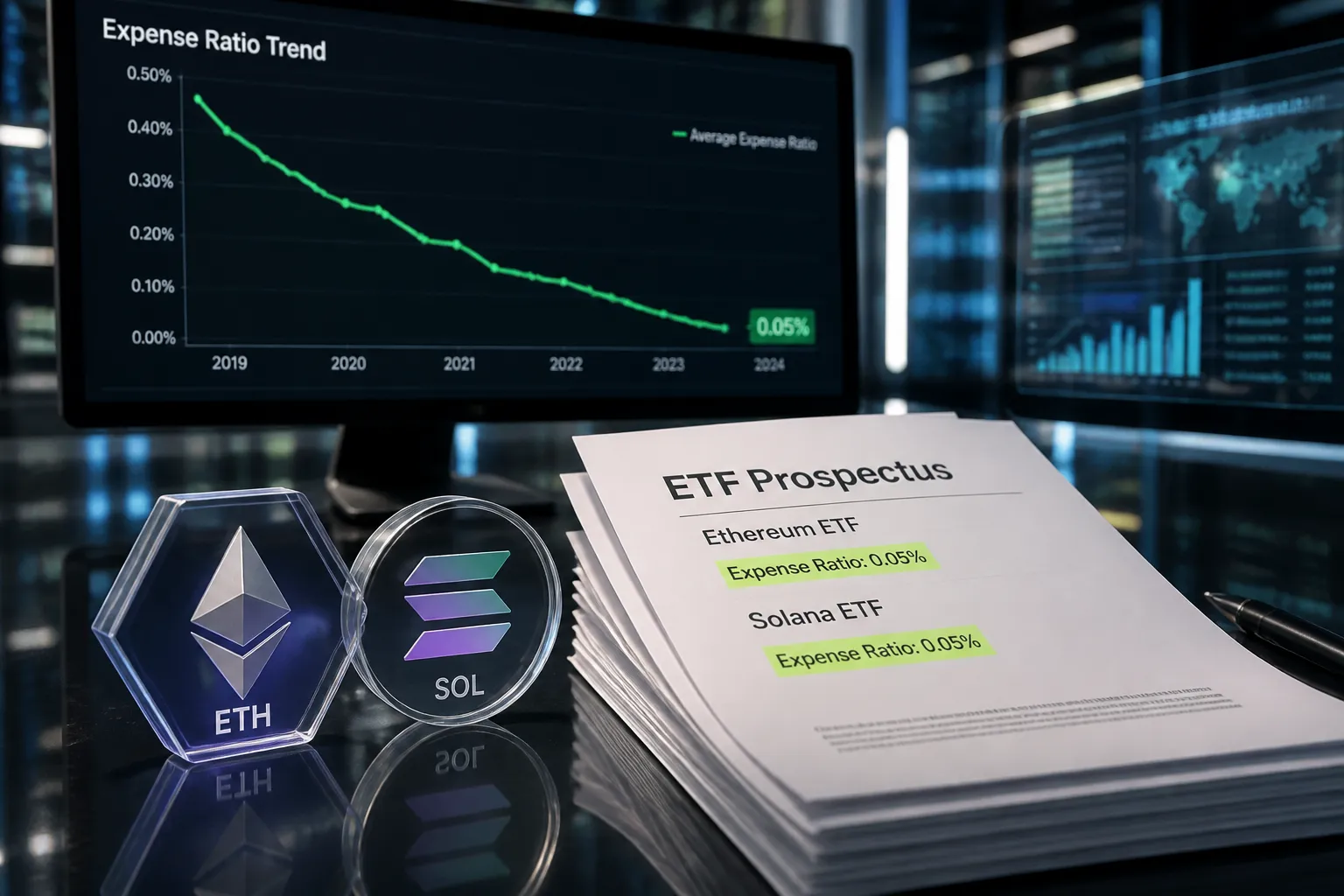
On June 18, Morgan Stanley filed amended registration statements for two spot‑cryptocurrency ETFs that would follow Ethereum (ETH) and Solana (SOL). The documents set a 0.14 % annual delegated sponsor fee for both products – the lowest fee announced for an ETH or SOL ETF anywhere in the world.
The proposed funds, tentatively named MSSE for Ethereum and MSOL for Solana, are slated to trade on NYSE Arca. According to the S‑1 filings, the Ethereum trust will hold ether and a portion of staking rewards, staking 50–80 % of its holdings under normal market conditions. The Solana trust would stake up to 100 % of its holdings. In both cases the trust retains 95 % of staking rewards; the sponsor receives no share of those rewards. The fee is a single charge that accrues daily on net asset value and is paid monthly in cash.
Morgan Stanley’s fee structure positions its products well below competitors. BlackRock’s iShares Ethereum Trust ETF (ETHA) charges 0.25 %, Grayscale’s mini‑Ether product 0.15 %, Bitwise’s Solana staking ETF 0.20 %, and Franklin Templeton’s Solana ETF 0.19 %. The 14‑basis‑point advantage is a strategic move to win shelf space in a market where institutional managers are still weighing the addition of ETH or SOL to their portfolios.
Staking yields play a key role in the fee calculus. Bitwise’s disclosed gross staking reward rate for Solana is 6.28 %. A fully staked Solana product that retains 95 % of rewards would generate roughly 5.97 % before the 0.14 % fee, or 5.83 % after the fee. For Ethereum, a hypothetical 3 % gross staking yield with 50–80 % staked would produce a retained yield of 1.29 %–2.14 % after the fee.
Market‑flow data from 2026 paints a mixed picture. Bitcoin spot ETFs recorded outflows of $982 million in a week in May, while Solana ETFs attracted $55.1 million in inflows and Ethereum ETFs saw $249 million leave. In late May, U.S. spot ETF data indicated Bitcoin ETFs lost 16,595 BTC, Solana ETFs added 192,835 SOL (about $16.6 million), and Ethereum ETFs shed 105,862 ETH. By early June, Bitcoin outflows reached $1.44 billion and Ethereum outflows $257 million, with positive pockets in XRP, Hyperliquid, and NEAR.
The filings name Figment, Galaxy, and Coinbase Canada as staking providers. Morgan Stanley’s global reach – 42 countries and $1.8 trillion in assets under management – positions it to offer these low‑fee products to a broad client base. The fee advantage could prove decisive for wealth managers weighing the cost of exposure against staking returns.
The products remain preliminary. The Securities and Exchange Commission must declare the registration statements effective before any shares can trade, and the filings leave open questions about staking arrangements, custody solutions, and tax treatment that could require further amendments. Macro‑economic conditions add another layer of uncertainty: the Federal Reserve’s policy rate stayed between 3.50 % and 3.75 % through mid‑2026, and inflation forecasts have risen, tightening the cost of capital for institutional investors. These factors could slow the pace at which managers add ETH or SOL to portfolios, delaying the potential rotation that would make Morgan Stanley’s low fee attractive.
In summary, Morgan Stanley’s proposed ETH and SOL ETFs introduce the lowest sponsor fee for U.S. spot‑crypto funds and weave staking rewards into their pricing models. The products are still subject to SEC effectiveness, potential regulatory adjustments, and market demand that has yet to materialize into sustained inflows. Investors and advisors will watch how the fee structure and staking strategy perform once the funds receive approval and begin trading.
The proposed funds, tentatively named MSSE for Ethereum and MSOL for Solana, are slated to trade on NYSE Arca. According to the S‑1 filings, the Ethereum trust will hold ether and a portion of staking rewards, staking 50–80 % of its holdings under normal market conditions. The Solana trust would stake up to 100 % of its holdings. In both cases the trust retains 95 % of staking rewards; the sponsor receives no share of those rewards. The fee is a single charge that accrues daily on net asset value and is paid monthly in cash.
Morgan Stanley’s fee structure positions its products well below competitors. BlackRock’s iShares Ethereum Trust ETF (ETHA) charges 0.25 %, Grayscale’s mini‑Ether product 0.15 %, Bitwise’s Solana staking ETF 0.20 %, and Franklin Templeton’s Solana ETF 0.19 %. The 14‑basis‑point advantage is a strategic move to win shelf space in a market where institutional managers are still weighing the addition of ETH or SOL to their portfolios.
Staking yields play a key role in the fee calculus. Bitwise’s disclosed gross staking reward rate for Solana is 6.28 %. A fully staked Solana product that retains 95 % of rewards would generate roughly 5.97 % before the 0.14 % fee, or 5.83 % after the fee. For Ethereum, a hypothetical 3 % gross staking yield with 50–80 % staked would produce a retained yield of 1.29 %–2.14 % after the fee.
Market‑flow data from 2026 paints a mixed picture. Bitcoin spot ETFs recorded outflows of $982 million in a week in May, while Solana ETFs attracted $55.1 million in inflows and Ethereum ETFs saw $249 million leave. In late May, U.S. spot ETF data indicated Bitcoin ETFs lost 16,595 BTC, Solana ETFs added 192,835 SOL (about $16.6 million), and Ethereum ETFs shed 105,862 ETH. By early June, Bitcoin outflows reached $1.44 billion and Ethereum outflows $257 million, with positive pockets in XRP, Hyperliquid, and NEAR.
The filings name Figment, Galaxy, and Coinbase Canada as staking providers. Morgan Stanley’s global reach – 42 countries and $1.8 trillion in assets under management – positions it to offer these low‑fee products to a broad client base. The fee advantage could prove decisive for wealth managers weighing the cost of exposure against staking returns.
The products remain preliminary. The Securities and Exchange Commission must declare the registration statements effective before any shares can trade, and the filings leave open questions about staking arrangements, custody solutions, and tax treatment that could require further amendments. Macro‑economic conditions add another layer of uncertainty: the Federal Reserve’s policy rate stayed between 3.50 % and 3.75 % through mid‑2026, and inflation forecasts have risen, tightening the cost of capital for institutional investors. These factors could slow the pace at which managers add ETH or SOL to portfolios, delaying the potential rotation that would make Morgan Stanley’s low fee attractive.
In summary, Morgan Stanley’s proposed ETH and SOL ETFs introduce the lowest sponsor fee for U.S. spot‑crypto funds and weave staking rewards into their pricing models. The products are still subject to SEC effectiveness, potential regulatory adjustments, and market demand that has yet to materialize into sustained inflows. Investors and advisors will watch how the fee structure and staking strategy perform once the funds receive approval and begin trading.