Blab Crypto
Synology NAS Gains Crypto Credibility Amid Rising Bitcoin Node Adoption
From modest home storage to the backbone of Bitcoin’s decentralization, Synology’s NAS devices are earning a new reputation.
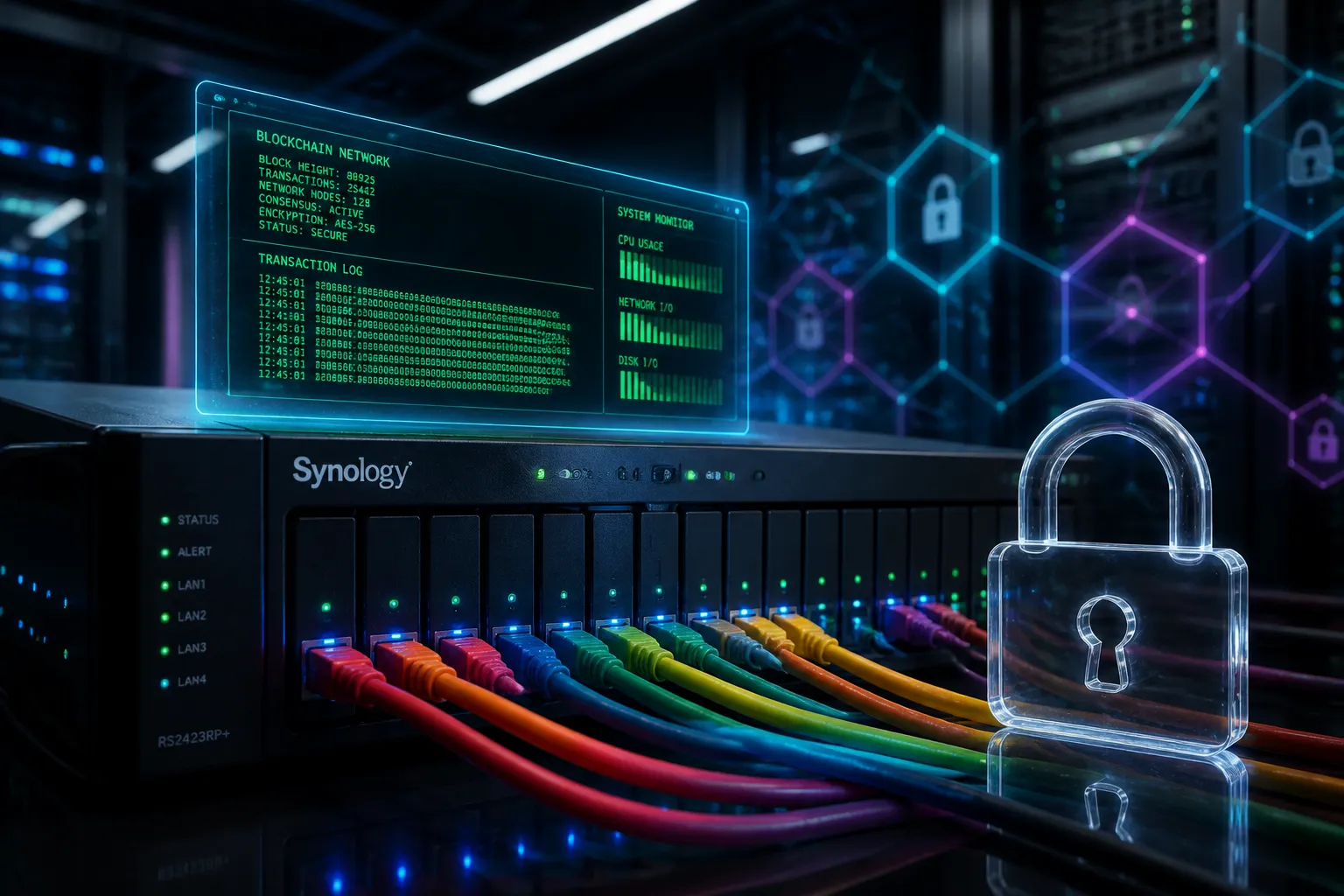
In March 2026, Wirecutter named the DiskStation DS225+ the best home NAS, while PCMag awarded the Synology BeeStation the top single‑drive model and the DS1525+ for small‑business and home use. The two‑bay DS225+ ships with a 2.5‑GbE port, a 2.0‑GHz Intel Celeron J4125, 2 GB of DDR4 RAM, and a 92‑mm cooling fan. Its DiskStation Manager (DSM) operating system now bundles a Docker‑based Container Manager, allowing users to run lightweight containers for a range of applications.
The combination of 2.5‑GbE connectivity and built‑in container support has made the DS225+ and its siblings a favorite among hobbyists who run blockchain workloads at home. Online tutorials demonstrate how to launch Bitcoin full nodes, Monero nodes, and IPFS instances inside Docker containers on Synology hardware. Chia farming guides have circulated for years, and the community has assembled a suite of ready‑to‑run images.
Synology’s relationship with cryptocurrency is not without history. In June 2014 a group of attackers exploited a firmware vulnerability to install mining software that generated roughly 500 million Dogecoins. Dell SecureWorks reported the incident, underscoring the risk of running unpatched NAS devices.
Today, most users who run Bitcoin nodes on Synology units do so for legitimate purposes. A full node verifies every transaction on the network, and operating one on a consumer device places responsibility on the operator for uptime, security patches, and physical protection of the hardware.
Synology has not announced any blockchain‑specific integrations. The company’s focus remains on backup and data protection, a stance echoed by Gartner’s Voice of the Customer report, which ranked Synology a “Strong Performer” in that category in May 2026.
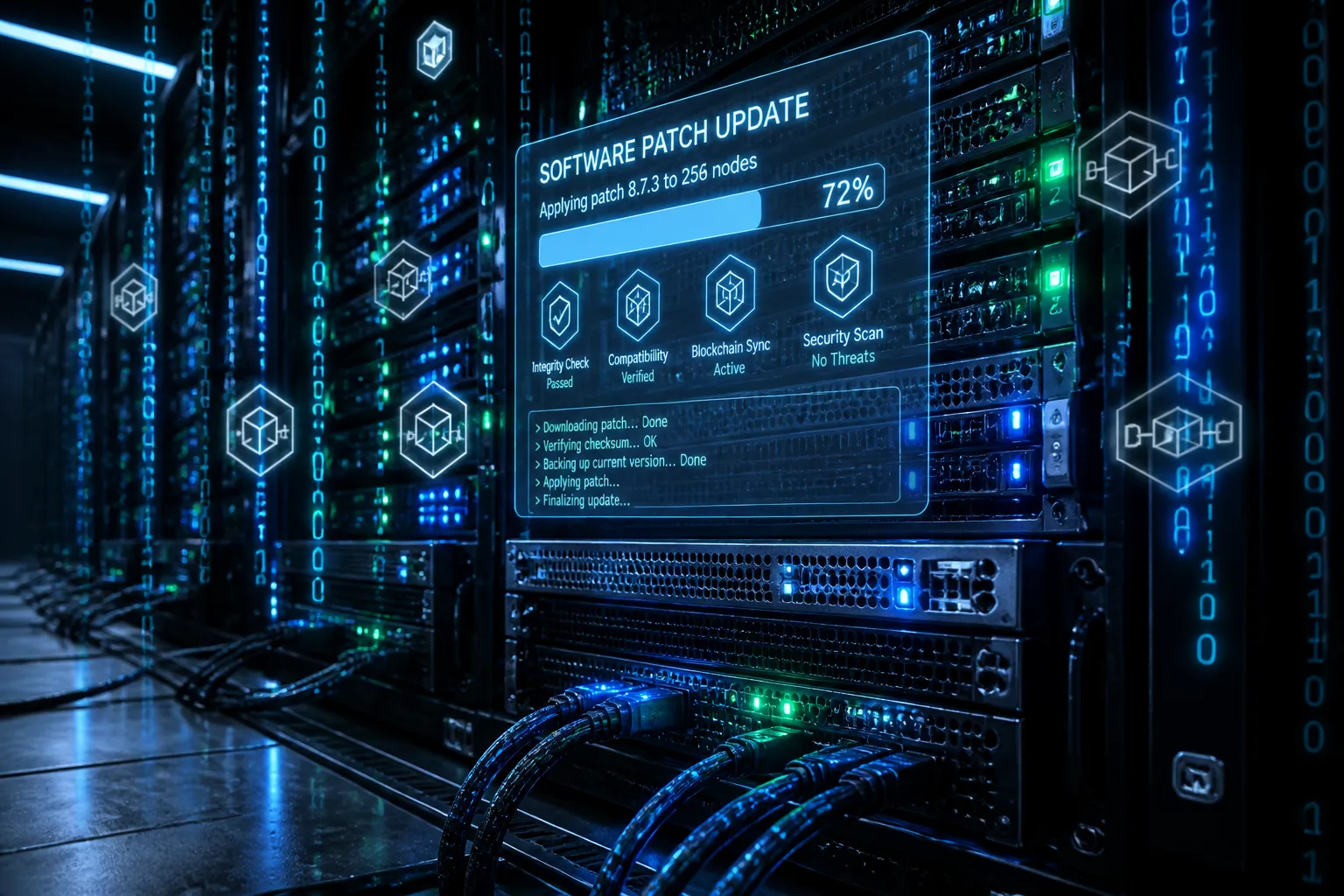
At COMPUTEX, Synology showcased new features for DiskStation Manager, reinforcing its commitment to the prosumer and small‑business market. Recent firmware updates have improved patch management, but the burden of keeping the system current still falls on the user.
Synology is not the only NAS maker in the space. QNAP, Asustor, and TerraMaster also compete for market share, each offering similar hardware and Docker support.
Running a full Bitcoin node on a consumer NAS requires careful attention to security. The 2014 Dogecoin mining exploit serves as a reminder that unpatched devices can be hijacked for illicit mining. While Synology’s update cadence has improved, users must still monitor firmware releases and apply patches promptly.
In summary, Synology’s NAS lineup continues to receive accolades for usability and performance, and its hardware is increasingly being used by cryptocurrency enthusiasts to host full nodes and other blockchain services. The company has not released any dedicated crypto features, but its robust Docker ecosystem and enterprise‑grade reliability make it a viable platform for home‑based blockchain infrastructure.
The current situation is that Synology’s NAS devices are widely adopted for both traditional backup workloads and emerging crypto applications. Users should remain vigilant about firmware updates and physical security to mitigate the risks highlighted by the 2014 exploit. No new protocol upgrades or regulatory developments specific to Synology’s crypto usage have been announced as of this writing.
In March 2026, Wirecutter named the DiskStation DS225+ the best home NAS, while PCMag awarded the Synology BeeStation the top single‑drive model and the DS1525+ for small‑business and home use. The two‑bay DS225+ ships with a 2.5‑GbE port, a 2.0‑GHz Intel Celeron J4125, 2 GB of DDR4 RAM, and a 92‑mm cooling fan. Its DiskStation Manager (DSM) operating system now bundles a Docker‑based Container Manager, allowing users to run lightweight containers for a range of applications.
The combination of 2.5‑GbE connectivity and built‑in container support has made the DS225+ and its siblings a favorite among hobbyists who run blockchain workloads at home. Online tutorials demonstrate how to launch Bitcoin full nodes, Monero nodes, and IPFS instances inside Docker containers on Synology hardware. Chia farming guides have circulated for years, and the community has assembled a suite of ready‑to‑run images.
Synology’s relationship with cryptocurrency is not without history. In June 2014 a group of attackers exploited a firmware vulnerability to install mining software that generated roughly 500 million Dogecoins. Dell SecureWorks reported the incident, underscoring the risk of running unpatched NAS devices.
Today, most users who run Bitcoin nodes on Synology units do so for legitimate purposes. A full node verifies every transaction on the network, and operating one on a consumer device places responsibility on the operator for uptime, security patches, and physical protection of the hardware.
Synology has not announced any blockchain‑specific integrations. The company’s focus remains on backup and data protection, a stance echoed by Gartner’s Voice of the Customer report, which ranked Synology a “Strong Performer” in that category in May 2026.
At COMPUTEX, Synology showcased new features for DiskStation Manager, reinforcing its commitment to the prosumer and small‑business market. Recent firmware updates have improved patch management, but the burden of keeping the system current still falls on the user.
Synology is not the only NAS maker in the space. QNAP, Asustor, and TerraMaster also compete for market share, each offering similar hardware and Docker support.
Running a full Bitcoin node on a consumer NAS requires careful attention to security. The 2014 Dogecoin mining exploit serves as a reminder that unpatched devices can be hijacked for illicit mining. While Synology’s update cadence has improved, users must still monitor firmware releases and apply patches promptly.
In summary, Synology’s NAS lineup continues to receive accolades for usability and performance, and its hardware is increasingly being used by cryptocurrency enthusiasts to host full nodes and other blockchain services. The company has not released any dedicated crypto features, but its robust Docker ecosystem and enterprise‑grade reliability make it a viable platform for home‑based blockchain infrastructure.
The current situation is that Synology’s NAS devices are widely adopted for both traditional backup workloads and emerging crypto applications. Users should remain vigilant about firmware updates and physical security to mitigate the risks highlighted by the 2014 exploit. No new protocol upgrades or regulatory developments specific to Synology’s crypto usage have been announced as of this writing.