Blab Crypto
North Carolina House Passes Strict Bitcoin ATM Regulation Bill
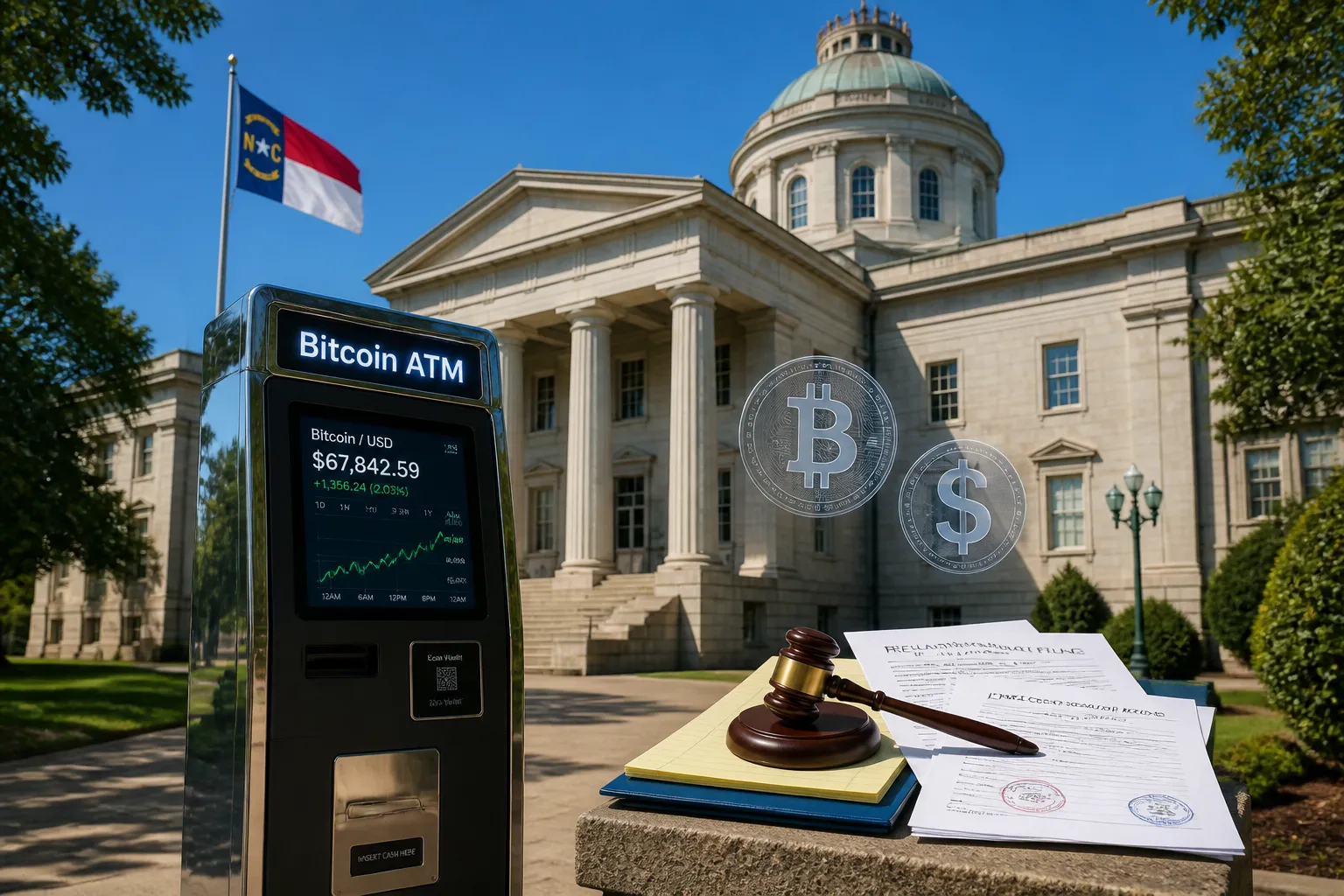
North Carolina’s House of Representatives unanimously approved House Bill 920 on June 11, 2026, sending the bill to the Senate for consideration. The legislation, now known as the Virtual Currency Kiosk Consumer Protection Act, replaces an earlier, broader digital‑asset bill with a focused set of rules that apply only to standalone bitcoin kiosks—machines that allow users to buy or sell cryptocurrency with cash.
Under the House‑approved version, any operator of a bitcoin kiosk in the state must obtain a money‑transmitter license under the Money Transmitters Act, Article 16B of Chapter 53, and submit quarterly reports to the Office of the Commissioner of Banks. The law caps all fees and price mark‑ups at 3 % per transaction and requires operators to display prominent scam warnings before each transaction. Operators must also provide paper receipts and deploy software that blocks known scam‑linked wallets.
Daily transaction limits are tiered: new customers may transact up to $1,000 per day, while returning customers may transact up to $2,500. The refund window for fraud victims is extended from 14 days to 30 days. Operators are required to hire a compliance officer and offer live customer service during specified hours. Violations could trigger unfair‑trade‑practice lawsuits, and individuals who assist in a scam could face misdemeanor charges.
The bill’s sponsor, Rep. Neal Jackson (R‑Moore), said the legislation is a response to a surge in kiosk‑related fraud. According to reports, 13,460 complaints were filed nationwide in 2025, with $389 million in reported losses. Jackson noted that seniors—more than half of the victims—lost $257 million in 2025.
The new law aligns North Carolina with a growing national trend. Wisconsin’s Act 226, passed earlier this year, imposes similar requirements, including a 30‑day refund window, scam warnings, a $1,000 daily limit, and anti‑fraud policies. Michigan is considering two bills that would add kiosks to the state’s money‑transmitter licensing framework. North Carolina’s version is more detailed, adding the 3 % fee cap, tiered limits, specific scam‑notice language, and misdemeanor penalties.
Industry observers note that the legislation could affect the economics of kiosk operators. The 3 % fee cap limits revenue from each transaction, while the daily limits and mandatory software could increase operational costs. However, the law also provides clearer regulatory guidance, potentially reducing the risk of costly enforcement actions.
The bill is scheduled to take effect on December 1, 2026, if passed by the Senate and signed by the governor. The Senate’s debate will determine whether the House’s provisions remain unchanged or are amended. No federal regulatory changes are expected to alter the state’s requirements.
In summary, North Carolina’s House has moved from a broad digital‑asset framework to a focused consumer‑protection law that targets bitcoin kiosks. The legislation imposes licensing, fee caps, transaction limits, scam warnings, receipt requirements, software safeguards, and compliance obligations on kiosk operators. The bill’s passage reflects a national push to protect consumers from kiosk fraud, particularly seniors, and to bring bitcoin ATMs under the same regulatory scrutiny as other money‑transmission businesses.
The next steps will be the Senate’s review, potential amendments, and the governor’s signature. Until then, kiosk operators and consumers should monitor the Senate’s actions and prepare for the upcoming regulatory changes.
Under the House‑approved version, any operator of a bitcoin kiosk in the state must obtain a money‑transmitter license under the Money Transmitters Act, Article 16B of Chapter 53, and submit quarterly reports to the Office of the Commissioner of Banks. The law caps all fees and price mark‑ups at 3 % per transaction and requires operators to display prominent scam warnings before each transaction. Operators must also provide paper receipts and deploy software that blocks known scam‑linked wallets.
Daily transaction limits are tiered: new customers may transact up to $1,000 per day, while returning customers may transact up to $2,500. The refund window for fraud victims is extended from 14 days to 30 days. Operators are required to hire a compliance officer and offer live customer service during specified hours. Violations could trigger unfair‑trade‑practice lawsuits, and individuals who assist in a scam could face misdemeanor charges.
The bill’s sponsor, Rep. Neal Jackson (R‑Moore), said the legislation is a response to a surge in kiosk‑related fraud. According to reports, 13,460 complaints were filed nationwide in 2025, with $389 million in reported losses. Jackson noted that seniors—more than half of the victims—lost $257 million in 2025.
The new law aligns North Carolina with a growing national trend. Wisconsin’s Act 226, passed earlier this year, imposes similar requirements, including a 30‑day refund window, scam warnings, a $1,000 daily limit, and anti‑fraud policies. Michigan is considering two bills that would add kiosks to the state’s money‑transmitter licensing framework. North Carolina’s version is more detailed, adding the 3 % fee cap, tiered limits, specific scam‑notice language, and misdemeanor penalties.
Industry observers note that the legislation could affect the economics of kiosk operators. The 3 % fee cap limits revenue from each transaction, while the daily limits and mandatory software could increase operational costs. However, the law also provides clearer regulatory guidance, potentially reducing the risk of costly enforcement actions.
The bill is scheduled to take effect on December 1, 2026, if passed by the Senate and signed by the governor. The Senate’s debate will determine whether the House’s provisions remain unchanged or are amended. No federal regulatory changes are expected to alter the state’s requirements.
In summary, North Carolina’s House has moved from a broad digital‑asset framework to a focused consumer‑protection law that targets bitcoin kiosks. The legislation imposes licensing, fee caps, transaction limits, scam warnings, receipt requirements, software safeguards, and compliance obligations on kiosk operators. The bill’s passage reflects a national push to protect consumers from kiosk fraud, particularly seniors, and to bring bitcoin ATMs under the same regulatory scrutiny as other money‑transmission businesses.
The next steps will be the Senate’s review, potential amendments, and the governor’s signature. Until then, kiosk operators and consumers should monitor the Senate’s actions and prepare for the upcoming regulatory changes.







