Blab Crypto
Texas Lawmakers and Sheriff Push for Ban on Bitcoin ATMs Amid Rising Scam Cases
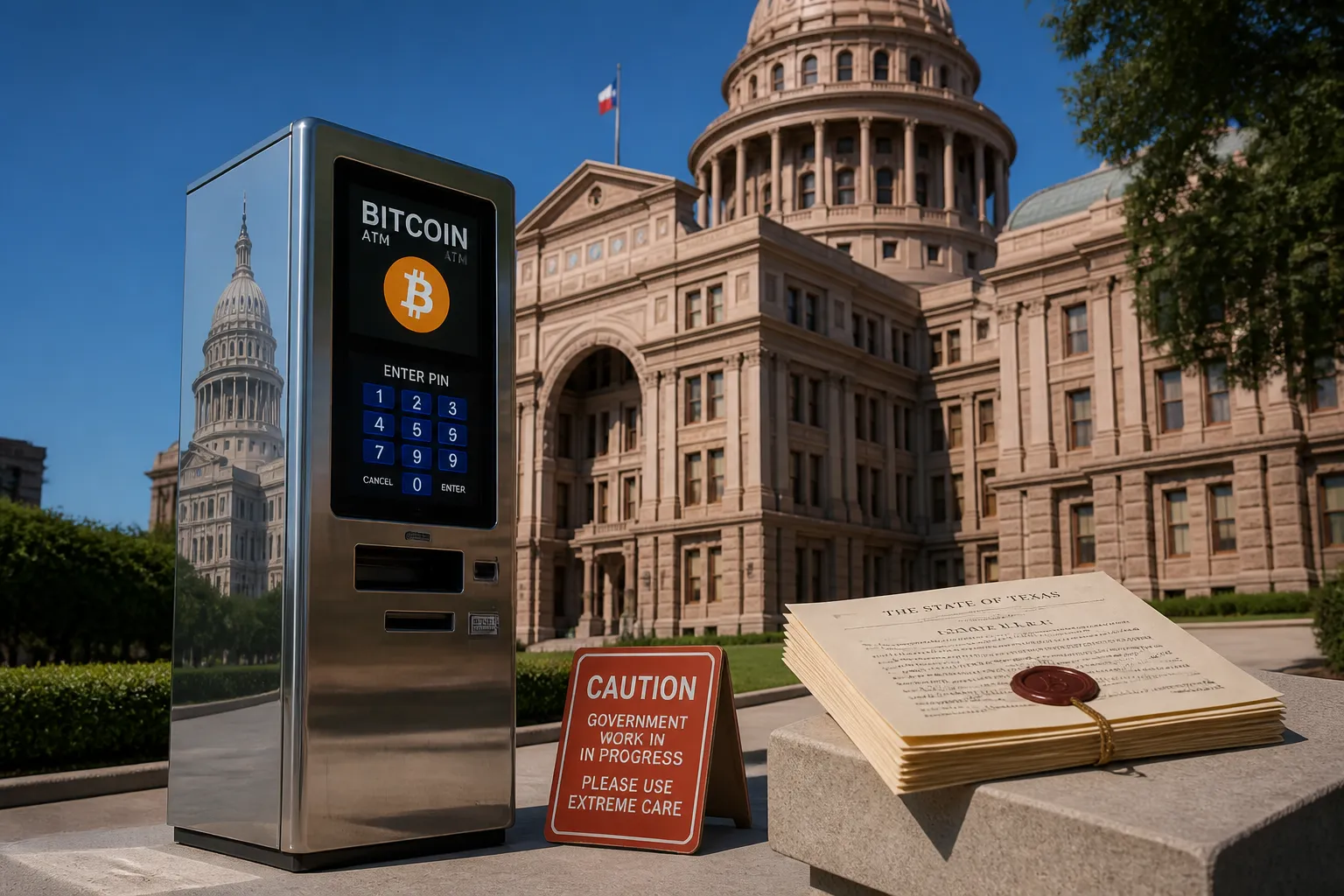
A surge of frauds involving cash‑to‑crypto terminals has spurred Texas legislators and the sheriff of Smith County to demand a statewide ban on Bitcoin ATMs.
On Monday, senators and representatives from the Texas Senate and House convened with Sheriff Larry Smith in Smith County to address the growing threat of Bitcoin‑ATM‑related scams that have targeted residents across East Texas.
Sheriff Smith, a former president of the Sheriff’s Association of Texas, opened the meeting by describing the situation as an "ever‑increasing victimization" of the community, especially senior citizens who are lured into sending cash to scammers through these kiosks. He explained that once the money is deposited, it is transferred into digital wallets and becomes difficult to recover, often ending up in offshore jurisdictions such as the Cayman Islands, Nigeria, and other countries with weak financial regulations.
The discussion gathered a broad coalition of stakeholders: staff from Sen. Bryan Hughes’s office, State Rep. Cole Hefner (R‑Mt. Pleasant), State Rep. Daniel Alders (R‑Tyler), Director Adam Colby, Capt. Jeff Roberts of the Texas Financial Crimes Intelligence Center, and Smith County White‑Collar Crimes Investigator John Partlow. The meeting report states that the participants agreed an outright ban on Bitcoin ATMs is the only effective measure to curb their use as criminal instruments.
"Cash‑to‑crypto terminals are frequently used by criminals to launder money and have been recognized as prime vectors for illicit financial flow," Sheriff Smith said. He added that the sheriff’s office would seek support from other statewide law‑enforcement groups to push the legislation.
Lawmakers present expressed a shared resolve to ban Bitcoin ATMs in Texas and plan to draft legislation for the next session. The proposal would mirror the Texas Senate Bill 1705, introduced in 2025 to create a regulatory framework for virtual‑currency kiosks. SB 1705, titled "relating to the regulation of virtual currency kiosks; providing an administrative penalty," seeks to impose penalties on operators that fail to comply with anti‑money‑laundering requirements.
The meeting occurred against the backdrop of Texas’s broader strategy to expand regulated crypto access. In December 2025, Bitcoin Bancorp announced plans to deploy up to 200 licensed Bitcoin ATMs across the state beginning in early 2026. The company said the new terminals would offer stable‑coin services over time and would operate under state licensing rules.
The contrast between the expansion plan and the push for a ban highlights a tension within Texas policy circles. While the state is positioning itself as a crypto‑friendly market, the increasing incidence of scams involving vulnerable populations has prompted a call for stricter controls.
Law‑enforcement officials noted that victims of these scams are often elderly residents who are targeted by fraud schemes that direct them to send money to scammers impersonating government officials or charity workers. The stolen funds are then moved to wallets that are quickly transferred to offshore addresses, making recovery nearly impossible.
The proposed ban would require operators to obtain a license and comply with enhanced know‑your‑customer and anti‑money‑laundering procedures. If enacted, the ban would apply to all cash‑to‑crypto terminals, including those that allow both purchase and sale of Bitcoin.
Sheriff Smith concluded the session by stating that the sheriff’s office would solicit backing from other law‑enforcement organizations statewide. "The Smith County Sheriff’s Office along with our local state senator and state representatives work tirelessly to safeguard not only the citizens of Northeast Texas but the entire state as well," Smith said.
The outcome of the proposed legislation remains to be seen. The Texas Legislature will consider the bill in the upcoming session, and the state’s regulatory framework for virtual‑currency kiosks will likely evolve as the debate continues. Meanwhile, the planned deployment of 200 Bitcoin ATMs by Bitcoin Bancorp will proceed under the existing licensing regime.
The debate underscores the broader challenge of balancing crypto innovation with consumer protection. As Texas moves forward, lawmakers and law‑enforcement officials will need to reconcile the state’s ambition to be a crypto hub with the imperative to protect vulnerable residents from fraud.
On Monday, senators and representatives from the Texas Senate and House convened with Sheriff Larry Smith in Smith County to address the growing threat of Bitcoin‑ATM‑related scams that have targeted residents across East Texas.
Sheriff Smith, a former president of the Sheriff’s Association of Texas, opened the meeting by describing the situation as an "ever‑increasing victimization" of the community, especially senior citizens who are lured into sending cash to scammers through these kiosks. He explained that once the money is deposited, it is transferred into digital wallets and becomes difficult to recover, often ending up in offshore jurisdictions such as the Cayman Islands, Nigeria, and other countries with weak financial regulations.
The discussion gathered a broad coalition of stakeholders: staff from Sen. Bryan Hughes’s office, State Rep. Cole Hefner (R‑Mt. Pleasant), State Rep. Daniel Alders (R‑Tyler), Director Adam Colby, Capt. Jeff Roberts of the Texas Financial Crimes Intelligence Center, and Smith County White‑Collar Crimes Investigator John Partlow. The meeting report states that the participants agreed an outright ban on Bitcoin ATMs is the only effective measure to curb their use as criminal instruments.
"Cash‑to‑crypto terminals are frequently used by criminals to launder money and have been recognized as prime vectors for illicit financial flow," Sheriff Smith said. He added that the sheriff’s office would seek support from other statewide law‑enforcement groups to push the legislation.
Lawmakers present expressed a shared resolve to ban Bitcoin ATMs in Texas and plan to draft legislation for the next session. The proposal would mirror the Texas Senate Bill 1705, introduced in 2025 to create a regulatory framework for virtual‑currency kiosks. SB 1705, titled "relating to the regulation of virtual currency kiosks; providing an administrative penalty," seeks to impose penalties on operators that fail to comply with anti‑money‑laundering requirements.
The meeting occurred against the backdrop of Texas’s broader strategy to expand regulated crypto access. In December 2025, Bitcoin Bancorp announced plans to deploy up to 200 licensed Bitcoin ATMs across the state beginning in early 2026. The company said the new terminals would offer stable‑coin services over time and would operate under state licensing rules.
The contrast between the expansion plan and the push for a ban highlights a tension within Texas policy circles. While the state is positioning itself as a crypto‑friendly market, the increasing incidence of scams involving vulnerable populations has prompted a call for stricter controls.
Law‑enforcement officials noted that victims of these scams are often elderly residents who are targeted by fraud schemes that direct them to send money to scammers impersonating government officials or charity workers. The stolen funds are then moved to wallets that are quickly transferred to offshore addresses, making recovery nearly impossible.
The proposed ban would require operators to obtain a license and comply with enhanced know‑your‑customer and anti‑money‑laundering procedures. If enacted, the ban would apply to all cash‑to‑crypto terminals, including those that allow both purchase and sale of Bitcoin.
Sheriff Smith concluded the session by stating that the sheriff’s office would solicit backing from other law‑enforcement organizations statewide. "The Smith County Sheriff’s Office along with our local state senator and state representatives work tirelessly to safeguard not only the citizens of Northeast Texas but the entire state as well," Smith said.
The outcome of the proposed legislation remains to be seen. The Texas Legislature will consider the bill in the upcoming session, and the state’s regulatory framework for virtual‑currency kiosks will likely evolve as the debate continues. Meanwhile, the planned deployment of 200 Bitcoin ATMs by Bitcoin Bancorp will proceed under the existing licensing regime.
The debate underscores the broader challenge of balancing crypto innovation with consumer protection. As Texas moves forward, lawmakers and law‑enforcement officials will need to reconcile the state’s ambition to be a crypto hub with the imperative to protect vulnerable residents from fraud.