Blab Crypto
Coinbase CEO Brian Armstrong Calls U.S. Constitution Unfit for Modern Fiscal Reality as National Debt Surpasses $39 Trillion
On July 1 2026, Brian Armstrong, the founder and chief executive officer of Coinbase Global Inc., took to X to launch a scathing critique of the U.S. Constitution. In a lengthy post he argued that the founding document lacks two essential fiscal safeguards—an explicit cap on government spending and a mandate for a hard‑backed currency—and that the absence of these provisions has helped the federal debt climb past $39 trillion. Armstrong warned that unchecked spending threatens the United States’ standing as the world’s reserve currency.
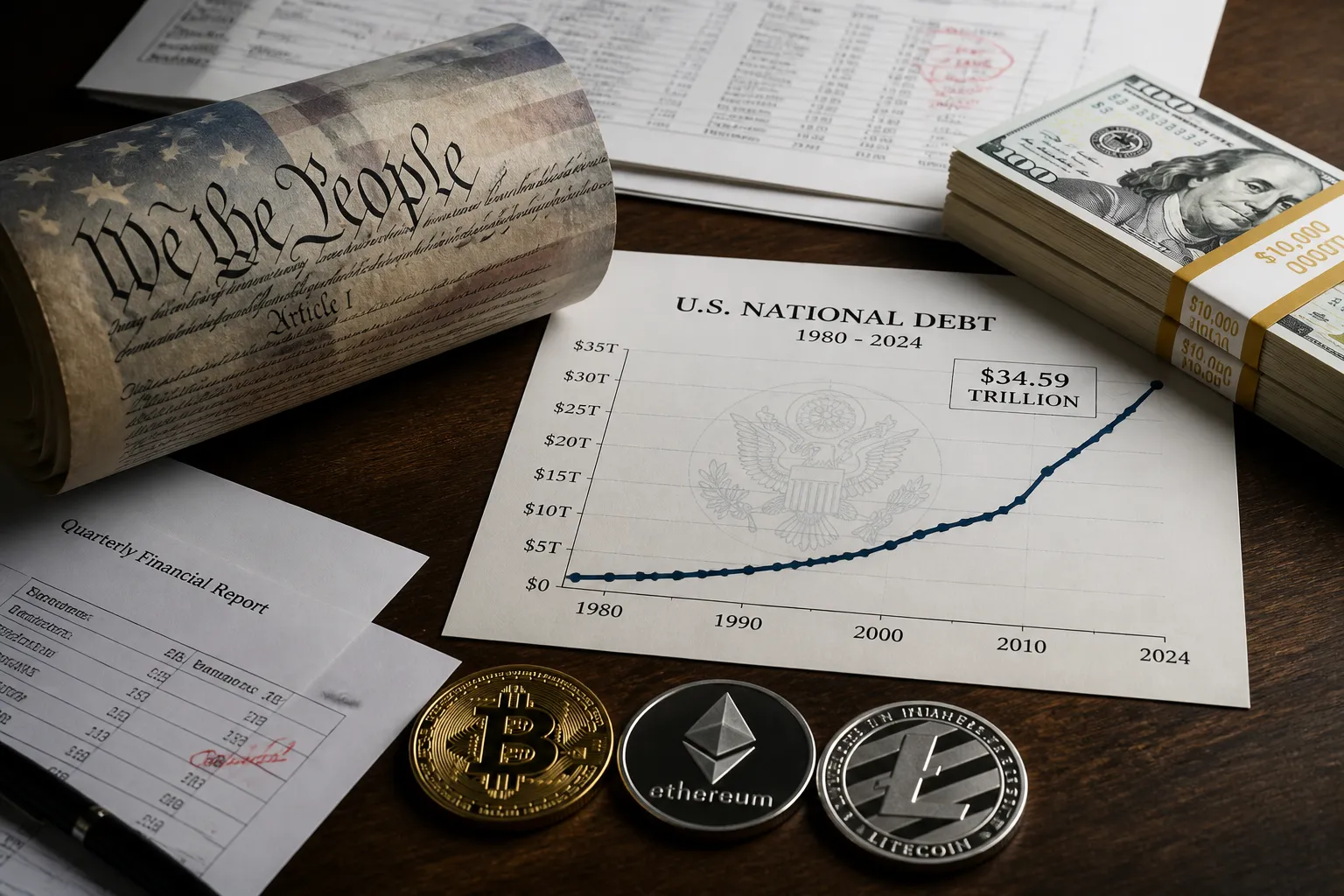
Armstrong’s remarks arrive as Treasury officials report that the total public debt reached $39.35 trillion on July 3 2026, the first time the figure has surpassed the $39 trillion mark, which was crossed on March 19 2026. The debt‑to‑GDP ratio peaked at 138 % in March 2026, the highest level since World War II, and the Treasury’s March monthly update recorded a $2.64 trillion rise in gross national debt from the prior year.
Armstrong is no stranger to fiscal debate. He has previously urged clearer regulation of cryptocurrencies and highlighted the contrast between Bitcoin’s energy‑based scarcity and fiat currency’s ability to print money without limit. In the July 1 post he reiterated that Bitcoin’s fixed supply “tends to hold its value for long,” whereas fiat can be debased through unchecked issuance.
To address what he sees as a broken incentive structure, Armstrong outlined three alternative paths: first, a new constitution for frontier jurisdictions such as Mars, or the creation of special economic zones or cyberspace that impose fiscal limits; second, a constitutional amendment that would align spending and debt with fiscal prudence; and third, a hyper‑economic growth model that harnesses artificial intelligence, robotics, and cryptocurrency to outpace inflation—an approach he says echoes Elon Musk’s belief that the AI age will generate such abundance that prices will fall, creating deflation.
Armstrong’s proposals reflect his broader view that hard‑backed digital assets could help enforce fiscal discipline in a future economic reset. His comments carry weight because Coinbase, with over 100 million users and nearly 12 percent of all Bitcoin in circulation, is a major player in the crypto market. While his post has attracted attention from policymakers and industry observers, it has yet to spur any official policy changes.
The U.S. debt problem remains a top concern for lawmakers. The Treasury is expected to borrow more than $2 trillion in fiscal year 2026, with a projected deficit of $1.9 trillion, according to the Congressional Budget Office. As the debt‑to‑GDP ratio climbs, interest payments on the debt are rising, further tightening fiscal space.
Armstrong’s commentary adds a new dimension to the ongoing debate by linking fiscal policy to constitutional limits and suggesting that digital assets could play a role in restoring fiscal discipline. Whether his ideas will influence legislative or regulatory action remains uncertain, but the discussion underscores the growing intersection between cryptocurrency, fiscal policy, and constitutional law as the United States grapples with a debt that now exceeds the size of its economy. Stakeholders in finance, technology, and public policy will be watching how the conversation around hard‑backed currency and fiscal safeguards evolves in the coming months.
Armstrong’s remarks arrive as Treasury officials report that the total public debt reached $39.35 trillion on July 3 2026, the first time the figure has surpassed the $39 trillion mark, which was crossed on March 19 2026. The debt‑to‑GDP ratio peaked at 138 % in March 2026, the highest level since World War II, and the Treasury’s March monthly update recorded a $2.64 trillion rise in gross national debt from the prior year.
Armstrong is no stranger to fiscal debate. He has previously urged clearer regulation of cryptocurrencies and highlighted the contrast between Bitcoin’s energy‑based scarcity and fiat currency’s ability to print money without limit. In the July 1 post he reiterated that Bitcoin’s fixed supply “tends to hold its value for long,” whereas fiat can be debased through unchecked issuance.
To address what he sees as a broken incentive structure, Armstrong outlined three alternative paths: first, a new constitution for frontier jurisdictions such as Mars, or the creation of special economic zones or cyberspace that impose fiscal limits; second, a constitutional amendment that would align spending and debt with fiscal prudence; and third, a hyper‑economic growth model that harnesses artificial intelligence, robotics, and cryptocurrency to outpace inflation—an approach he says echoes Elon Musk’s belief that the AI age will generate such abundance that prices will fall, creating deflation.
Armstrong’s proposals reflect his broader view that hard‑backed digital assets could help enforce fiscal discipline in a future economic reset. His comments carry weight because Coinbase, with over 100 million users and nearly 12 percent of all Bitcoin in circulation, is a major player in the crypto market. While his post has attracted attention from policymakers and industry observers, it has yet to spur any official policy changes.
The U.S. debt problem remains a top concern for lawmakers. The Treasury is expected to borrow more than $2 trillion in fiscal year 2026, with a projected deficit of $1.9 trillion, according to the Congressional Budget Office. As the debt‑to‑GDP ratio climbs, interest payments on the debt are rising, further tightening fiscal space.
Armstrong’s commentary adds a new dimension to the ongoing debate by linking fiscal policy to constitutional limits and suggesting that digital assets could play a role in restoring fiscal discipline. Whether his ideas will influence legislative or regulatory action remains uncertain, but the discussion underscores the growing intersection between cryptocurrency, fiscal policy, and constitutional law as the United States grapples with a debt that now exceeds the size of its economy. Stakeholders in finance, technology, and public policy will be watching how the conversation around hard‑backed currency and fiscal safeguards evolves in the coming months.