Blab Crypto
Kevin Warshs Fed Chair Confirmation Signals a Shift in Crypto-Market Sentiment
On May 13, 2026, the U.S. Senate confirmed Kevin Warsh as the next chair of the Federal Reserve, a move that has already begun to shape how cryptocurrency investors read monetary‑policy signals.
Warsh’s confirmation was the narrowest for a Fed chair in modern history, with a 54‑45 vote. Unlike his predecessors, the new chair owns stakes in several digital‑asset projects, including Polymarket, Solana, and Flashnet—a Bitcoin‑payments startup. Those holdings are uncommon for a central‑bank official and have drawn attention from market participants.
At the Fed’s first Federal Open Market Committee (FOMC) meeting under Warsh on June 17, 2026, the committee voted unanimously to keep the federal‑funds rate in the 3.5‑3.75% range. Inflation, measured at 4.2% in May, remains above the Fed’s 2% target. The decision to hold rates steady, rather than tighten further, was described by the Fed as a deliberate choice to avoid adding pressure to the financial system.
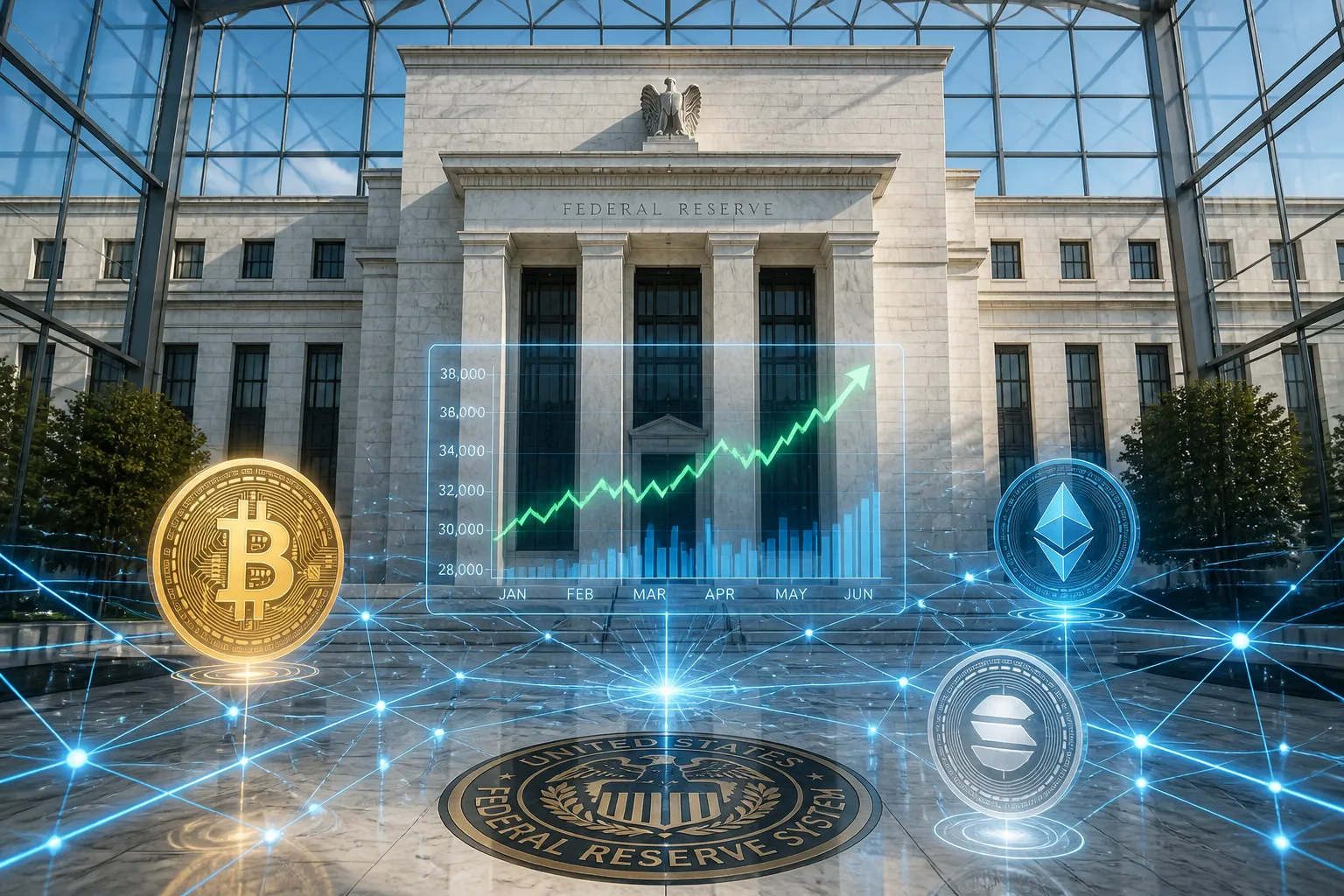
Bitcoin’s price reacted to the June meeting, trading between $64,000 and $66,000. While the Fed does not regulate crypto exchanges or set rules for digital‑asset issuers, its policy stance shapes the broader risk environment for banks, Treasury, and Congress. A chair who personally holds Solana and has backed a Bitcoin‑payments company is less likely to push a hard‑line view that crypto poses a systemic threat.
The crypto industry is also watching the legislative agenda. Congress is debating stable‑coin regulation and broader market‑structure rules for digital assets. Warsh’s pro‑digital‑asset stance could influence how regulators and lawmakers approach these proposals.
The next key data point for market observers is the release of the FOMC minutes on July 8, 2026. Those minutes will detail how committee members discussed inflation, growth risks, and the consensus around the current rate hold. Traders are advised to look for language related to “financial innovation,” “digital payments,” or “emerging asset classes,” as such phrasing could signal the Fed’s view on the role of crypto in the economy.
Warsh’s confirmation and the subsequent rate decision have already had measurable effects on the crypto market. The Bitcoin price range following the June meeting suggests that investors are interpreting the Fed’s stance as a signal that monetary policy will remain accommodative for the near term. This interpretation aligns with the broader view that a steady rate environment reduces the pressure on digital‑asset prices that can arise from tightening.
The Fed’s influence extends beyond rates. Its policy statements and minutes shape the risk appetite of banks, which in turn affects the liquidity available to crypto‑related lending and trading. Warsh’s background may also affect how the Fed communicates about financial‑stability risks associated with digital assets, potentially leading to a more nuanced discussion of crypto‑related systemic risks.
In summary, Kevin Warsh’s confirmation as Fed chair and the committee’s decision to hold rates steady have introduced a new dynamic into how crypto markets interpret U.S. monetary policy. The upcoming FOMC minutes will provide further clarity on the Fed’s perspective on digital assets. Market participants will continue to monitor the Fed’s communications, legislative developments, and the broader economic environment to assess the implications for Bitcoin, Solana, and other digital‑asset projects.
Warsh’s confirmation was the narrowest for a Fed chair in modern history, with a 54‑45 vote. Unlike his predecessors, the new chair owns stakes in several digital‑asset projects, including Polymarket, Solana, and Flashnet—a Bitcoin‑payments startup. Those holdings are uncommon for a central‑bank official and have drawn attention from market participants.
At the Fed’s first Federal Open Market Committee (FOMC) meeting under Warsh on June 17, 2026, the committee voted unanimously to keep the federal‑funds rate in the 3.5‑3.75% range. Inflation, measured at 4.2% in May, remains above the Fed’s 2% target. The decision to hold rates steady, rather than tighten further, was described by the Fed as a deliberate choice to avoid adding pressure to the financial system.
Bitcoin’s price reacted to the June meeting, trading between $64,000 and $66,000. While the Fed does not regulate crypto exchanges or set rules for digital‑asset issuers, its policy stance shapes the broader risk environment for banks, Treasury, and Congress. A chair who personally holds Solana and has backed a Bitcoin‑payments company is less likely to push a hard‑line view that crypto poses a systemic threat.
The crypto industry is also watching the legislative agenda. Congress is debating stable‑coin regulation and broader market‑structure rules for digital assets. Warsh’s pro‑digital‑asset stance could influence how regulators and lawmakers approach these proposals.
The next key data point for market observers is the release of the FOMC minutes on July 8, 2026. Those minutes will detail how committee members discussed inflation, growth risks, and the consensus around the current rate hold. Traders are advised to look for language related to “financial innovation,” “digital payments,” or “emerging asset classes,” as such phrasing could signal the Fed’s view on the role of crypto in the economy.
Warsh’s confirmation and the subsequent rate decision have already had measurable effects on the crypto market. The Bitcoin price range following the June meeting suggests that investors are interpreting the Fed’s stance as a signal that monetary policy will remain accommodative for the near term. This interpretation aligns with the broader view that a steady rate environment reduces the pressure on digital‑asset prices that can arise from tightening.
The Fed’s influence extends beyond rates. Its policy statements and minutes shape the risk appetite of banks, which in turn affects the liquidity available to crypto‑related lending and trading. Warsh’s background may also affect how the Fed communicates about financial‑stability risks associated with digital assets, potentially leading to a more nuanced discussion of crypto‑related systemic risks.
In summary, Kevin Warsh’s confirmation as Fed chair and the committee’s decision to hold rates steady have introduced a new dynamic into how crypto markets interpret U.S. monetary policy. The upcoming FOMC minutes will provide further clarity on the Fed’s perspective on digital assets. Market participants will continue to monitor the Fed’s communications, legislative developments, and the broader economic environment to assess the implications for Bitcoin, Solana, and other digital‑asset projects.







