Blab Crypto
Monroeville Faces Bitcoin Mining Receivership and Potential AI Data Center Amid Zoning Debate
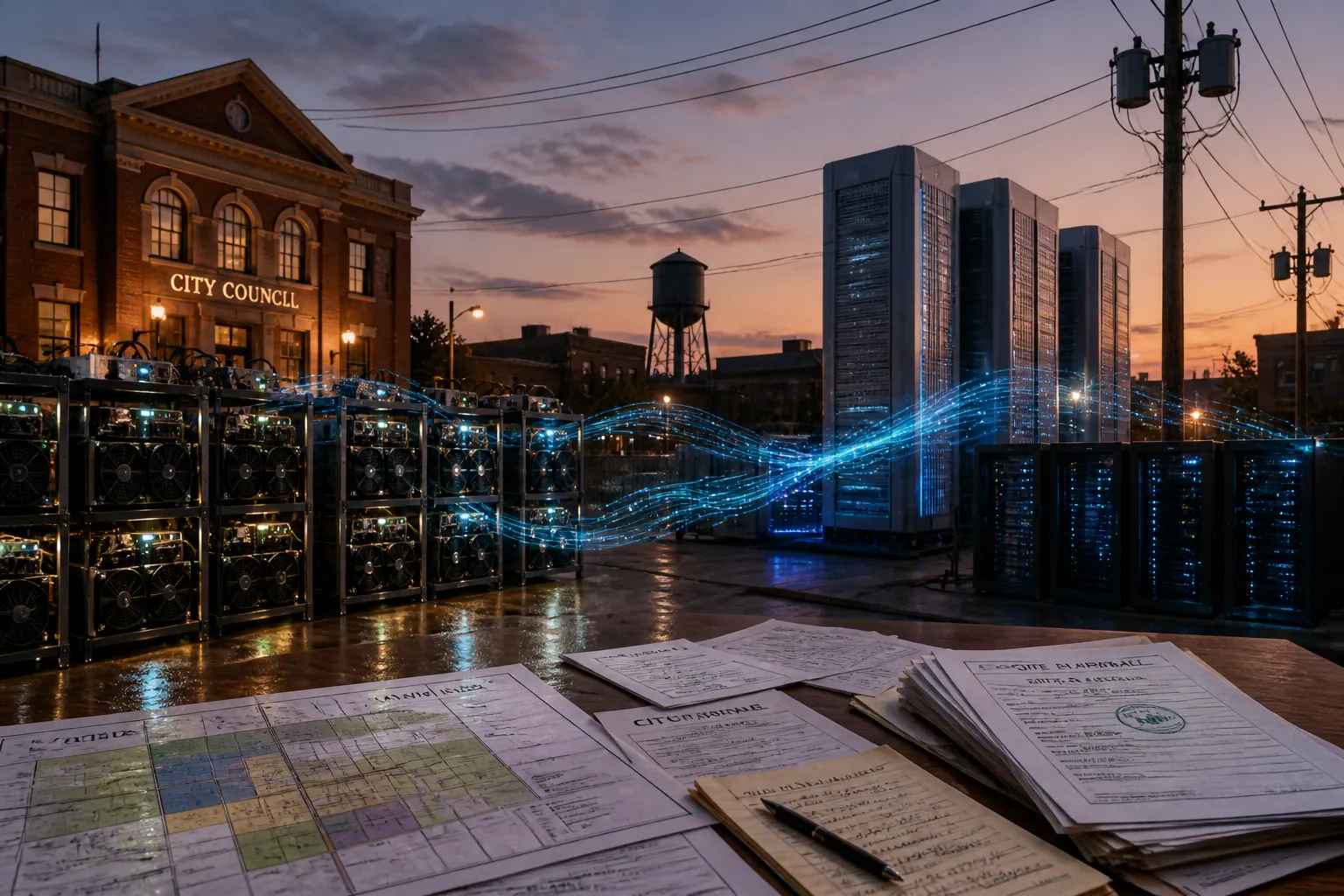
Monroeville, Ohio, is caught in the middle of a legal and regulatory tug‑of‑war that began with a troubled Bitcoin mining operation tied to the Gray Matter company and has expanded to a proposed artificial‑intelligence data center by Decimal Digital. The village council is currently reviewing zoning rules, a one‑year moratorium on new data centers, and ways to gather public input.
A court‑appointed receiver, Mark Dottore of Dottore Companies, briefed council members that the former operators of the Gray Matter‑related mining site had exploited the village. Dottore confirmed that those operators are no longer involved and that he is working to address noise complaints while recovering roughly $1.3 million owed to the village and other secured creditors. He stressed that any sale of the existing site must go through the court, with motions filed and parties given time to object before a judge makes a final decision.
The council also tackled a separate issue: Decimal Digital’s ownership of land earmarked for a potential AI data center. Solicitor Jim Barney explained that the village is dealing with two distinct matters—the receivership of the Gray Matter site and the Decimal Digital property. Decimal Digital’s CEO, Roshan Shah, noted that the current Bitcoin mining operation is “unbearably loud,” but that the proposed data center would use different technology and should not be directly compared.
Decimal Digital has offered, in writing, to help the village recover the $1.3 million tied to the Gray Matter matter. The existing mining site remains under receivership, meaning that any resolution must move through the legal process.
During the council work session, several members suggested ways to improve public communication. Andrew Brown proposed a frequently asked questions document that could be updated as new information becomes available. Barney is drafting language for a possible advisory vote that would let residents weigh in on data‑center development, though the result would not be binding.
The council also debated how to collect public feedback. Options discussed included public forums, surveys, and other outreach methods. Zoning was a major focus, with the council considering an overlay district that would add specific data‑center rules on top of existing zoning, or a conditional‑use approval that would allow a project only after officials set conditions such as noise limits, setbacks, and generator requirements.
Residents expressed a desire for more information and a stronger voice in the decision‑making process. Jim Ehrman noted that many residents only have the Gray Matter site as a reference point, and that the village’s history with the mining operation fuels distrust. He also clarified that the council’s work sessions do not indicate approval of any project; the village still needs zoning and other rules in place should a data center move forward.
Decimal Digital representatives announced a public information event scheduled for August 15 at the American Legion in Monroeville. The event will be organized in a “science fair” style, allowing residents to speak directly with professionals about water use, noise, economics, zoning, and other topics at various stations.
After a private meeting with the receiver, a Decimal Digital attorney expressed disappointment that the company was not included in the closed‑door discussion. The attorney said Decimal Digital has been proactive and wishes to remain involved in decisions affecting the site. Barney explained that the executive session was not appropriate for Decimal Digital because the village and the company were not aligned on that part of the litigation.
Officials said the next steps include continuing to develop possible zoning rules, reviewing external technical support, and determining the best methods for collecting public feedback. The data‑center discussion is expected to continue at future council and planning meetings.
In summary, Monroeville is navigating the aftermath of a Bitcoin mining receivership while evaluating a new AI data center proposal. The village’s moratorium, zoning considerations, and community engagement efforts will shape the outcome of these competing interests.
A court‑appointed receiver, Mark Dottore of Dottore Companies, briefed council members that the former operators of the Gray Matter‑related mining site had exploited the village. Dottore confirmed that those operators are no longer involved and that he is working to address noise complaints while recovering roughly $1.3 million owed to the village and other secured creditors. He stressed that any sale of the existing site must go through the court, with motions filed and parties given time to object before a judge makes a final decision.
The council also tackled a separate issue: Decimal Digital’s ownership of land earmarked for a potential AI data center. Solicitor Jim Barney explained that the village is dealing with two distinct matters—the receivership of the Gray Matter site and the Decimal Digital property. Decimal Digital’s CEO, Roshan Shah, noted that the current Bitcoin mining operation is “unbearably loud,” but that the proposed data center would use different technology and should not be directly compared.
Decimal Digital has offered, in writing, to help the village recover the $1.3 million tied to the Gray Matter matter. The existing mining site remains under receivership, meaning that any resolution must move through the legal process.
During the council work session, several members suggested ways to improve public communication. Andrew Brown proposed a frequently asked questions document that could be updated as new information becomes available. Barney is drafting language for a possible advisory vote that would let residents weigh in on data‑center development, though the result would not be binding.
The council also debated how to collect public feedback. Options discussed included public forums, surveys, and other outreach methods. Zoning was a major focus, with the council considering an overlay district that would add specific data‑center rules on top of existing zoning, or a conditional‑use approval that would allow a project only after officials set conditions such as noise limits, setbacks, and generator requirements.
Residents expressed a desire for more information and a stronger voice in the decision‑making process. Jim Ehrman noted that many residents only have the Gray Matter site as a reference point, and that the village’s history with the mining operation fuels distrust. He also clarified that the council’s work sessions do not indicate approval of any project; the village still needs zoning and other rules in place should a data center move forward.
Decimal Digital representatives announced a public information event scheduled for August 15 at the American Legion in Monroeville. The event will be organized in a “science fair” style, allowing residents to speak directly with professionals about water use, noise, economics, zoning, and other topics at various stations.
After a private meeting with the receiver, a Decimal Digital attorney expressed disappointment that the company was not included in the closed‑door discussion. The attorney said Decimal Digital has been proactive and wishes to remain involved in decisions affecting the site. Barney explained that the executive session was not appropriate for Decimal Digital because the village and the company were not aligned on that part of the litigation.
Officials said the next steps include continuing to develop possible zoning rules, reviewing external technical support, and determining the best methods for collecting public feedback. The data‑center discussion is expected to continue at future council and planning meetings.
In summary, Monroeville is navigating the aftermath of a Bitcoin mining receivership while evaluating a new AI data center proposal. The village’s moratorium, zoning considerations, and community engagement efforts will shape the outcome of these competing interests.







