Blab Crypto
Bitcoin Miners Shift to AI Data Centers, Driving New Revenue Streams and ETF Dynamics
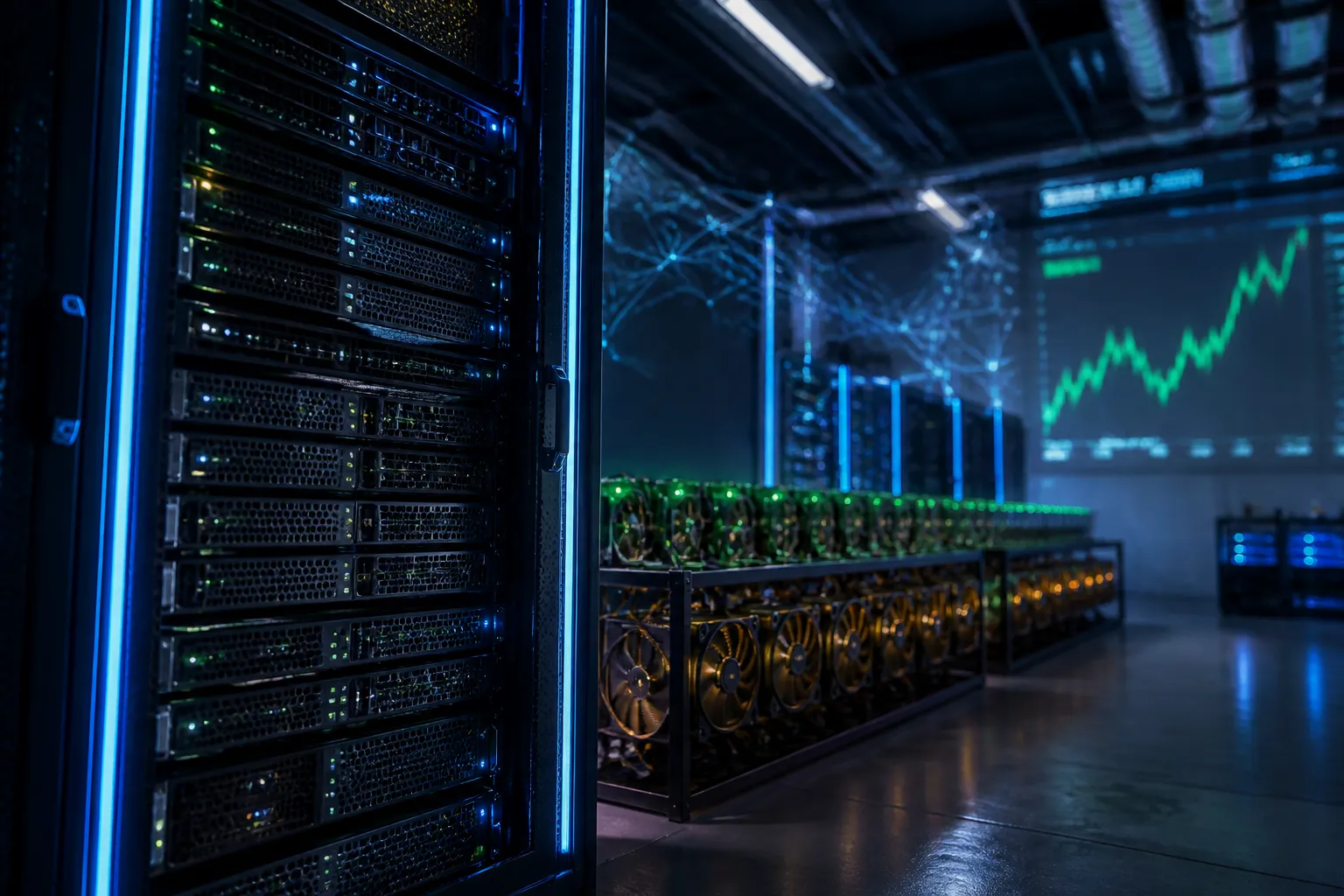
Bitcoin mining firms are pivoting their sprawling data‑center assets into high‑performance computing hubs, a move that is reshaping the sector’s earnings profile and rattling miner‑focused ETFs.
The catalyst is the 2024 Bitcoin halving, which cut block rewards in half and squeezed profit margins. At the same time, hyperscale cloud providers are scrambling for more GPU‑rich compute power to fuel the next wave of artificial intelligence workloads. Together, these forces have nudged miners to lease out their cooling towers, power grids, and rack space.
CoinInsider reports that the industry has already signed AI and HPC contracts totaling roughly $70 billion. Crypto.News projects that by the end of 2026, up to 70 % of listed miners’ revenue could stem from AI services, compared with about 30 % today. The shift is largely enabled by existing infrastructure: miners already own the power lines, cooling systems, and floor space that can be re‑purposed for AI.
Cipher Digital (CIFR) exemplifies the trend. In November 2025, the company inked a 15‑year, $5.5 billion lease with Amazon Web Services to deliver 300 megawatts of AI‑compute capacity. The deal sits within a broader $8.5 billion portfolio of AI contracts, positioning Cipher to capture revenue tied to the expanding AI market. IREN Limited (IREN) followed suit, securing a $9.7 billion agreement with Microsoft that grants access to Nvidia GPU chips for AI training. For IREN, the contract marks a pivot from pure mining to a full‑blown AI infrastructure provider.
These corporate transformations reverberate in the Valkyrie Bitcoin Miners ETF (WGMI), which tracks publicly traded mining companies. WGMI’s share price has slid roughly 26 % in recent months, a decline analysts say reflects market repricing rather than a fundamental weakening of assets. The ETF holds both Cipher and IREN, companies that are trading below the value implied by their long‑term AI contracts. CoinDesk’s Compass Point notes that investors should re‑value these firms based on the predictable revenue streams from AI data‑center leases.
Bernstein highlighted that the halving’s reduced block reward has made it harder for miners to sustain profitability on Bitcoin alone. Leasing excess compute capacity to hyperscalers offers a steadier, contract‑based income that is less volatile than cryptocurrency prices.
On a broader scale, the transition accelerates the convergence of crypto and AI sectors. Physical assets that once served a single purpose—mining Bitcoin—are now integral to the wider digital‑infrastructure ecosystem. This convergence is reflected in the performance of miner‑focused ETFs and in the valuation of companies that have secured long‑term AI contracts.
In short, Bitcoin miners are rapidly becoming AI infrastructure providers, reshaping revenue models and influencing the valuation of miner‑focused ETFs. The long‑term success of this shift hinges on the execution of AI contracts and the firms’ ability to deliver on the performance promised to hyperscale tenants.
The catalyst is the 2024 Bitcoin halving, which cut block rewards in half and squeezed profit margins. At the same time, hyperscale cloud providers are scrambling for more GPU‑rich compute power to fuel the next wave of artificial intelligence workloads. Together, these forces have nudged miners to lease out their cooling towers, power grids, and rack space.
CoinInsider reports that the industry has already signed AI and HPC contracts totaling roughly $70 billion. Crypto.News projects that by the end of 2026, up to 70 % of listed miners’ revenue could stem from AI services, compared with about 30 % today. The shift is largely enabled by existing infrastructure: miners already own the power lines, cooling systems, and floor space that can be re‑purposed for AI.
Cipher Digital (CIFR) exemplifies the trend. In November 2025, the company inked a 15‑year, $5.5 billion lease with Amazon Web Services to deliver 300 megawatts of AI‑compute capacity. The deal sits within a broader $8.5 billion portfolio of AI contracts, positioning Cipher to capture revenue tied to the expanding AI market. IREN Limited (IREN) followed suit, securing a $9.7 billion agreement with Microsoft that grants access to Nvidia GPU chips for AI training. For IREN, the contract marks a pivot from pure mining to a full‑blown AI infrastructure provider.
These corporate transformations reverberate in the Valkyrie Bitcoin Miners ETF (WGMI), which tracks publicly traded mining companies. WGMI’s share price has slid roughly 26 % in recent months, a decline analysts say reflects market repricing rather than a fundamental weakening of assets. The ETF holds both Cipher and IREN, companies that are trading below the value implied by their long‑term AI contracts. CoinDesk’s Compass Point notes that investors should re‑value these firms based on the predictable revenue streams from AI data‑center leases.
Bernstein highlighted that the halving’s reduced block reward has made it harder for miners to sustain profitability on Bitcoin alone. Leasing excess compute capacity to hyperscalers offers a steadier, contract‑based income that is less volatile than cryptocurrency prices.
On a broader scale, the transition accelerates the convergence of crypto and AI sectors. Physical assets that once served a single purpose—mining Bitcoin—are now integral to the wider digital‑infrastructure ecosystem. This convergence is reflected in the performance of miner‑focused ETFs and in the valuation of companies that have secured long‑term AI contracts.
In short, Bitcoin miners are rapidly becoming AI infrastructure providers, reshaping revenue models and influencing the valuation of miner‑focused ETFs. The long‑term success of this shift hinges on the execution of AI contracts and the firms’ ability to deliver on the performance promised to hyperscale tenants.







