Blab Crypto
Kraken Launches USD-Settled Bitcoin and Ether Options to Expand Derivatives Offerings
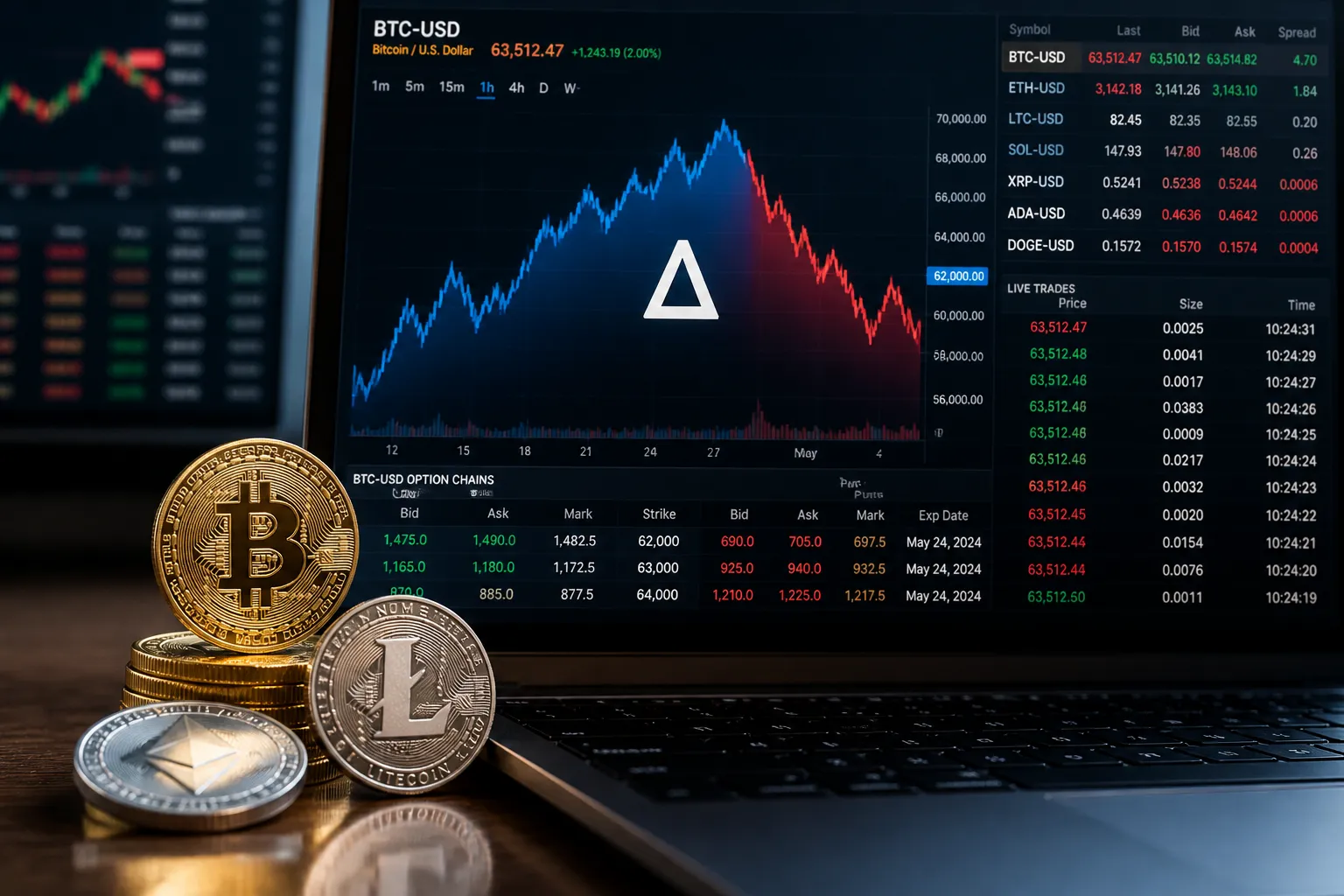
Kraken’s newest move into derivatives markets came Thursday when the U.S.‑based exchange announced the launch of European‑style, cash‑settled options for Bitcoin (BTC) and Ethereum (ETH). The contracts are USD‑settled and initially available through a request‑for‑quote (RFQ) system for eligible international clients outside Europe, North America and Australia, with plans to roll the product into Europe later this year.
The announcement signals a deepening of Kraken’s product suite, which has long focused on spot and futures trading. Options, by contrast, account for a smaller slice of crypto trading volume and are currently offered by a handful of venues. Kraken’s strategy is to lower operational barriers that have historically kept many traders away from options, thereby widening its addressable market.
"Crypto options activity is still a fraction of what it is in traditional markets, but the gap is closing as professional and institutional capital continues to move into digital assets," said Alexia Theodorou, Kraken’s director of derivatives. "We believe easier access and simpler settlement will allow options to grow beyond the current institutional‑heavy user base."
In the crypto space, most retail and active traders gravitate toward perpetual futures because they are straightforward and readily available on major exchanges. Options, however, let investors trade price direction, volatility, time, and risk exposure. Theodorou noted that the existing crypto options market has been built for a narrow slice of the trader base.
Kraken’s solution is a straightforward, dollar‑settled contract that lives in the same account clients already use for spot and futures trading. By settling premiums, profit and loss, and final settlement in U.S. dollars, the exchange removes the need for traders to manage crypto collateral or handle settlement directly in BTC or ETH. This design choice is intended to reduce friction for users who want exposure to options strategies without taking on additional operational complexity.
The product includes portfolio margin by default, allowing offsetting positions across spot, futures and options to reduce collateral requirements. Users can also post collateral in more than 30 currencies, a feature that could appeal to international clients managing multi‑asset trading accounts.
Kraken has built educational tools into the trading interface, covering basic strategies such as calls, puts and multi‑leg positions. The exchange says that slow adoption has been tied less to demand and more to product design.
The platform plans to add a public order book, which would improve price discovery beyond the initial RFQ format. While RFQ trading can work for larger or more tailored trades, a public order book would make the product more visible and accessible for a wider set of users.
Geographically, Europe is the next major target. According to the exchange, it already holds the permissions needed to offer crypto derivatives in the region.
The timing of the launch reflects a broader race among crypto venues to build deeper derivatives markets as institutional demand grows. Existing options leaders such as Deribit and CME Group hold strong positions, but Kraken believes the market is still early enough for new entrants to expand participation rather than simply compete for the same traders.
Kraken’s announcement signals that major platforms see the transition from a specialized product to a broader trading tool as a key battleground in crypto market structure. The exchange’s focus on simplifying settlement, integrating margin and providing educational resources aims to make options a more routine part of institutional and professional trading strategies.
At present, the options contracts are limited to BTC and ETH and are available only through RFQ. Kraken has not yet announced a public order book or additional underlying assets, but it has indicated plans to expand both geographically and in terms of product breadth as the market evolves.
The launch is a significant step for Kraken as it continues to move from a spot exchange into a comprehensive financial platform that includes spot, futures, payments and now options. Whether the simplified design will attract a broader user base remains to be seen, but the exchange’s approach underscores the importance of product accessibility in driving wider adoption of crypto derivatives.
The announcement signals a deepening of Kraken’s product suite, which has long focused on spot and futures trading. Options, by contrast, account for a smaller slice of crypto trading volume and are currently offered by a handful of venues. Kraken’s strategy is to lower operational barriers that have historically kept many traders away from options, thereby widening its addressable market.
"Crypto options activity is still a fraction of what it is in traditional markets, but the gap is closing as professional and institutional capital continues to move into digital assets," said Alexia Theodorou, Kraken’s director of derivatives. "We believe easier access and simpler settlement will allow options to grow beyond the current institutional‑heavy user base."
In the crypto space, most retail and active traders gravitate toward perpetual futures because they are straightforward and readily available on major exchanges. Options, however, let investors trade price direction, volatility, time, and risk exposure. Theodorou noted that the existing crypto options market has been built for a narrow slice of the trader base.
Kraken’s solution is a straightforward, dollar‑settled contract that lives in the same account clients already use for spot and futures trading. By settling premiums, profit and loss, and final settlement in U.S. dollars, the exchange removes the need for traders to manage crypto collateral or handle settlement directly in BTC or ETH. This design choice is intended to reduce friction for users who want exposure to options strategies without taking on additional operational complexity.
The product includes portfolio margin by default, allowing offsetting positions across spot, futures and options to reduce collateral requirements. Users can also post collateral in more than 30 currencies, a feature that could appeal to international clients managing multi‑asset trading accounts.
Kraken has built educational tools into the trading interface, covering basic strategies such as calls, puts and multi‑leg positions. The exchange says that slow adoption has been tied less to demand and more to product design.
The platform plans to add a public order book, which would improve price discovery beyond the initial RFQ format. While RFQ trading can work for larger or more tailored trades, a public order book would make the product more visible and accessible for a wider set of users.
Geographically, Europe is the next major target. According to the exchange, it already holds the permissions needed to offer crypto derivatives in the region.
The timing of the launch reflects a broader race among crypto venues to build deeper derivatives markets as institutional demand grows. Existing options leaders such as Deribit and CME Group hold strong positions, but Kraken believes the market is still early enough for new entrants to expand participation rather than simply compete for the same traders.
Kraken’s announcement signals that major platforms see the transition from a specialized product to a broader trading tool as a key battleground in crypto market structure. The exchange’s focus on simplifying settlement, integrating margin and providing educational resources aims to make options a more routine part of institutional and professional trading strategies.
At present, the options contracts are limited to BTC and ETH and are available only through RFQ. Kraken has not yet announced a public order book or additional underlying assets, but it has indicated plans to expand both geographically and in terms of product breadth as the market evolves.
The launch is a significant step for Kraken as it continues to move from a spot exchange into a comprehensive financial platform that includes spot, futures, payments and now options. Whether the simplified design will attract a broader user base remains to be seen, but the exchange’s approach underscores the importance of product accessibility in driving wider adoption of crypto derivatives.