Blab Crypto
2026 World Cup Spurs Chiliz Fan Token Surge, Spains Record Token Burn
When England capped a historic World Cup run with a third‑place finish, the real drama unfolded on the Chiliz blockchain.
The 2026 FIFA World Cup, now a 48‑team spectacle, brought an extra layer of excitement for crypto investors. Six of the expanded roster—Argentina ($ARG), Spain ($SPAIN), South Africa ($SAFA), Belgium ($BELG), Portugal ($POR) and the United States ($USA)—had already launched official fan tokens on Socios.com. England, however, chose not to issue a token, leaving a conspicuous gap in a market that thrives on national fan engagement.
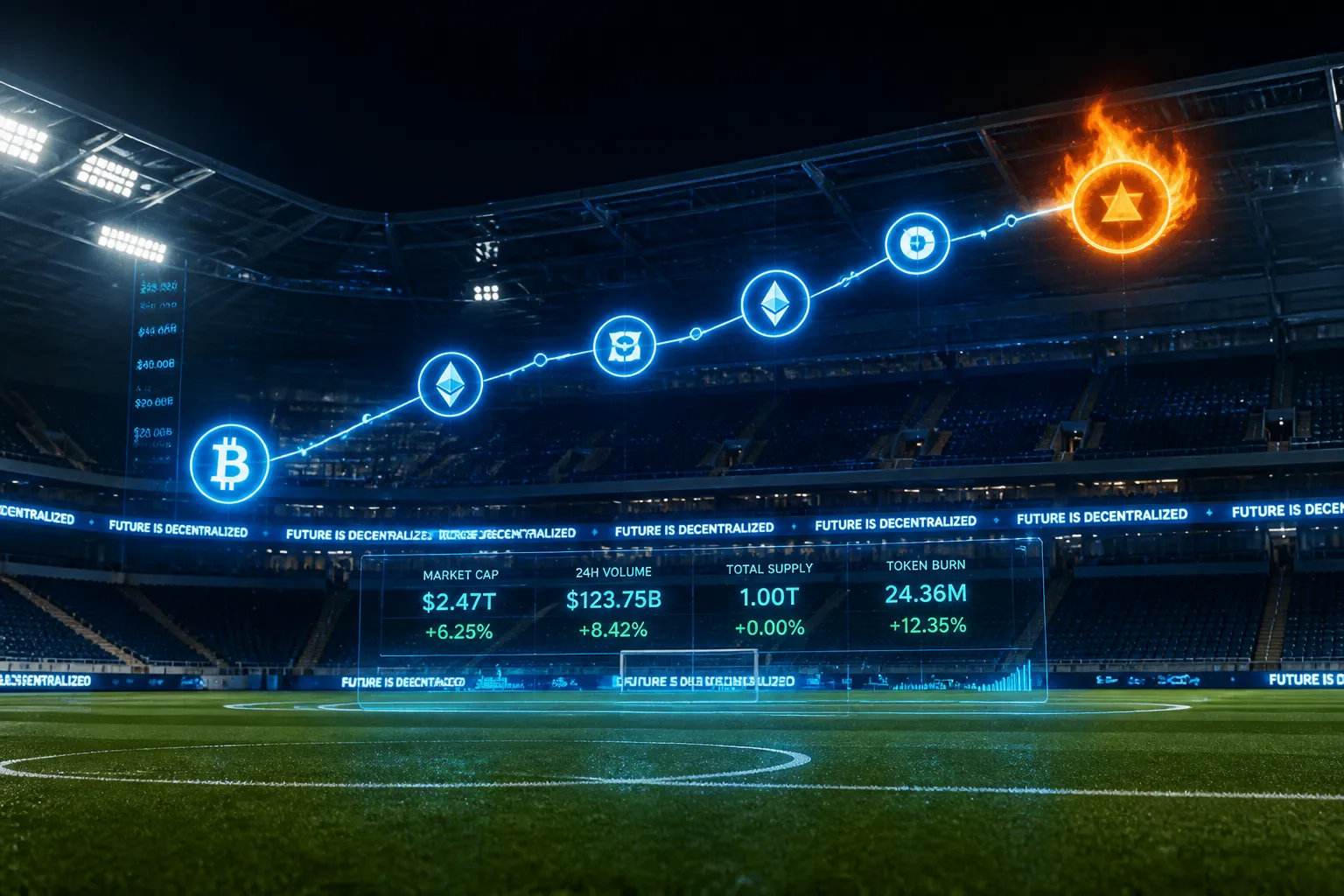
The larger format added roughly a third more matches than the previous 32‑team structure, amplifying on‑pitch events that directly influenced token activity. Chiliz’s “Burn to Glory” campaign linked each victory to a scheduled burn of a percentage of a team’s treasury tokens. The most dramatic on‑chain moment occurred when Spain defeated Belgium in the quarter‑finals: 1.16 million $SPAIN tokens were burned, setting a new record for a single fan‑token burn during a World Cup. The burn permanently reduced the circulating supply, tightening scarcity for remaining holders.
Trading data from several crypto‑native platforms mirrored the on‑field drama. Argentina’s $ARG token saw significant volume spikes during England’s knockout matches, illustrating how bracket positioning and indirect rivalries can move digital asset flows. Similar patterns emerged for $BELG and $SAFA, with price volatility tracking match outcomes in near real‑time. These movements reinforce the long‑standing correlation between on‑pitch performance and token price that has defined Chiliz’s fan‑token ecosystem.
While the tokens’ liquidity and trading volume surged during the tournament, they tend to wane between major competitions. This volatility exposes holders to prolonged periods of declining activity, a reality that investors should keep in mind when evaluating fan‑token holdings. The 2026 tournament, however, showcased the platform’s ability to generate intense, short‑term interest that can translate into measurable on‑chain activity.
For Chiliz’s native token, CHZ, the World Cup serves as a quadrennial marketing event. Aggregate fan‑token transactions drive demand for CHZ, the currency used to purchase tokens and access platform features. The absence of an England fan token meant that a large fan base could not directly participate, potentially limiting CHZ’s exposure to one of the world’s most passionate football markets.
Chiliz’s burn mechanism introduces a structural dimension beyond speculation. By reducing supply in response to team performance, the protocol creates deflationary pressure that can influence long‑term token economics. Whether this model will sustain investor interest beyond the tournament remains an open question, but the 2026 event demonstrated its capacity to generate tangible on‑chain outcomes.
In summary, the 2026 World Cup amplified trading activity on the Chiliz platform, highlighted the impact of performance‑linked burns, and underscored the importance of token availability for major national teams. Spain’s record burn and Argentina’s trading surges illustrate the market’s responsiveness to on‑field events, while the lack of an England fan token represents a missed opportunity for the Chiliz ecosystem. Traders and investors should monitor CHZ’s activity levels and the ongoing performance of the remaining national‑team tokens as the platform prepares for the next major sporting cycle.
The 2026 FIFA World Cup, now a 48‑team spectacle, brought an extra layer of excitement for crypto investors. Six of the expanded roster—Argentina ($ARG), Spain ($SPAIN), South Africa ($SAFA), Belgium ($BELG), Portugal ($POR) and the United States ($USA)—had already launched official fan tokens on Socios.com. England, however, chose not to issue a token, leaving a conspicuous gap in a market that thrives on national fan engagement.
The larger format added roughly a third more matches than the previous 32‑team structure, amplifying on‑pitch events that directly influenced token activity. Chiliz’s “Burn to Glory” campaign linked each victory to a scheduled burn of a percentage of a team’s treasury tokens. The most dramatic on‑chain moment occurred when Spain defeated Belgium in the quarter‑finals: 1.16 million $SPAIN tokens were burned, setting a new record for a single fan‑token burn during a World Cup. The burn permanently reduced the circulating supply, tightening scarcity for remaining holders.
Trading data from several crypto‑native platforms mirrored the on‑field drama. Argentina’s $ARG token saw significant volume spikes during England’s knockout matches, illustrating how bracket positioning and indirect rivalries can move digital asset flows. Similar patterns emerged for $BELG and $SAFA, with price volatility tracking match outcomes in near real‑time. These movements reinforce the long‑standing correlation between on‑pitch performance and token price that has defined Chiliz’s fan‑token ecosystem.
While the tokens’ liquidity and trading volume surged during the tournament, they tend to wane between major competitions. This volatility exposes holders to prolonged periods of declining activity, a reality that investors should keep in mind when evaluating fan‑token holdings. The 2026 tournament, however, showcased the platform’s ability to generate intense, short‑term interest that can translate into measurable on‑chain activity.
For Chiliz’s native token, CHZ, the World Cup serves as a quadrennial marketing event. Aggregate fan‑token transactions drive demand for CHZ, the currency used to purchase tokens and access platform features. The absence of an England fan token meant that a large fan base could not directly participate, potentially limiting CHZ’s exposure to one of the world’s most passionate football markets.
Chiliz’s burn mechanism introduces a structural dimension beyond speculation. By reducing supply in response to team performance, the protocol creates deflationary pressure that can influence long‑term token economics. Whether this model will sustain investor interest beyond the tournament remains an open question, but the 2026 event demonstrated its capacity to generate tangible on‑chain outcomes.
In summary, the 2026 World Cup amplified trading activity on the Chiliz platform, highlighted the impact of performance‑linked burns, and underscored the importance of token availability for major national teams. Spain’s record burn and Argentina’s trading surges illustrate the market’s responsiveness to on‑field events, while the lack of an England fan token represents a missed opportunity for the Chiliz ecosystem. Traders and investors should monitor CHZ’s activity levels and the ongoing performance of the remaining national‑team tokens as the platform prepares for the next major sporting cycle.